How To Stay Safe From Brown Bears In Hokkaido And Protect The Wildlife You Love
This article is an English translation of the original Japanese article. Read the original Japanese version.
Brown bear encounters and attacks are rising across Hokkaido, from remote trails to the edges of residential areas. Learn how to understand bear behavior, avoid dangerous situations, and respond calmly if you ever come face to face with one.
Recent years have brought a worrying increase in brown bear sightings and human injuries across Hokkaido. Bears are now appearing not only in forests and farmland but sometimes near residential neighborhoods, damaging crops and livestock and, in rare cases, causing tragic loss of life.
One recent incident on Mount Rausu in the Shiretoko Peninsula, where a male hiker was fatally attacked by a brown bear, deeply shocked local communities and outdoor enthusiasts. For people who live in Hokkaido, as well as travelers and pet parents visiting with their dogs, this is not a distant news story but an urgent safety concern.
This guide explains how brown bears live, why encounters are increasing, and what experts recommend you do to avoid bears and stay safe if you meet one.
Understanding Brown Bear Behavior
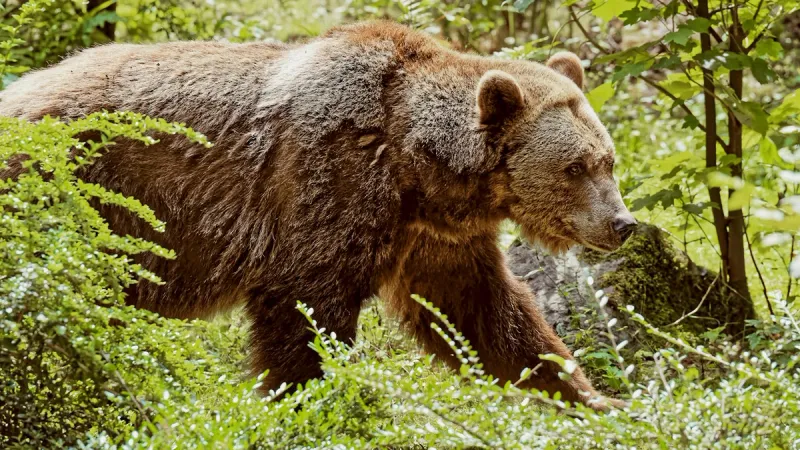
Brown bears are among the largest land-dwelling carnivores in the world. However, despite the word "carnivore," their actual diet is predominantly plant based and omnivorous, not that of a relentless predator constantly hunting large prey.
In spring, they feed on plants such as butterbur and bamboo shoots. During summer, they shift to berries and soft vegetation, and in autumn they rely heavily on acorns, chestnuts, and other nuts to build crucial fat reserves. Animal-based foods, including salmon, small mammals, and deer, make up a smaller portion of their diet. Research suggests that roughly 70–80% of a brown bear’s food intake comes from plants.
Brown bears also have very large home ranges. Adult males may roam over areas exceeding 100 square kilometers. Unlike some big cats, they do not aggressively defend strict territories, so the ranges of multiple bears often overlap.
Breeding typically occurs from June to July. Females then give birth while hibernating in winter dens. During this period, mother bears become intensely protective and more likely to react aggressively to anything they perceive as a threat to their cubs. Encounters with a mother and cubs are considered especially dangerous.
In the wild, brown bears can live around 20–30 years, which is relatively long compared to many other wild mammals. This long lifespan allows them to learn and remember human-related food sources, which can increase conflict if people are not careful.
Why Brown Bear Encounters Are Increasing
Experts point to several overlapping reasons for the recent rise in brown bear sightings and incidents in Hokkaido.
One major factor is food shortages in the forest. In years when acorns and other nuts fail, bears struggle to gain enough weight before winter. As a result, they are more likely to venture closer to villages, farmland, and even the outskirts of towns in search of calories.
Another key driver is that human communities and bear habitats are now closer than ever. Forest development, changes in land use, and depopulation of mountain villages can reduce regular human presence in some areas. When there are fewer people working in the hills and fields, bears may feel less inhibited about moving into places that used to be busy.
In addition, wildlife specialists suspect that brown bear numbers themselves may be increasing in some regions. As populations grow, younger bears in particular must travel farther to find their own home ranges. During this dispersal, they are more likely to cross roads, pass near settlements, and encounter people and pets.
For pet guardians who enjoy hiking or camping with their dogs, these trends mean it is more important than ever to plan outings with bear safety in mind.
How To Reduce Your Risk Of Meeting A Brown Bear
Completely eliminating the risk of encountering a brown bear is impossible in bear country, but you can significantly reduce that risk with thoughtful preparation and behavior. This is especially important if you hike, camp, or walk dogs in or near forested areas.
First, make your presence obvious. Brown bears are naturally cautious and usually prefer to avoid humans when they know we are nearby. Experts recommend creating consistent noise so bears are not surprised at close range. Consider using a bear bell, playing a small radio, or talking with your companions as you walk. The goal is to give bears plenty of warning so they can move away before you get close.
Next, never leave food or garbage where bears can access it. The smell of human food is a powerful attractant. Leaving food in tents, cars, or around campsites can draw bears into areas they might otherwise avoid. Always store food in bear-resistant containers or designated storage areas when available, and pack out all leftovers and food waste. If a bear learns that human areas mean easy meals, it is more likely to return and become bolder over time.
When you are on mountain trails or forest paths, pay attention to signs of recent bear activity. Fresh tracks, droppings, claw marks on trees, and dug-up soil or overturned rocks can all indicate that a bear has been in the area. If you notice multiple signs or very fresh evidence, experts strongly advise turning back rather than pressing on.
Time of day and season also matter. Brown bears tend to be more active around dawn and dusk. In autumn, when bears are urgently feeding to prepare for winter, they are more likely to approach fields, orchards, and village edges. Before heading out, especially in high-risk seasons, check local government or park authority updates for recent bear sightings and warnings.
Finally, carry bear spray in areas where encounters are possible, and know how to use it before you go. Bear spray is most effective at close range and should be kept somewhere you can reach quickly, not buried deep in a backpack. Whenever possible, travel in groups rather than alone; research shows that groups are less likely to be attacked than solo hikers.
For pet parents, keeping dogs on leash in bear country is also critical. Unleashed dogs may run toward a bear and then back to you, unintentionally leading the bear straight to your location.
What To Do If You Encounter A Brown Bear
Even with excellent preparation, no one can guarantee they will never encounter a bear in bear habitat. How you respond in those first moments can strongly influence the outcome.
Do Not Run From A Brown Bear
The most important rule is do not run. Brown bears can reach speeds of around 50 km/h, far faster than any human. Trying to outrun a bear on foot is almost never successful and can trigger a chase response.
Turning your back and sprinting away may signal that you are prey. Instead, you want to appear calm, controlled, and non-threatening while slowly increasing the distance between you and the bear.
If You See A Bear At A Distance
If you notice a bear far away, stay calm and quietly increase the distance. Speak in a low, steady voice and begin to back away slowly, keeping the bear in sight without staring directly into its eyes the entire time.
Avoid sudden movements, and do not approach to take photos or get a closer look. Your goal is to show that you are not a threat and that you are leaving the area. If you are with others, stay together and move as a group.
If A Bear Is Suddenly Very Close
If you unexpectedly find a bear at close range, stop where you are and take a moment to breathe. Sudden movements or panicked reactions can escalate the situation.
Speak to the bear in a low, calm voice to help it recognize you as a human rather than another animal. Slowly raise your arms or open your jacket to appear larger without making aggressive gestures. If you are carrying a backpack or other gear, some experts suggest gently placing it on the ground between you and the bear to create a distraction and a small barrier.
Keep your dog close and under control. If your dog is on leash, do not allow it to lunge or bark aggressively at the bear, as this can provoke a defensive reaction.
If The Bear Shows Signs Of Attacking
If a brown bear lowers its head, pins its ears back, charges, or otherwise appears ready to attack, your options become very limited.
If you have bear spray, this is the time to use it. Stand your ground, aim slightly downward so the spray forms a cloud between you and the bear, and deploy it when the bear is within effective range as indicated on the product instructions.
If the bear makes contact or is about to, use any available object—your backpack, trekking poles, or other gear—as a shield between your body and the bear. Protecting your head and neck is critical.
In the worst-case scenario, if you are knocked to the ground and cannot escape, curl into a ball or lie face down, clasp your hands behind your neck, and use your arms and backpack to shield your head and spine. The goal is to reduce the chance of fatal injuries and increase your chances of survival until the bear disengages.
Every Bear Encounter Is Different
The strategies described above reflect widely recommended best practices from bear safety experts, but it is essential to remember that no single response guarantees safety in every situation.
Individual bears differ in temperament, age, health, and past experiences with humans. A mother with cubs may react with extreme aggression to any perceived threat. A starving bear may take risks it would normally avoid. Bears that have repeatedly obtained human food can lose their natural fear of people and behave more boldly.
Because of these variables, there is no perfect script that will work in all cases. Instead, think of these guidelines as tools to reduce risk and improve your odds, not as an absolute guarantee. Staying observant, reading the situation, and remaining as calm as possible are all part of effective decision-making in the moment.
Moving Toward Safer Coexistence With Brown Bears
Brown bears are a powerful symbol of Hokkaido’s wild landscapes and play an important role in the local ecosystem. Under natural conditions, they generally prefer to avoid humans and live quietly in the forest. However, environmental changes, shifting land use, and closer contact with human communities have turned bear sightings and damage into a serious social issue.
For residents, travelers, and pet parents alike, the path forward lies in understanding bear ecology, practicing prevention, and preparing for emergencies. By managing food and garbage responsibly, staying informed about local bear activity, and learning how to behave in bear country, we can reduce dangerous encounters for both people and bears.
When we respect wildlife and take proactive steps to manage risk, it becomes more realistic for humans, pets, and brown bears to share the same landscapes. If you plan to enjoy hiking, camping, or outdoor adventures in Hokkaido—especially with animal companions—keep these safety principles in mind. They can help protect you and your loved ones while also supporting a healthier, more balanced coexistence with the wild animals that call Hokkaido home.
- 03.03.2026
- 08.18.2025