Why Japanese Ghost Cats Still Haunt Our Imagination And What They Reveal About Real Cats
This article is an English translation of the original Japanese article. Read the original Japanese version.
From mountain-dwelling spirit beasts to elegant shapeshifters in kimono, Japan’s ghostly cats have evolved alongside real-life felines. Discover how legends of bakeneko and nekomata reflect our deepest feelings about the mysterious cats sharing our homes today.
Key takeaways
Q. What is the difference between nekomata and bakeneko?
Nekomata are mountain-dwelling yokai with split tails that attack people, while bakeneko appear in human settlements, transform into humans, and are depicted as having human-like emotions such as grudge or gratitude.
Q. How did nekomata and bakeneko come to be worshipped as deities?
They were first feared as vengeful beings, but by enshrining them as cat mounds or cat Jizo to calm their curses, they gradually came to be worshipped as guardian deities believed to cure illness, prevent fires, and protect homes.
Q. What did the stories of nekomata and bakeneko mean to people of the time?
Nekomata stories expressed fear of unknown mountains and beasts, while bakeneko reflected familiar injustices and human emotions, serving as tales through which Japanese people named and faced social and psychological anxieties.
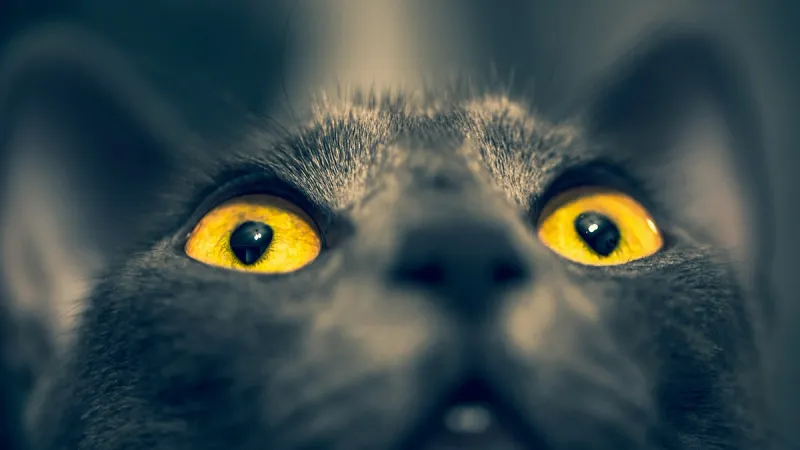
Among all the animals in Japanese folklore, no creature has been imagined as richly and as often as the cat. Their eyes gleam in the dark, their movements are fluid and silent, and their calm gaze can feel as if it sees straight through a person’s heart. For centuries, cats in Japan have been treated as both sacred and unsettling, feared and revered at the same time.
Two of the most fascinating examples are the legendary bakeneko and nekomata. Both are said to be ordinary cats that, after living a long life, awaken to supernatural powers and transform into something otherworldly. Yet their forms, personalities, and the settings of their stories are strikingly different. In exploring these two ghost cats, pet parents can also glimpse how humans have tried to understand the real cats by their side.
Ancient Mountain Spirits The Wild Nekomata
The earliest written record of a cat as a supernatural being in Japan appears in the late Kamakura period, in a Buddhist text called Genkō Shakusho. It notes that in the old province of Shinano, “a cat devours people and is called nekomata.” This tells us that the word nekomata was already in use hundreds of years ago.
In these early tales, the nekomata was not a cozy house companion. It was a terrifying mountain-dwelling creature that attacked humans. Travelers spoke of a giant cat appearing on dark mountain paths, glowing like a torch in the night and luring people off the road. Its tail was said to split into two, and it was believed to breathe fire, understand human speech, and even control human spirits.
Folklorists note that this image of the nekomata is closely tied to medieval mountain worship in Japan. For people who depended on the mountains yet feared their dangers, the nekomata became a kind of living symbol of the wild. It could be seen as an incarnation of the mountain gods themselves, sometimes bringing disaster, sometimes guarding the land. In this way, the awe people felt toward untamed nature was projected onto the figure of a powerful, ancient cat.
Famous Nekomata Legends
In one region, people believed that a gigantic cat with a forked tail roamed the mountains at night, spewing fire and swallowing any traveler it encountered. When a warrior finally set out to defeat it, he cut the monster down, and human bones spilled from its belly. Stories like this captured the very real fear of wild animals and unknown dangers that once surrounded remote mountain paths.
There are also many places where defeating a nekomata supposedly left its mark on the land itself. One well-known example is Mount Nekomagadake in Aizu, Fukushima Prefecture. Local tradition says a warrior’s arrow pierced a rock as he battled a nekomata, and the creature’s blood stained the stone. The pool that formed there became known as the “Cat Demon Pool,” a reminder of the day the monster was finally subdued.
These legends may sound distant from the lives of modern pet guardians, but they highlight something timeless. When people did not fully understand the animals or landscapes around them, they often turned that uncertainty into stories. The nekomata became a way to name and contain the fear of the unknown.
From Mountains To Living Rooms The Rise Of The Bakeneko
While the word bakeneko existed earlier, it truly spread from the Muromachi through the Edo periods, when everyday life in Japan became more urban. As towns grew and homes became more crowded, cats moved from barns and storehouses into people’s living spaces. They became familiar companions, valued for both their charm and their skill at catching rodents.
As cats settled into human homes, the stage for ghost stories shifted from deep mountains to bustling neighborhoods. Instead of lurking in forests, supernatural cats now appeared in kitchens, corridors, and tea houses. The bakeneko emerged as a cat that could transform into a human, slipping unnoticed into daily life.
Bakeneko often take on human form, and in many stories they appear as women. In Edo-period theater and woodblock prints, audiences loved scenes of “cat dances,” where a beautiful woman is revealed to be a cat in disguise, twirling and leaping with uncanny grace. Cultural historians suggest that the cat’s supple movements and independent nature were linked to ideas of feminine allure, turning the eerie into a kind of entertainment.
In bakeneko tales, the cat is frequently given deeply human emotions. It may harbor resentment, burn with jealousy, or feel compelled to repay a kindness. These stories are less about a wild beast and more about intense feelings that people themselves struggle to express. In that sense, the bakeneko becomes a mirror of the human heart, reflecting the joys and sorrows that people projected onto the cats living in their homes.
Classic Bakeneko Drama The Nabeshima Cat Uproar
One of the most famous bakeneko legends is the Nabeshima Bakeneko Incident, which became a hit theme in Edo-period plays. In this story, a woman in the Nabeshima clan’s household is killed unjustly. The cat that loved her absorbs her grudge, gains supernatural power, and begins to take revenge.
The cat assumes the woman’s form and returns to the mansion. Night after night, she appears before the lord, tormenting him with her presence. No one can understand what is happening, and fear spreads through the household. Eventually, a skilled swordsman notices something strange in the shadow on a paper sliding door. The silhouette is not quite human. Realizing it is a cat in disguise, he strikes, and the bakeneko is finally slain.
Afterward, the people build a cat burial mound, or neko-zuka, to honor the cat’s remains and calm its spirit. Once the mound is in place and prayers are offered, the disturbances cease. On stage, scenes of a cat transforming into a woman and dancing became wildly popular, turning the bakeneko into an icon of Edo pop culture.
For modern pet parents, this legend can be read in a different light. The cat is not simply a villain; it is a creature acting out of loyalty and grief. The story suggests a deep belief that cats, like humans, can form strong emotional bonds and may even carry those feelings beyond death.
From Curses To Guardians When Cats Become Gods
Both nekomata and bakeneko began as beings to be feared. They were blamed for illness, misfortune, and unexplained events. Yet over time, the very cats that were once seen as dangerous were gradually transformed into protectors.
To calm their supposed curses, people built cat burial mounds, small shrines, and stone statues known as cat Jizō. As generations passed, these places of fear turned into places of prayer. In the mountain regions of Nagano and Niigata, you can still find small shrines called Nekomata Shrines or statues of cat deities. Locals visit them to ask for help with illness, protection from fires, and safety for their homes.
This shift reflects a distinctly Japanese way of thinking. There is a saying that even a vengeful spirit, once properly honored, can become a guardian. In other words, what once threatened you can, if respected, become a source of protection. Applied to cats, this idea helped lift nekomata and bakeneko beyond simple ghost stories, turning them into cultural and spiritual figures.
For today’s pet guardians, this transformation offers a meaningful reminder. When we take the time to understand and respect an animal’s nature, our relationship can move from fear or misunderstanding to trust and mutual care.
What Shapeshifting Cats Reveal About The Human Heart
Nekomata and bakeneko are both said to arise from cats that have lived a very long time and changed into something more than ordinary. People once believed that if a cat’s tail grew too long, it might split in two and the cat would become a yokai. Behind this superstition lies a simple truth many pet parents recognize today the longer we live with a cat, the more mysterious and complex it can seem.
The mountain nekomata gave a name to the fear of the unknown the dark forest, the wild animal, the unexplained disappearance. The urban bakeneko, by contrast, gave shape to the tensions and injustices of everyday life. When people felt powerless in the face of rigid social rules, they could imagine a cat rising up to avenge a wrong or expose a hidden truth.
In that sense, these ghost cats are a kind of social mirror. They reflect how strongly humans have relied on cats, feared them, loved them, and trusted them. Even now, cats continue to inspire new stories, from internet memes to fantasy novels. Research on human–animal bonds suggests that such stories help people process emotions, strengthen attachment, and better understand their pets’ needs.
For modern pet parents, you do not need to believe in shapeshifting cats to appreciate what these legends offer. Consider using them as a gentle reminder to:
- Pay close attention to your cat’s subtle body language and routines
- Respect your cat’s independence while providing a safe, enriched environment
- Honor the emotional bond you share, especially as your cat ages
The cats that once haunted mountain passes and theater stages now curl up on sofas and windowsills. Yet their mystery remains. As long as humans and cats live side by side, new tales will continue to emerge, each one revealing a little more about both species.
Continuing Your Own Story With Your Cat
From fearsome nekomata to elegant bakeneko, Japan’s ghost cats show how deeply people have always felt about their feline companions. They turned anxiety about nature and society into stories of long-lived cats with powerful emotions and extraordinary abilities.
Today, pet guardians can draw something positive from these legends. By treating your cat with curiosity, respect, and consistent care, you write a kinder, more grounded version of the old tales one where the mysterious creature at your side is not a source of fear, but a trusted partner in everyday life.
As you watch your cat’s eyes gleam in the half-light or see it move silently through your home, remember the long history of wonder behind that small, familiar shape. The next chapter of the cat’s story is being written in your living room, one quiet moment at a time.
- 03.20.2026
- 11.04.2025