Lady And The Tramp Dog Breeds Explained What Pet Parents Should Really Know
This article is an English translation of the original Japanese article. Read the original Japanese version.
Think Lady is a Cavalier and Tramp is a Schnauzer Lookalike You are not alone. Discover the real breeds behind Disney’s Lady and the Tramp, the surprising history of the film, and what these dogs can teach modern pet parents about companionship and care.
Key takeaways
Q. What is Lady's actual dog breed?
Lady is not a Cavalier; she is a female American Cocker Spaniel.
Q. Is Tramp not a Miniature Schnauzer?
Tramp is not a Miniature Schnauzer but is described as a mixed-breed dog with terrier-type traits.
Q. How was 'Lady and the Tramp' developed as a film?
It began with a 1937 concept, incorporated ideas from a short story, and was completed over about 18 years, releasing in 1955.
The Real Story Behind Lady And The Tramp
Many pet parents grow up believing Lady is a Cavalier King Charles Spaniel and Tramp is a Miniature Schnauzer. They certainly look the part at first glance.
In reality, both characters have very different origins, and the film itself has a surprisingly dramatic backstory. Understanding those details not only clears up the breed confusion, it also deepens our appreciation for how thoughtfully dogs were portrayed on screen.
A Quick Refresher On Lady And The Tramp
The story is set in New England, where an American Cocker Spaniel puppy named Lady arrives as a cherished Christmas gift to the Dear family. She grows up as a beloved companion, showered with attention and affection.
Life changes when a baby joins the family. Lady is initially confused by the new routine, but she gradually settles into her role as a gentle guardian, watching over the newborn and adapting to the household’s shifting priorities.
One day, the Dears leave on a trip and hire a sitter to care for the baby and Lady. Unfortunately, the sitter dislikes dogs and strongly prefers cats. Feeling misunderstood and pushed aside, Lady runs out of the house and into the wider world.
There she meets Tramp, a streetwise stray with a rough-and-tumble charm. Their chance encounter leads to adventure, romance, and one of the most iconic spaghetti scenes in film history.
Lady Is An American Cocker Spaniel
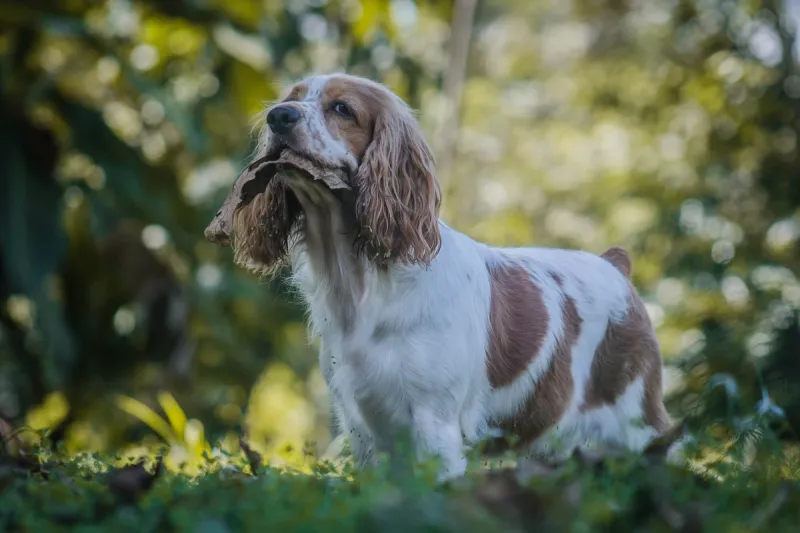
Within the film’s own description, Lady is clearly identified as an American Cocker Spaniel. Her long, silky ears, expressive eyes, and soft, rounded features are classic hallmarks of the breed.
Behind the scenes, Lady’s breed choice was very intentional. Walt Disney once visited the home of Joe Grant, a Disney story artist. Grant’s family dog was an American Cocker Spaniel, and he had created a series of sketches based on her. Walt was captivated by both the dog and the drawings.
Encouraged by Walt, Grant began developing a storyboard centered on an American Cocker Spaniel as the main character. Those early boards eventually evolved into what the world now knows as Lady and the Tramp.
What Makes The American Cocker Spaniel Special
The American Cocker Spaniel originated from spaniels imported from England and further developed in the United States. Over time, breeders emphasized a softer expression, fuller coat, and a slightly different body type compared with the English Cocker Spaniel.
These dogs were originally bred as bird-hunting companions, and many still retain a strong retrieving instinct and love of outdoor activity. Their large, soulful eyes and flowing, often slightly wavy coat give them a gentle, almost dreamy appearance.
In terms of temperament, American Cocker Spaniels are typically:
- Highly social and people oriented
- Food motivated, which can be helpful for training
- Sensitive, often responding strongly to tone of voice and household tension
For modern pet guardians, this means consistent, reward-based training and regular grooming are essential. Their long ears and dense coat also require routine health checks to prevent ear infections and matting.
Why So Many People Think Lady Is A Cavalier
The Cavalier King Charles Spaniel is another small, affectionate spaniel breed that originated in the United Kingdom. The name itself sounds regal: “Cavalier” refers to a knight, and “King Charles” honors the English royal family.
Cavaliers share several visual traits with Lady:
- Large, round, dark eyes
- Long, feathered ears
- A soft, sweet facial expression
When you compare film stills of Lady with photos of Cavaliers, it is easy to see why many viewers assume she must be a Cavalier King Charles Spaniel. The gentle demeanor, flowing ears, and compact body all echo the Cavalier’s charm.
However, from a production standpoint, Lady’s design and backstory are firmly rooted in the American Cocker Spaniel. For pet parents, this is a helpful reminder that animated dogs often blend real-world traits in stylized ways, which can blur breed recognition.
Tramp Is Not A Miniature Schnauzer
Tramp, the roguish stray who steals Lady’s heart, is often mistaken for a Miniature Schnauzer. His wiry-looking coat, bearded muzzle, and dignified bearing certainly resemble the breed.
Yet according to production notes and later commentary, Tramp is best described as a mixed-breed dog rather than a purebred Schnauzer. When you look closely, some key Schnauzer traits are missing.
One notable detail is the tail. Traditional Miniature Schnauzers were often docked, meaning part of the tail was surgically removed. Tramp’s tail is full and natural, which already sets him apart from the classic Schnauzer silhouette of that era.
Animators and historians also suggest that Tramp’s design likely incorporates traits from various terrier-type dogs, with many pointing specifically to the Airedale Terrier as a strong influence.
Miniature Schnauzer At A Glance
The Miniature Schnauzer is a small, sturdy dog originally developed in Germany. Despite being grouped with terriers in some countries, the breed’s ancestry is distinct and does not actually include traditional terrier bloodlines.
Miniature Schnauzers are known for:
- Their iconic beard and eyebrows
- A wiry, low-shedding coat
- An alert, confident, often spirited personality
They were historically used as farm dogs and ratters, valued for their intelligence and willingness to work. Today, they are popular family companions who generally thrive on mental stimulation and structured activity.
While Tramp shares the bearded look and some of the scruffy charm, his overall body shape, tail, and mixed features support the idea that he is not a pure Miniature Schnauzer.
Airedale Terrier Traits In Tramp’s Design
The Airedale Terrier, often called the “King of Terriers,” is the largest of the terrier breeds and originated in Airedale, England. Historically, Airedales were used to hunt otters and other game, earning them the nickname “water terriers.”
Airedales typically have:
- A strong, athletic build
- A wiry, tan-and-black coat
- A confident, independent temperament
Many experts and fans see echoes of the Airedale in Tramp’s posture, muzzle shape, and overall outline. While no official “breed mix” has been confirmed, it is reasonable to view Tramp as a mixed-breed dog with terrier-like influences, rather than tying him to one specific pedigree.
For pet guardians, this reflects a broader truth: mixed-breed dogs can embody the best of many worlds, combining resilience, unique looks, and wonderfully individual personalities.
The Story Behind Tramp’s Name
The name Tramp feels perfect for a free-spirited street dog, but it was not an easy choice. In English, “tramp” can also carry negative meanings, including references to vagrancy and, in some contexts, sex work.
Because of these associations, some team members strongly opposed the name. Alternative options such as “Homer” and “Bozo” were proposed during development.
Ultimately, Walt Disney insisted on keeping Tramp, believing it best captured the character’s wandering lifestyle and rough-edged charm. His decision shaped not only the film’s title but also how audiences around the world would remember the character.
When the film was first released in Japan, the original title Lady and the Tramp was translated very literally as “Lady and the Vagrant,” emphasizing the social contrast between the refined house dog and the streetwise stray.
The Iconic Spaghetti Scene Almost Did Not Happen
The candlelit spaghetti dinner, where Lady and Tramp accidentally kiss while sharing a strand of pasta, is widely considered the film’s most memorable moment. It is frequently referenced in discussions of romantic animation and cinematic history.
Yet early on, Walt Disney was skeptical. He reportedly disliked the idea of dogs eating spaghetti on screen, worrying it might look messy or unappealing rather than charming.
Everything changed when supervising animator Frank Thomas created a fully realized version of the scene. The animation captured such tenderness, humor, and emotional nuance that Walt changed his mind. The sequence was approved and went on to become one of the most beloved scenes in animation.
For pet parents, this scene also highlights how shared meals and positive experiences can symbolize trust and connection, even when presented in a stylized, romanticized way.
A Story That Was Almost Never Finished
The path from Joe Grant’s first sketches to the finished film was long and often difficult. After Walt gave the initial green light, Grant and the Disney team developed a full storyboard for the project.
However, the completed storyboard did not meet Walt’s expectations. He felt the story was missing something essential, and the project was shelved. For a time, the future of Lady and the Tramp was genuinely uncertain.
Years later, Walt discovered a short story by Ward Greene titled “Happy Dan, The Whistling Dog.” The tale featured a carefree, independent dog whose personality resonated strongly with what Walt wanted for Tramp.
Seeing new potential, Walt asked Joe Grant to incorporate elements of Greene’s story into the existing concept. Grant, however, disagreed with the direction and ultimately left the Disney studio.
Ward Greene Steps In As The Author
After Grant’s departure, Walt turned directly to Ward Greene. He commissioned Greene to write a new story that would serve as the narrative foundation for the film.
In 1953, Greene’s version of the tale was published, featuring two dogs who would later become the Lady and Tramp we recognize today. This prose version helped solidify character dynamics, themes, and key plot points.
Only after this literary groundwork was in place did the film move forward in earnest. Animation production began in 1951, and the completed movie premiered in June 1955.
From the first concept in 1937 to release in 1955, the project spanned roughly 18 years. That lengthy development reflects not only technical challenges but also the creative persistence of the people involved.
What Pet Parents Can Take From Lady And The Tramp
Knowing that Lady is an American Cocker Spaniel and Tramp is a mixed-breed dog with terrier-like traits adds depth to how we watch the film. It also offers several useful reminders for modern pet guardians:
- Breed influences behavior, but does not define it. Lady’s gentle nature and Tramp’s street smarts reflect their backgrounds, yet both grow and change through their relationship and experiences.
- Mixed-breed dogs are every bit as special as purebreds. Tramp’s charm, loyalty, and courage highlight the value of adopting and appreciating dogs of all backgrounds.
- Life changes affect our pets. Lady’s confusion when the baby arrives mirrors how many real dogs react to new family members. Experts recommend planning ahead, using gradual introductions, and maintaining positive routines to support pets through transitions.
When you rewatch Lady and the Tramp, consider the years of creative effort, the careful breed inspirations, and the evolving understanding of dogs that shaped the film.
By viewing it through both a nostalgic and informed lens, pet parents can deepen their love for the story while also reflecting on how far our knowledge of canine behavior, welfare, and companionship has come.
Watching With New Eyes And A Deeper Appreciation
The next time you sit down with Lady and the Tramp, you will know that Lady is an American Cocker Spaniel and Tramp is a mixed-breed dog, not the Cavalier and Schnauzer many of us once assumed.
Behind their animated faces lies nearly two decades of creative trial, collaboration, and conviction. Understanding that journey can inspire pet guardians to look at their own dogs with renewed curiosity, respect, and affection.
Consider revisiting the film with your family, paying attention to the subtle breed details, the emotional cues, and the way the dogs navigate love, change, and belonging. In doing so, you not only enjoy a classic, you also celebrate the rich, evolving relationship between humans and the dogs who share our lives.
- 03.21.2026
- 10.16.2018
Reia
I live a peaceful life with my four cats and one dog. I hold a Grade 2 certification as a Companion Animal Care Manager. Currently, I am studying every day to pursue a career where I can be of help to as many animals and animal lovers as possible.