30 Dog Jokes Every Pet Parent Can Actually Use in English Conversation
This article is an English translation of the original Japanese article. Read the original Japanese version.
Dog jokes are a classic style of lighthearted American humor, and many of the most beloved ones are built around clever wordplay. This curated list of 30 dog jokes helps pet parents enjoy the puns, understand the meanings, and confidently share them with English speakers.
Key takeaways
Q. What are the main characteristics of the dog jokes introduced in this article?
They are simple, easy-to-remember jokes that link English puns and idioms with dogs and dog breeds.
Q. In what situations are these dog jokes recommended to be used?
They are recommended for casual chats with dog lovers, English learning, and light jokes for children.
Q. Are there any dog jokes that are easy for English beginners to understand?
Yes. Simple word-swap jokes like “barking lot” and “hot dog” are easy for beginners to understand.
Dog jokes are a staple of English-language humor. In many English-speaking countries, “dog jokes” are recognized as their own mini genre, especially in kids’ books, family movies, and casual conversation.
This guide brings together 30 well-known and easy-to-use dog jokes. Each one includes the original English line plus a quick explanation, so pet parents and English learners can actually understand the wordplay and share it with friends.
The Dog With Two Left Feet
Why do dogs make terrible dance partners? Because they have two left feet!
In English, saying someone has “two left feet” is a common idiom meaning they are a bad dancer. The joke becomes funnier with dogs because they literally have four feet, so imagining them with “two left feet” turns the idiom into a silly visual.
The Cowboy And The Wiener Dog
Why did the cowboy get a wiener dog? He wanted to get a long little doggy!
This joke plays on the old cowboy song lyric “Get along, little dogies.” Here, it becomes “get a long little doggy,” referring to the long body of a Dachshund or “wiener dog.” It combines cowboy culture, music, and dog anatomy in one neat pun.
The Dalmatian Who Hit The Spot
What did the Dalmatian say after dinner? That hit the spot!
The phrase “hit the spot” means “that was exactly what I needed” or “that was really satisfying,” often used after a good meal. The joke works because Dalmatians are famous for their spots, so the expression suddenly sounds very literal.
The Winter Chili Dog
What do you call a dog playing outside in winter? A chili dog.
This is a simple sound-based pun. “Chilly” means cold, while “chili dog” is a hot dog topped with chili. The pronunciation is nearly identical, so a cold dog outdoors becomes a “chili/chilly dog.”
The Dog Who Loves Grammar
Why do dogs love grammar? Because they like buts.
Here, the joke relies on the similar pronunciation of “but” (the conjunction) and “butt” (slang for bottom). Many children find “butt” jokes hilarious, so this one is a reliable crowd-pleaser in family-friendly settings.
Greyhound On A Greyhound
How did the dog get from Boston to New York? He took a Greyhound.
In the United States, Greyhound is a major long-distance bus company. At the same time, a Greyhound is a sleek, fast dog breed. The idea of a dog taking a “Greyhound” bus is a classic double meaning that English speakers recognize quickly.
Just A Little Husky
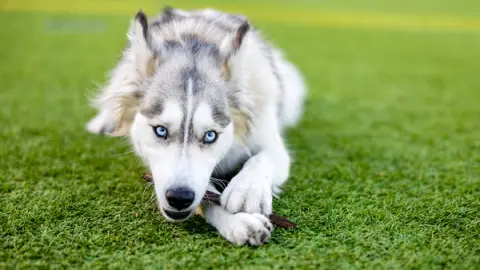
My dog’s not fat; he’s just a little Husky.
“Husky” is both a dog breed and an adjective meaning “big-boned” or “stocky.” The joke suggests the dog is not overweight; he is simply “a little Husky,” blurring the line between body type and breed.
The Dog Who Loves Bubble Baths
What kind of dog loves bubble baths? A Shampoodle.
“Shampoodle” is a made-up word combining “shampoo” and “Poodle.” Because Poodles are known for their fluffy, groomed coats, imagining a Poodle who loves shampoo makes the pun feel especially fitting.
Dracula’s Favorite Dog
What is Dracula’s favorite breed of dog? A Bloodhound!
Dracula is strongly associated with blood, and Bloodhound is a real dog breed known for its powerful sense of smell. The joke simply connects Dracula’s love of blood with the breed name.
The Barking Lot
Where do dogs park their cars? In the barking lot.
This is a beginner-friendly pun. “Parking lot” (car park) becomes “barking lot,” replacing the “p” with a “b” to reference a dog’s bark. It is easy to understand and often used in children’s books and ESL materials.
Avoiding The Hot Dog
Why did the dog stay out of the sun? So he wouldn’t be a hot dog.
A “hot dog” is both a food and, literally, a dog that is too warm. The image of a dog hiding in the shade to avoid becoming a “hot dog” makes this a gentle, kid-friendly joke.
The Herding Dog’s Favorite Game
What’s a herding dog’s favorite game? Hide and sheep.
This pun changes “hide and seek” (the children’s game) to “hide and sheep.” Because herding dogs work with sheep, the twist feels natural and playful.
Birthday Pupcakes
What do you get a dog for its birthday? Pupcakes!
Here, “cupcake” becomes “pupcake,” swapping “cup” for “pup” (a young dog). Many pet bakeries now sell real “pupcakes,” so this pun often shows up in pet birthday posts on social media.
Short Corgi Jokes
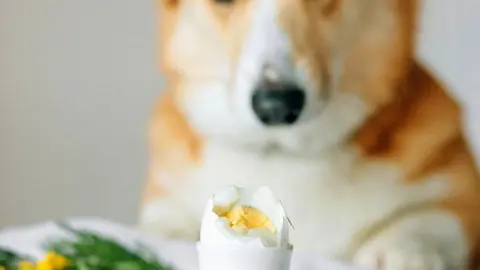
Why aren’t Corgi jokes funny? They’re all really short.
The word “short” has two meanings here: Corgis are famous for their short legs, and a “short joke” can also mean a very brief joke. The humor comes from this double meaning.
The Dog Watching The Mouse
Why did the dog sit in front of the computer? To keep an eye on the mouse!
Dogs naturally chase mice, and computers use a mouse as a pointing device. The idea of a dog “guarding” the computer mouse as if it were a real rodent creates a warm, family-friendly image.
The Barkitect
What do you call a dog who designs buildings? A bark-itect.
This joke blends “bark” (the sound a dog makes) with “architect.” Many English dog jokes follow this pattern of combining a profession with a dog-related word.
The Dog Magician
What do you call a dog magician? A Labracadabrador.
This is a mashup of “Labrador” (the dog breed) and “abracadabra,” a classic magic word. The rhythm and rhyme make it especially fun to say out loud.
The Wealthy Dog
What do you call a dog who inherited a fortune? A pedigree estate.
“Pedigree” refers to a dog’s purebred lineage, and “estate” refers to wealth or property. Together, “pedigree estate” sounds like a very fancy, upper-class dog situation.
The Always-Late Watchdog
What do you call a dog that’s always late? A watchdog.
Normally, a “watchdog” is a guard dog that keeps watch. The joke twists this by focusing on “watch” as in “a timepiece,” suggesting that a dog who is always late is ironically called a “watchdog.”
The Wine-Loving Dog
What’s a dog’s favorite kind of wine? Pooch Merlot.
This pun combines “pooch” (a casual word for dog) with “Merlot,” a popular type of red wine. It is a light, playful joke often appreciated by adult pet parents who enjoy wine culture.
The Social Media Dog
Why did the dog join social media? To get more followers!
On social media, “followers” are people who subscribe to your posts. In real life, dogs love having people follow them around or chase them in play. The overlap between online “followers” and real-life followers makes the joke work.
The Gamer Dog
What’s a dog’s favorite video game? Bark Souls.
This joke riffs on the popular game “Dark Souls.” Replacing “Dark” with “Bark” instantly turns it into a dog-themed title, which resonates with gamers who are also pet parents.
The Pupsicle
What do you call a cold dog? A pupsicle.
A “popsicle” is a frozen ice pop. Swapping “pop” for “pup” creates “pupsicle,” a very cute way to describe a chilly puppy.
The Singing Subwoofer
What kind of dog loves to sing? A subwoofer.
In audio equipment, a “woofer” is a speaker for low sounds, and a “subwoofer” is a powerful low-frequency speaker. Because dogs say “woof,” the word “woofer” becomes a natural dog pun, and a “subwoofer” sounds like a dog who sings in deep tones.
The Bacon Lover
What do you call a dog who loves bacon? A pork-terrier.
This combines “pork” (meat from pigs) and “terrier,” a common dog breed group. The image of a terrier obsessed with bacon makes the pun feel very on-brand for food-motivated dogs.
The Movie Buff Dog
What do you call a dog who loves movies? A barkbuster.
A “blockbuster” is a hugely successful movie. Replacing “block” with “bark” turns it into “barkbuster,” suggesting a dog who is a big fan of hit films.
The College Dog
Why did the dog go to college? To get a bark-elor’s degree.
This pun plays with “bachelor’s degree,” the standard university degree. Swapping the beginning for “bark” creates “bark-elor’s degree,” as if the dog is proudly graduating.
The Math Dog
What’s a dog’s favorite kind of math? Paw-gebra.
Here, “algebra” becomes “paw-gebra,” replacing “al” with “paw,” the word for an animal’s foot. This type of pun is especially common in educational jokes and classroom posters.
The Trom-bone
What’s a dog’s favorite musical instrument? A trom-bone.
Dogs famously love bones, and the word “trombone” already contains “bone.” Emphasizing that part of the word turns a normal instrument into a dog’s dream.
The Space Dog
Why did the dog go to space? To find the barking lot!
This joke revisits the earlier “barking lot” pun. Imagining a dog traveling all the way into space just to find a special barking area adds a layer of absurd, cartoon-style humor.
Paw-sitive Energy Naps
Why do dogs nap during the day? Because they’re working on their paw-sitive energy.
The word “paw-sitive” blends “paw” and “positive.” It suggests that dogs nap to recharge their positive, happy energy, which matches what many pet parents observe in their own dogs.
Sharing Dog Jokes With Confidence
These 30 dog jokes highlight how much English humor relies on puns, idioms, and double meanings. Understanding the wordplay helps pet parents enjoy the jokes more deeply and share them confidently with English speakers.
Consider using a few favorites in everyday conversation, social media captions, or as light icebreakers with fellow dog lovers. With a bit of practice, you will not only remember the punchlines but also start to recognize similar patterns in new English jokes you encounter.
By exploring playful language through dog jokes, you strengthen both your bond with your dog-loving community and your comfort with real-world English. That is a win for you, your sense of humor, and every pup who brightens your day.
- 03.20.2026
- 10.29.2025