Why Cats Suddenly Bite Their Pet Parents And How To Safely Calm Redirected Aggression

This article is an English translation of the original Japanese article. Read the original Japanese version.
Has your sweet, purring cat suddenly turned, hissing and biting without warning? Learn what redirected aggression is, why it happens, and the expert-backed steps you can take to keep everyone safe and gently rebuild trust.
Key takeaways
Q. What is redirected aggression in cats?
It is an instinctive aggressive reaction where a cat, unable to confront the real source of fear or anger, redirects its aggression to someone nearby.
Q. How should I respond when my cat shows redirected aggression?
Do not shout or cuddle; instead, avoid eye contact, quietly move away to another room, and leave the cat alone until it calms down.
Q. How can I adjust the environment to prevent redirected aggression from recurring?
Block views of outside cats with curtains or film and regularly relieve your cat’s energy and stress through hunting-style play.
Why Your Cat’s Anger Or Fear Suddenly Changes Targets
Many pet parents are stunned when a cat who was just purring in their lap suddenly hisses, swats, or bites. It can feel personal and confusing, especially when you know your cat usually adores you.
Behavior experts explain that this is often a form of redirected aggression. The same psychological pattern exists in humans: when we are frustrated by something we cannot control, we sometimes snap at someone close to us instead. Cats, who cannot use words to process their fear or frustration, experience a similar emotional overflow.
Redirected aggression occurs when a cat cannot directly confront the real source of their anger or fear, so that intense energy spills over onto the nearest available target. This might be a pet parent, another cat in the home, or even a piece of furniture.
For cats whose roots lie in the wild, the surge of adrenaline released in a moment of perceived danger is enormous. When they cannot discharge that powerful energy toward the actual “threat,” their nervous system can feel overloaded. In that extreme state, many cats lose the ability to apply the usual “brakes” on their behavior and may lash out at whoever happens to be in front of them.
It is crucial to understand that your cat is not choosing to hurt you out of malice. What you are seeing is a stress response that has exceeded their coping capacity. Recognizing this can make the experience feel less like a betrayal and more like a medical and behavioral emergency that needs calm management.
Common Triggers That Lead To Redirected Aggression
So what kinds of everyday events can upset a cat so deeply that they redirect their fear or anger? In many homes, the triggers are subtle and easy for humans to overlook.
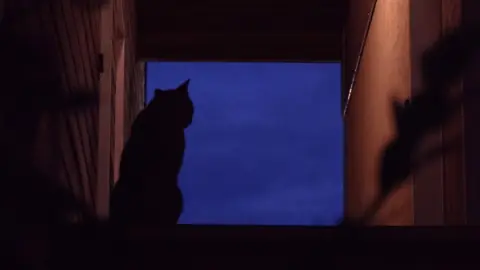
One of the most common triggers is the sight of another cat or animal outside the window. From your cat’s perspective, a strange animal appearing at the edge of their territory is a serious intrusion. When a solid pane of glass prevents them from chasing the intruder away, the frustration can be intense. A cat who is staring out the window, tail lashing from side to side and growling or chattering, is already highly aroused.
If a pet parent approaches to pet or pick up the cat at that moment, the cat may suddenly whirl around and bite or scratch. The cat’s brain simply redirects the pent-up aggression toward the closest target because the true “enemy” is unreachable.
Sudden loud noises are another major trigger. Construction work in the neighborhood, a blaring ambulance siren, fireworks, or even a heavy object dropped in the home can all be terrifying. Because cats have far more sensitive hearing than humans, an unexpected boom or crash can feel like a life-threatening event.
In addition, unfamiliar smells can trigger redirected aggression.
Loading...
For example, if a pet guardian pets another cat while out of the house and then comes home with that scent on their hands or clothing, their own cat may react with intense suspicion. The invisible “intruder” smell can cause confusion and fear, which may spill over into aggressive behavior toward the very person they usually trust.
What Not To Do When Your Cat Attacks And How To Make An Emergency Exit
When a cat goes into a redirected aggression episode, your first priority is safety. Experts strongly advise avoiding certain instinctive reactions that can make the situation worse.
Do not scream, yell, or punish your cat. A high-pitched voice, sudden movements, or physical punishment will almost always escalate the cat’s panic. In that moment, your cat’s brain is in survival mode, and any additional threat can intensify the attack.
It may also feel natural to try to scoop your cat up, hug them, or soothe them with close contact. Unfortunately, attempting to comfort a cat who is in full fight-or-flight mode can backfire. Being restrained may feel like being trapped, which can trigger even more frantic aggression.
Behavior specialists recommend a simple but effective emergency protocol: avoid eye contact, stay silent, and calmly move away from your cat. Do not turn your back abruptly or run; instead, slowly back out of the room while keeping your body sideways and nonthreatening.
Once you are safely in another room, gently close the door to create a barrier. This gives your cat a quiet, secure space to cool down without additional stimulation. Think of it as a “decompression room” rather than a punishment.
The time needed for a cat to return to baseline can vary widely. Some cats settle within 20–30 minutes, while others may remain on edge for many hours or even a few days. During this period, observe from a distance. Watch for signs that your cat is returning to normal, such as relaxed body posture, soft facial expression, grooming, and eating or drinking as usual.
Only when your cat appears fully calm should you consider re-entering the space or approaching more closely, and even then, move slowly and respectfully.
Creating A Safer Environment To Prevent Future Episodes
Once your cat has calmed down, the next step is prevention. If you do not address the underlying trigger, redirected aggression is likely to recur.
If outdoor cats or other animals visible through the window seem to be the main cause, environmental management is key. Experts recommend blocking or softening the visual access to those stressors. You might:
- Hang heavier curtains or blinds over problem windows
- Apply frosted or privacy film to the lower half of windows
- Move cat trees or favorite perches away from high-stress views
Simply removing the sight of unfamiliar cats can dramatically reduce territorial arousal and help your cat feel that their home is secure.
In addition, structured playtime is essential for stress relief. Many indoor cats do not get enough opportunities to express their natural hunting behaviors, which can leave them with a constant low-level frustration that makes big reactions more likely.
Try offering daily sessions that include vertical movement on cat trees, interactive wand toys that mimic prey, and chase-and-pounce games. After a vigorous play session, end with a small treat or a portion of their regular meal to simulate a successful hunt. This sequence—stalk, chase, catch, eat—helps satisfy deep instinctual needs and can lower overall stress.
By combining trigger management with regular, enriching play, you give your cat healthier outlets for their energy and emotions.
Reintroducing Cats After Redirected Aggression In Multi-Cat Homes
In multi-cat households, redirected aggression often lands not on a human, but on a feline housemate. Two cats who previously slept curled up together may suddenly be locked in serious conflict after one frightening incident.
When this happens, many behaviorists recommend a careful reintroduction process, often called “reintroduction” or “re-intro,” similar to introducing unfamiliar cats for the first time. Rushing this step can permanently damage the relationship.
Start by completely separating the cats’ living spaces. Each cat should have their own room with food, water, litter, resting spots, and hiding places. They should not be able to see or physically reach each other. This separation allows both cats’ stress levels to reset.
After several days of calm, begin scent swapping. Exchange bedding, towels, or grooming brushes between the cats so they can smell each other without direct contact. If either cat hisses, growls, or shows intense fear at the scent, slow down and continue scent work until their reactions soften.
When both cats can investigate the other’s scent without obvious distress, move to mealtimes on opposite sides of a closed door. Place their food bowls a short distance from the door and gradually move them closer over multiple sessions. The goal is to create a positive association: the presence of the other cat’s scent and sounds predicts something enjoyable—food.
Next, you can progress to brief visual contact through a barrier, such as a baby gate covered partially with a towel, or a secure crate or carrier. Keep these sessions short and end them on a calm note. Watch closely for body language: relaxed tails, soft eyes, and quiet sniffing are good signs; flattened ears, growling, or lunging mean you need to slow down.
Only when both cats consistently remain relaxed during these controlled interactions should you consider supervised time together in the same room. Even then, keep sessions short at first and provide multiple escape routes and high perches so neither cat feels trapped.
This process can take several weeks to several months. Patience is critical. Forcing the cats back together too quickly can reignite aggression and make future repair much harder.
Healing Your Bond And Moving Toward Lifelong Trust
Being attacked by a beloved cat is emotionally painful as well as physically frightening. Many pet parents feel anxious about approaching their cat afterward or worry that the relationship is permanently damaged.
It is important to remember that redirected aggression is a temporary, fear-driven reaction, not a sign that your cat no longer loves or trusts you. Your cat’s underlying bond with you is still there, even if it is briefly overshadowed by stress.
Focus on small, low-pressure interactions. From a comfortable distance, speak to your cat in your usual calm, gentle tone. You might sit on the floor and quietly read or work while allowing your cat to choose whether to come closer. Offering high-value treats tossed gently in their direction can help rebuild positive associations with your presence.
Let your cat set the pace. If they approach you, allow them to initiate contact by sniffing or rubbing against you before you reach out to pet them. Over time, these respectful, predictable interactions help your cat feel safe again.
Above all, trust that healing takes time. With patience, environmental adjustments, and a commitment to understanding your cat’s emotional world, most pet guardians find that their cats return to their familiar, affectionate selves. In many cases, navigating a challenge like redirected aggression together can even deepen the bond, as you learn to read your cat more accurately and advocate more effectively for their comfort.
By staying curious, compassionate, and proactive, you are laying the foundation for a calmer home and a lifetime of mutual trust with your feline companion.
- 03.23.2026