Do Cats Really Need Walks Outdoors? What Pet Parents Should Know About Hidden Risks
This article is an English translation of the original Japanese article. Read the original Japanese version.
Seeing cats on harnesses in parks and city streets can make outdoor walks look fun and enriching. But for most cats, the world beyond the front door brings far more stress and risk than benefit. Learn why experts say a well set up indoor home is usually the safest, happiest choice.
Key takeaways
Q. Is walking a cat really necessary?
In most cases, walks are unnecessary for cats; a well-prepared indoor environment is enough for their well-being.
Q. What risks are there when taking a cat for a walk outside?
There are many dangers: escape, traffic accidents, contact with other animals, fleas, ticks, infections, and post-walk stress.
Q. How can I satisfy my cat indoors instead of walking it?
You can safely provide stimulation and exercise with cat towers, steps, hiding spots, window setups, puzzle toys, and automatic toys.
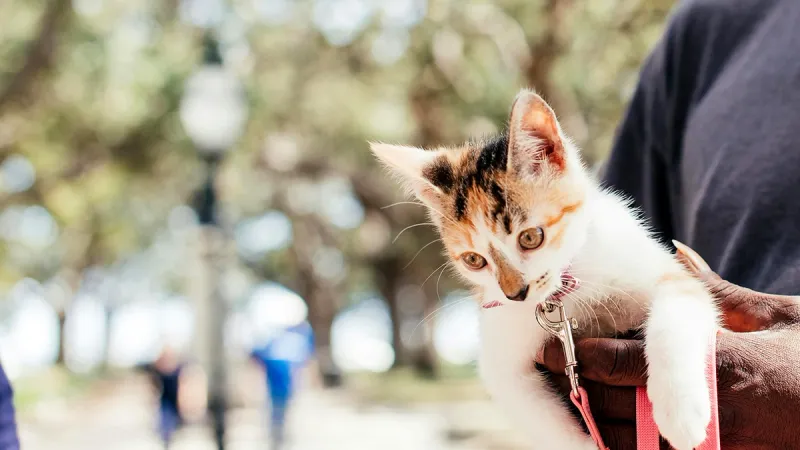
In recent years, more pet parents have started taking their cats out on harnesses and leashes. It can look adorable and adventurous, especially on social media, and may leave you wondering whether your own cat is missing out.
From a feline behavior standpoint, however, a cat’s idea of a “walk” is very different from a dog’s. Most cats do not need outdoor walks to live a healthy, fulfilled life, and for many, being taken outside is more frightening than fun.
Do Cats Actually Need Walks?
Behaviorists and veterinarians generally agree that the average indoor cat does not need to go for walks. As long as your cat has a safe, enriched indoor environment, they can stay physically healthy and mentally stimulated without ever stepping outside.
Cats are, by nature, creatures of habit. They thrive on predictability and familiar territory. New smells, sudden noises, unfamiliar people, and traffic sounds are not “exciting” for most cats. Instead, these are often interpreted as potential threats, triggering stress and a strong urge to hide or escape.
Outdoor walks can sometimes provide extra exercise or a change of scenery. However, nearly all of these benefits can be safely recreated indoors with thoughtful environmental enrichment such as vertical spaces, window views, and interactive play.
Before deciding to take your cat outside, it is worth asking a simple question. Is a brief burst of novelty really worth exposing your cat to significant stress and risk? For most cats, the answer is no.
Only a Small Number of Cats Truly Tolerate Walks
There are certainly exceptions. Some cats are naturally more confident and adaptable than others. These individuals may cope reasonably well with carefully managed outdoor time on a harness.
Cats that may be more likely to handle outdoor walks include those who:
- Stay calm around new sounds and people
- Show strong curiosity rather than fear in unfamiliar situations
- Have previous experience living outdoors or as indoor–outdoor cats
Even in these cases, success is not guaranteed. Each cat is an individual, and tolerance for change can vary widely.
In contrast, most companion cats share traits that make outdoor walks stressful rather than enjoyable, such as:
- Fear of unfamiliar smells, noises, or environments
- Dislike of being picked up or confined in a carrier
- High sensitivity to changes in routine or surroundings
- A tendency to panic and become difficult to control when frightened
For these cats, being taken outside is not a pleasant “outing.” It is more likely to feel like a forced ordeal. What looks like an adventure to a pet guardian may feel like a survival situation to the cat.
The Hidden Risks of Taking Cats Outdoors
Any time a cat is taken outside, even on a harness, there are real risks that pet parents need to consider. These risks often outweigh the limited benefits of a short walk.
Common concerns include:
- Escape and getting lost if the harness is not perfectly fitted or the cat panics
- Conflicts or injuries from encounters with unfamiliar animals or people
- Traffic dangers from cars, bicycles, or scooters in busy areas
- Exposure to parasites and infectious diseases, including fleas, ticks, and certain viruses or bacteria
- Post-outing stress, which can show up as hiding, reduced appetite, digestive upset, or changes in behavior
Even a single frightening incident can have lasting effects on a sensitive cat. A moment of panic outdoors can lead to a lost pet, an injury, or a long-term fear response.
It is easy to assume that “they will get used to it,” but this is not always true. Some cats may gradually tolerate outdoor walks, while others become more anxious over time. Before focusing on getting your cat used to the outside world, it is worth asking whether they truly need to adapt to that environment at all.
Why Indoor Life Can Be Safely Fulfilling
For cats, happiness is not defined by how far they roam. A secure, predictable territory where they feel completely safe is their entire world. That territory can be your living room, not a park or busy street.
With the right setup, indoor-only cats can be highly active, curious, and content. Consider providing:
- Vertical spaces such as cat trees, shelves, or window perches
- Cozy hiding spots like covered beds, boxes, or tunnels
- Safe vantage points near windows so your cat can watch birds, people, and the changing light
To a cat, watching the world from a sunny windowsill, exploring different levels in the home, or curling up in a favorite hideaway can feel like a full day of adventure. These experiences satisfy their natural instincts without exposing them to outdoor hazards.
In addition, there is now a wide range of interactive toys and puzzle feeders designed specifically to enrich indoor life. Timed toys, treat-dispensing puzzles, and wand play sessions can provide both mental and physical exercise that rivals what they would get on a short walk.
By focusing on indoor enrichment, pet guardians can reduce stress and health risks while still meeting their cat’s needs for movement, exploration, and play.
Avoid Letting Human Expectations Drive the Decision
Walks with cats often gain attention online because they are visually striking and unusual. This can unintentionally shift the focus from the cat’s comfort to the human desire for novelty or shareable moments.
When considering outdoor walks, it helps to pause and ask: Is this truly for my cat, or is it more for me? If your cat trembles, hides, or seems exhausted after each outing, their behavior is sending a clear message.
Wanting to give your cat more exercise or stimulation is a loving instinct. However, if that goal leads to repeated outings that your cat finds frightening, the result is the opposite of what you intend. From the cat’s perspective, they are being repeatedly placed in a stressful situation they cannot control or escape.
What most cats need is not a dramatic change of scenery. They need a place where they feel completely safe, understood, and free to be themselves. That sense of security is far more valuable than a walk around the block.
Choosing What Truly Serves Your Cat
It is possible to train some cats to walk on a harness and leash, and in specific cases, carefully managed outdoor time can be appropriate. However, for the vast majority of cats, the potential stress and safety risks outweigh any modest benefits of going outside.
Cats are territorial animals who prioritize feeling safe within a familiar space. Rather than focusing on exposing them to the “outside world,” pet parents are usually better off investing in ways to make the current home environment richer, safer, and more engaging.
By tuning in to your cat’s body language and respecting their comfort level, you can make choices that support their emotional and physical well-being. Your cat does not need to walk through the neighborhood to live a full, happy life. They need a home where they can relax, explore, and trust that they are safe.
Building a Lifetime of Comfort and Trust
Ultimately, the goal is not to create picture-perfect moments but to build a relationship based on trust. When you prioritize your cat’s sense of security over trends or expectations, you show them that their feelings matter.
Focus on what your individual cat is telling you. Provide enriching indoor spaces, regular play, and a calm, predictable routine. In doing so, you offer them something far more valuable than a walk outdoors.
By choosing safety, comfort, and respect for your cat’s nature, you are laying the foundation for a lifetime of mutual trust and quiet, contented companionship.
- 03.20.2026
- 07.08.2025