9 Clear Signs Your Cat Is Completely Smitten With You
This article is an English translation of the original Japanese article. Read the original Japanese version.
Cats have a reputation for being cool and independent, but a truly bonded cat shows their love in surprisingly tender ways. Discover 9 science-backed trust signals that tell you your cat feels safe, relaxed, and genuinely happy by your side.
Key takeaways
Q. What does it mean when a cat rubs its body against you?
It is marking you with its scent to show you are a safe companion, a sign of affection and trust.
Q. How should I respond when my cat lies on its back and shows its belly?
It’s a strong trust sign, but some dislike belly touches, so stop petting immediately if it shows discomfort.
Q. How should an owner respond to slow blinks or headbutts from a cat?
Return a slow blink or gently pet after a headbutt to convey safety and affection back to your cat.
1. Rubbing Their Body Against You
When your cat weaves around your legs or rubs their body, head, or tail base against you, it is much more than simple affection. Cats have scent glands on their cheeks and near the base of the tail, and by rubbing, they are depositing their scent to mark you as part of their safe social group.
In feline social behavior, this gentle “scent marking” often means this is mine and I feel good about it. If your cat greets you at the door or rubs against you before bed, consider it a strong sign that they see you as a trusted companion and feel secure in your presence.
2. Purring Softly Around You
The familiar rumble of a cat’s purr is one of the clearest indicators of contentment. Many cats purr when they are relaxed, being gently stroked, or enjoying quiet time with their Pet Guardian. In most calm situations, purring reflects comfort, safety, and positive social bonding.
Veterinary behavior experts note that some cats may also purr when they are anxious or in pain, often as a self-soothing mechanism. However, if your cat is purring with a soft body, half-closed eyes, and a relaxed posture on your lap or beside you in bed, it is very likely their way of saying, I feel happy and safe with you right now.
3. Slow Blinking While Looking At You
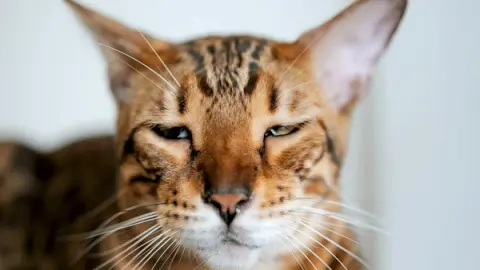
If your cat meets your gaze and then slowly closes and opens their eyes, you are witnessing what many behaviorists call the “slow blink.” In the feline world, narrowing the eyes and blinking slowly is a powerful signal of trust and non-aggression.
Direct, unblinking eye contact can be threatening between cats, so choosing to soften their gaze around you is a sign they feel no need to be on guard. Try slowly blinking back at your cat. Many Pet Parents find that mirroring this behavior helps their cat relax even more, creating a gentle form of eye contact that feels like a quiet, mutual I trust you.
4. Showing You Their Belly
A cat’s belly is one of the most vulnerable areas of their body, protecting vital organs. When a cat rolls onto their side or back and exposes their stomach near you, they are signaling that they feel safe enough to let their guard down.
This does not always mean they want belly rubs. Some cats enjoy gentle strokes there, while others find it overstimulating and may react defensively if touched. Respecting your cat’s preferences is key. If they stiffen, swat, or grab your hand, calmly withdraw and focus on areas they clearly enjoy being petted, such as the cheeks or shoulders.
Even if they do not want you to touch their belly, the act of stretching out and exposing it in your presence is still a major vote of confidence and a strong indicator of deep trust.
5. Sitting In a Loaf or “Tucked” Position Near You
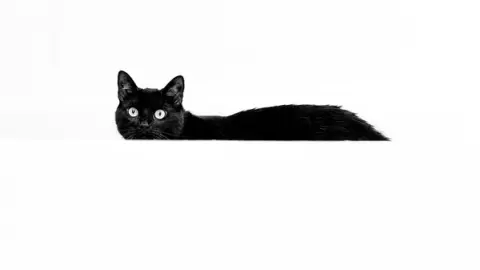
The classic “cat loaf” or “tucked paws” position, where your cat folds their front paws neatly under their chest, is more than just cute. In this posture, a cat cannot instantly spring away or defend themselves as easily, so they usually adopt it only when they feel calm and unthreatened.
If your cat frequently settles into this compact, relaxed pose close to you—on the sofa, at your feet, or on your desk—it suggests they view your presence and the environment as safe. When they start to doze off in this position, eyes slowly closing and body softening, it is a strong sign that they are not just comfortable, but deeply at ease around you.
6. Following You From Room to Room
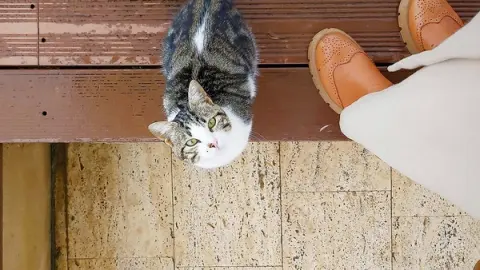
Some cats are more independent, while others become little shadows, quietly trailing their Pet Guardian around the home. If your cat consistently follows you—from the living room to the kitchen, to the bathroom, and back again—they are showing that your presence is a source of security and interest.
This behavior is especially common in cats that have a strong social bond with their human. They may:
- Walk just behind or beside you
- Pause in doorways to watch what you are doing
- Wind around your legs or sit near your feet
While it can occasionally be a tripping hazard, this close following is often a leftover behavior from kittenhood, when staying near a caregiver meant safety. For many adult cats, staying close to you is their way of playing, exploring, and relaxing with confidence.
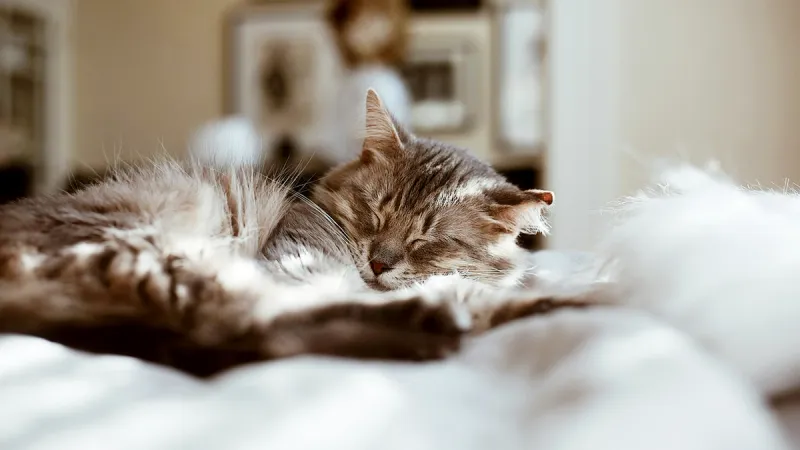
7. Wanting To Sleep Right Next To You
Sleep is one of the most vulnerable states for any animal. Cats spend many hours a day resting, and they are selective about where and with whom they choose to sleep. If your cat regularly curls up on your pillow, at your feet, or even under the covers, they are making a clear statement that they feel protected and secure by your side.
From a behavioral standpoint, choosing to sleep near you means your scent, warmth, and presence are associated with safety. Many Pet Parents notice that their cats return to the same favorite sleeping spots near them night after night. This consistent choice is a strong indicator of a deep, trusting bond.
8. Vocalizing To “Talk” With You
Cats have a wide range of vocalizations—meows, chirps, trills, and soft “mrrp” sounds. Interestingly, research suggests that adult cats use many of these sounds primarily to communicate with humans, not with other cats. In other words, your cat may be tailoring their voice specifically for you.
If your cat looks at you and meows, chirps, or trills, they may be:
- Requesting food or treats
- Asking for play or attention
- Greeting you after you have been away
- Simply seeking interaction and reassurance
When the tone is soft and the body language is relaxed—tail held gently upright, ears forward, eyes calm—those gentle sounds often mean stay with me or I like being near you. Responding with a calm voice, gentle touch, or a short play session can reinforce this positive communication loop.
9. Gently Bumping Their Head Against You
A soft head bump to your hand, arm, or face—often called a “head bunt” or “head butt”—is one of the most intimate feline gestures. Cats have scent glands on their forehead, and pressing or rubbing this area against you is a strong social bonding behavior reserved for trusted companions.
Among cats, this behavior is typically seen between individuals that share a close relationship, such as bonded pairs or family members. When your cat chooses to do this with you, they are effectively including you in their inner circle. Respond by gently stroking their head or cheeks, speaking softly, and giving them a moment of undivided attention. This helps reinforce the message that the bond is mutual.
Strengthening a Lifetime Bond With Your Cat
Cats may not use words, but their bodies, voices, and daily routines communicate a great deal about how they feel. Each rub, purr, slow blink, and head bump is part of a rich, instinctive language that tells you when your cat feels safe, loved, and connected.
To deepen this bond over time, consider focusing on a few key habits:
- Respect their boundaries by watching for signs of overstimulation and giving them space when needed
- Offer predictable care with regular feeding, play, and quiet time together
- Respond to their signals—answer their meows, return their slow blinks, and acknowledge their affection
When a cat learns that their needs are met consistently and kindly, their trust grows. As you continue to read and honor these subtle signs, you are not just caring for your cat’s physical health—you are also nurturing a lifelong, secure, and loving relationship that benefits both of you.
- 03.20.2026
- 10.22.2025