When A Cornered Mouse Bites The Cat Lessons On Power, Pressure, And Respect
This article is an English translation of the original Japanese article. Read the original Japanese version.
We often assume the biggest, strongest animal always wins. Yet even the smallest creature can fight back when it has nowhere left to run. Discover what the proverb "a cornered mouse will bite the cat" reveals about animal instinct, human psychology, and how we treat others.
Key takeaways
Q. What kind of situation does the proverb 'Kyūso neko o kamu' describe?
It is a proverb that describes a usually powerless weaker side making an unexpected counterattack when cornered with no escape.
Q. Where does the proverb 'Kyūso neko o kamu' originate from?
Its root is the phrase 'Kyūso byo o kamu' in the Chinese book 'Yantie Lun' from the Former Han period, created as a warning to the powerful not to corner the weak too much.
Q. What lesson can people today learn from 'Kyūso neko o kamu'?
It teaches us not to look down on the weak or corner others, and to remember anyone can be either mouse or cat, so we must respect each other's dignity.
If you grew up watching Tom and Jerry, the idea of a tiny mouse chasing off a cat might feel like pure cartoon slapstick. In reality, the old proverb about a cornered mouse biting the cat carries a much deeper message about instinct, power, and how far any living being can be pushed.
In this article, we will explore what this saying means, where it comes from, how similar ideas appear in Western culture, and what it can teach modern pet parents and pet guardians about respect, boundaries, and emotional safety.
What It Really Means When A Cornered Mouse Bites The Cat
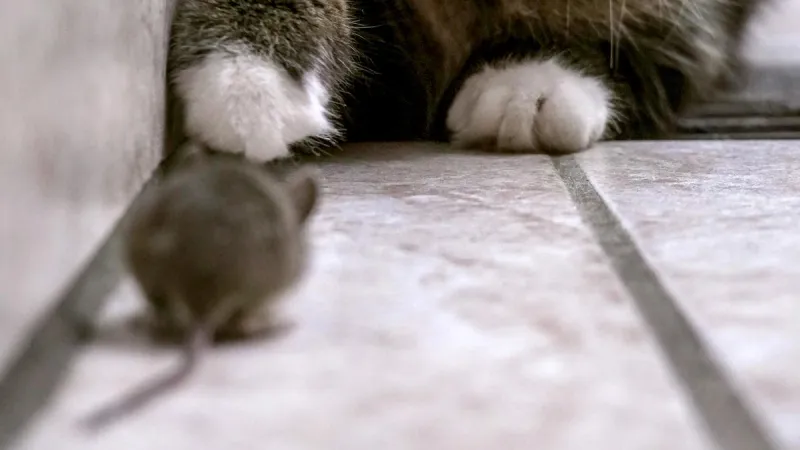
The proverb is often summarized as a weak or usually powerless individual can launch a surprising counterattack when pushed to the brink. Literally, it describes a mouse that normally has no chance against a cat, but when trapped with no escape, it turns and bites.
At its core, the phrase carries two powerful reminders. First, never underestimate the so‑called weaker side. Second, even those in a position of strength must not become careless or cruel. The image is not just about a feel‑good comeback story; it captures the raw, instinctive surge of energy that appears when survival is on the line.
In other words, this is less about a heroic underdog victory and more about what happens when any living being is pushed past its limit. That moment of desperate resistance is what gives the proverb its lasting emotional impact.
Ancient Roots In Chinese Thought
The idea behind the cornered mouse is not uniquely Japanese. Historical records trace its roots back to ancient China. In a political dialogue collection from the Former Han dynasty, known as Yantielun (Discourses on Salt and Iron), there is a phrase that can be translated as a cornered mouse bites the cat.
This text discussed national economic policy, social order, and how power should be used. Within that context, the proverb appears as a warning to those in power. If the ruling class or authorities push the weak too far, they should expect resistance, even from those who seem harmless.
Over time, the expression traveled and evolved. In Japan, it spread from the medieval period through the Edo era, becoming part of samurai teachings and everyday wisdom. For warriors, it reinforced the idea that even an apparently weak opponent must not be mocked or cornered without mercy. Among common people, it became a life lesson about dignity, self‑protection, and the risks of pushing others too hard.
A Shared Idea Across East And West
The message behind the cornered mouse is not limited to East Asia. Western cultures developed remarkably similar sayings, which suggests this insight is universal rather than regional.
In English, you can find almost the same proverb in the form "A cornered rat will bite the cat." The wording may change slightly depending on the source, but the meaning is consistent. When there is no way out, even a timid animal will fight back.
Another well‑known English proverb is "Even a worm will turn." On the surface, a worm seems completely defenseless. Yet the saying reminds us that even the gentlest, most vulnerable creature will resist if mistreated for too long. Historical collections of English proverbs from the 16th century already include this phrase, showing how long people have recognized this pattern.
Across cultures, these expressions all point to the same truth. The power of someone who has been cornered or oppressed is easy to overlook, but dangerous to ignore. Whether we are talking about animals, colleagues, family members, or entire communities, there is always a breaking point.
Do Real Mice Actually Fight Back
From a behavioral standpoint, the proverb is not just poetic. It reflects how real animals, including rodents, respond when they feel trapped. Under normal conditions, mice are extremely cautious. Their first instinct when they sense danger is to flee, hide, or freeze.
However, when every escape route is blocked and the threat is immediate, their behavior can change dramatically. A mouse that would usually run will sometimes lunge, squeal, and bite with surprising intensity. This is not because the mouse suddenly becomes brave in a human sense, but because its survival systems have switched into emergency mode.
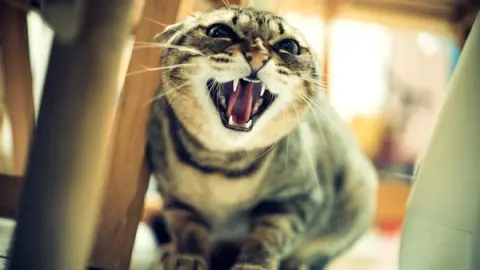
For pet guardians, this has practical implications. A small animal that seems gentle and shy can still bite or scratch if it feels there is no safe way out. This is not “bad behavior” so much as a last‑ditch survival response.
Defensive Aggression And Modern Psychology
Psychology and behavioral science use the term defensive aggression to describe this kind of reaction. Defensive aggression occurs when an animal or person feels trapped, terrified, or under extreme pressure, and sees no option other than to fight.
Research suggests that when escape is impossible, the brain’s fear circuits can trigger powerful physical responses. Heart rate and breathing increase, muscles tense, and the body prepares for a sudden burst of action. In animals, this may look like biting, scratching, lunging, or loud vocalizations. In humans, it can appear as shouting, sudden defiance, or intense emotional outbursts.
Importantly, defensive aggression is not the same as cruelty or unprovoked attack. It is better understood as a final protective barrier. People who have endured long‑term stress, bullying, or emotional pressure may seem quiet and compliant for a long time, then suddenly push back strongly. From the outside, this can look like an overreaction, but from the inside, it often feels like the only remaining way to stay safe.
Seen in this light, the proverb about the cornered mouse is not just moral advice. It also reflects a basic survival mechanism shared by many species, including humans.
What This Means For Pet Parents And Pet Guardians
So how does an old proverb about a mouse and a cat apply to modern life with pets and people
For pet parents and pet guardians, it highlights the importance of respecting boundaries and avoiding situations where an animal feels trapped. Consider the following principles when interacting with your pets:
- Provide a clear escape route. When handling cats, small mammals, or other sensitive animals, make sure they have a way to move away if they feel uncomfortable.
- Watch for early stress signals. Flattened ears, tail flicking, crouching, hiding, or freezing can all be signs that your pet is feeling pressured.
- Avoid cornering or restraining unnecessarily. Gentle, gradual handling is safer and more humane than forcing contact.
- Use positive reinforcement. Reward calm, voluntary interaction instead of pushing your pet into situations they are not ready for.
Experts recommend focusing on choice and control. When animals are allowed to approach at their own pace and retreat when they need to, they are far less likely to resort to defensive aggression.
The same logic applies to human relationships. In families, workplaces, and communities, constantly pressuring or belittling someone can eventually trigger a strong backlash. Respecting personal space, listening to concerns, and easing unnecessary pressure can prevent conflicts from escalating to that “cornered mouse” stage.
Choosing Respect Over Domination
Ultimately, the proverb about a cornered mouse biting the cat is not just about admiring the underdog’s courage. It is also a warning against using power carelessly. Whenever one side tries to dominate completely, the relationship becomes unstable.
In daily life, any of us can find ourselves in the role of the mouse or the cat. Sometimes we feel small, unheard, or pushed into a corner. Other times, we may be the ones holding more power, whether as a manager, a parent, or a pet guardian. Recognizing this shifting balance is the first step toward more compassionate choices.
For those who care for animals, the goal is not to be the cat that corners the mouse, nor the mouse that must bite to survive. Instead, aim to be the calm, reliable presence that offers safety, options, and respect. When we create environments where neither side feels trapped, defensive aggression becomes far less likely.
Building A Life Based On Safety And Trust
The story of the cornered mouse reminds us that every living being, no matter how small, carries a powerful instinct to protect itself. When we ignore that instinct, we invite conflict. When we honor it, we build trust.
As pet parents and pet guardians, you have the opportunity to shape a world where your animals never have to feel cornered. By respecting their boundaries, reading their signals, and avoiding unnecessary pressure, you help them feel secure enough to relax and connect.
The same mindset can transform how we treat one another. If we remember that anyone can become that cornered mouse under enough strain, we are more likely to choose empathy over control. In doing so, we move closer to a life built not on fear and resistance, but on mutual safety, understanding, and lasting trust.
- 03.20.2026
- 11.03.2025