Why Your Cat Sleeps Facing Left And What Their Favorite Side Reveals About Their Brain
This article is an English translation of the original Japanese article. Read the original Japanese version.
Have you noticed your cat always seems to nap on the same side, often facing left? New research suggests this isn’t just a cute quirk but may be linked to how your cat’s brain processes information and stays ready for danger, with important clues for health monitoring.
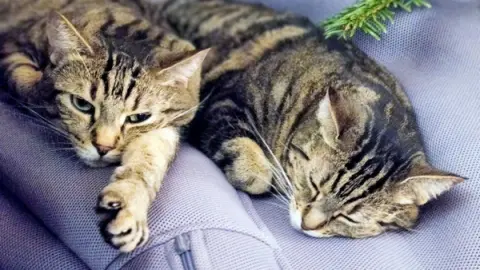
In recent years, pet parents have become more attentive than ever to the subtle details of their cats’ daily lives. One surprisingly meaningful detail is the direction your cat prefers when they sleep. If you start paying close attention, you may notice a pattern – and for many cats, that pattern is sleeping with the left side down.
A new study suggests this is not a coincidence. Instead, it may be tied to how the feline brain is wired to protect them, even during deep sleep.
A New Look At How Cats Choose Their Sleeping Side
In June of this year, a research team published a study in the respected journal Current Biology titled “Lateralized Sleeping Positions in Domestic Cats.” The work was carried out by an international group of scientists from the University of Bari Aldo Moro in Italy, Ruhr University Bochum in Germany, and the University Medical Center Hamburg-Eppendorf, among others.
Rather than focusing on general sleep habits, the researchers asked a very specific question. They wanted to know whether cats show a consistent left–right bias in their sleeping posture and what that might reveal about the brain and behavior. This approach comes from the fields of animal behavior and neuroscience, where scientists often look for “lateralization” – differences between the left and right sides of the body or brain.
How YouTube Helped Scientists Study Sleeping Cats
Instead of bringing cats into a laboratory, the team turned to a very modern data source. They analyzed 408 cat videos uploaded to YouTube to see which side cats preferred when lying down to sleep.
At first glance, this might sound casual, but the selection process was actually very strict. Each video had to meet all of the following conditions:
- The cat had to be fully lying on its side, not just loafing or half-sitting.
- The cat needed to maintain the same position for at least 10 seconds.
- The footage could not be mirrored or flipped, and edited or reversed clips were excluded.
- The cat had to be alone in the frame, so other animals or people would not interfere with the assessment.
Only videos that met these criteria were included. The researchers then carefully judged which shoulder was against the ground in each clip. This creative use of online “cat content” is a powerful example of how everyday videos can be turned into meaningful scientific data.
Most Cats Prefer To Sleep On Their Left Side
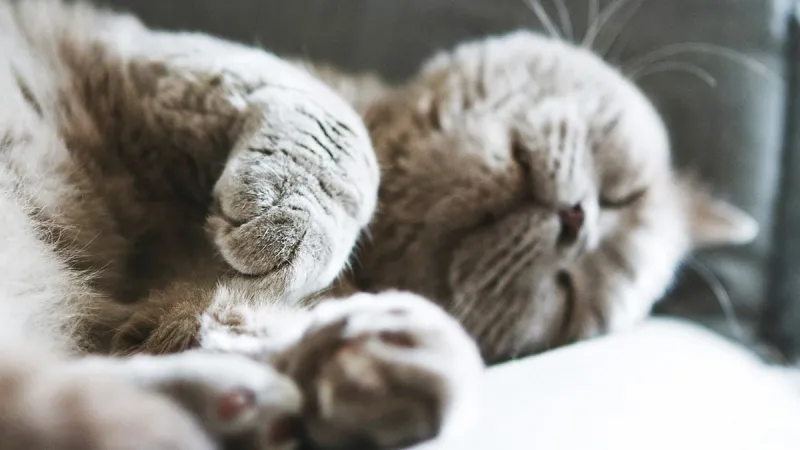
When the team analyzed the 408 qualifying videos, a clear pattern emerged. About two thirds of the cats were sleeping with their left shoulder down. Statistical testing showed that this was not just random chance. Instead, it indicated a real, measurable bias.
In other words, the study concluded that domestic cats show lateralization in their sleeping posture, with a noticeable tendency to favor the left side. This does not mean that every individual cat will always sleep left-side down. Some will prefer the right, and many will switch sides from time to time. However, when you look at cats as a group, the overall trend toward the left side is strong.
Why Do So Many Cats Sleep Facing Left
The natural next question is simple but fascinating. Why the left side and not the right? To answer this, the researchers looked at how the brain is organized.
When a cat lies with the left side of the body down, the right side of the body and the right visual field are more exposed and unobstructed. As the cat wakes up, the first visual information entering the eyes is processed primarily by the right hemisphere of the brain.
The right hemisphere is strongly involved in:
- Spatial awareness and orientation
- Rapid escape or avoidance responses
- Threat detection, prediction, and vigilance
From an evolutionary standpoint, this makes sense. By sleeping with the left side down, a cat may be positioning itself so that its right brain is primed to react quickly to potential danger. In practical terms, this posture could support faster responses to sudden sounds, movements, or threats in the environment.
While more research is needed to fully confirm the mechanism, the current evidence strongly suggests that sleeping on the left side may be part of a built-in survival strategy rather than a random preference.
What This Means For Pet Parents Day To Day
For most pet guardians, the key takeaway is reassuring. If your cat consistently prefers one side, whether left or right, and this has always been their habit, there is usually no cause for concern. Many healthy cats simply have a favorite sleeping side.
However, this research also highlights an important point. Seemingly small changes in sleeping posture can sometimes signal discomfort or illness. It is worth paying attention if you notice any of the following:
- A cat that always slept on the left suddenly starts sleeping only on the right, or vice versa.
- Your cat seems to avoid putting weight on one shoulder or one set of legs, choosing positions that protect or hide that area.
- You observe changes around sleep, such as slower, stiffer movements on waking or, conversely, unusual jumpiness or overreaction when disturbed.
These shifts can be subtle, but they may point to joint pain, internal discomfort, or possible nerve-related issues. In some cases, they could be early clues to arthritis, injury, or other medical problems.
If you notice a clear, persistent change in your cat’s usual sleeping side or posture, consult your veterinarian promptly. Bringing photos or short videos of your cat’s typical and changed sleeping positions can be extremely helpful for your vet’s assessment.
How This Research Could Shape Future Animal Care
The current findings apply specifically to domestic cats and their preferred sleeping side. Still, they open the door to many new questions that could influence both animal welfare and veterinary medicine.
Researchers are already considering follow-up studies, such as:
- Whether dogs and other companion animals also show left–right biases in sleep.
- How age, sex, and whether an animal is spayed or neutered might influence side preference.
- Whether animals with chronic illness, pain, or neurological conditions show different or stronger biases.
By exploring these questions, scientists hope to better understand the structure of the brain, how signals travel through the nervous system, and how behavior reflects internal health. Over time, this could lead to new tools for early detection of disease and improved guidelines for monitoring animal comfort and well-being.
It is remarkable that something as ordinary as a cat’s favorite sleeping side can offer a window into cutting-edge brain and behavior research.
Using Your Cat’s Sleeping Habits To Support Better Care
This study shows that a simple, everyday behavior – how your cat curls up for a nap – can reveal surprising insights into their brain and survival strategies. At the same time, it reinforces a practical message for pet parents.
You do not need to worry whether your cat sleeps facing left or right on any given day. What matters most is knowing what is normal for your individual cat and staying alert to meaningful changes. By quietly observing their usual sleeping side, posture, and wake-up behavior, you build a mental “database” of what healthy looks like for them.
When something shifts – a new stiffness, a sudden change in preferred side, or unusual sensitivity when touched – you are more likely to notice it early. That early awareness can make a real difference in getting timely veterinary care and keeping your cat comfortable.
In that sense, you are not just enjoying how adorable your cat looks when they sleep. You are also acting as a careful observer and advocate. By paying attention to the small details of your cat’s naps today, you support a lifetime of safer, healthier rest for them tomorrow.
- 03.02.2026
- 09.16.2025