Real Animals Behind Ghibli Creatures Pet Lovers Already Know and Love
This article is an English translation of the original Japanese article. Read the original Japanese version.
Studio Ghibli’s magical creatures feel strangely familiar for a reason. Discover how real-life owls, deer, foxes, insects, and even prehistoric birds inspired these iconic characters and what they reveal about the way we see animals in our everyday lives.
Studio Ghibli’s worlds are filled with unforgettable imaginary creatures that feel as real as any pet snoozing on the sofa. Their designs may look fantastical at first glance, but a closer look reveals details borrowed from very real animals that pet parents already recognize and adore.
By carefully blending traits from owls, deer, foxes, insects, and even ancient birds, Ghibli artists create creatures that feel like they could exist somewhere just beyond the treeline. That subtle realism is what makes viewers think, “If I turned the corner right now, I might actually meet one.”
Is Totoro Secretly Inspired by an Owl
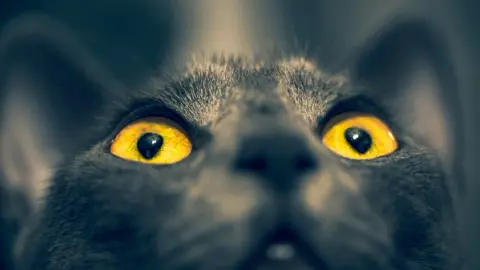
When most people picture Totoro, they imagine a large, soft, almost bear-like forest spirit quietly waiting in the night. Many viewers overlook that his posture and presence feel mammalian, but his key features line up strikingly well with a nocturnal hunter, the horned owl.
Totoro’s round body, upright stance, and the ear-like tufts on his head closely resemble the ear tufts and compact silhouette of many owl species. Even the markings on his belly can be read as layered feathers, echoing the dense plumage that helps owls stay silent and warm during nighttime hunts.
In the same film, the Catbus appears as another fantastical creature, yet it also shares traits with real nocturnal animals. Both cats and owls are active at night, move silently, and have long been associated with witches and magic in folklore. This shared nocturnal theme helps Totoro and Catbus feel like part of a believable nighttime ecosystem, rather than random inventions.
The Deer God That Feels Familiar Yet Uncanny
In Princess Mononoke, the Forest Spirit known as Shishigami shifts between two forms, one by day and one by night. During the day, it appears as a deer-like being that clearly draws from the Japanese sika deer, an animal deeply woven into Japanese culture and mythology.
The body shape, slender legs, and general outline are recognizably deer-like, but the face is unnervingly expressionless and the antlers spread out in an impossibly wide, branching pattern. This combination of the familiar and the exaggerated creates a creature that feels sacred and untouchable.
Because the design starts from a well-known animal and then pushes certain features beyond what is biologically possible, the Shishigami occupies a powerful middle ground. It looks like a deer, yet clearly is not. That fine balance between realism and otherworldliness is what inspires both awe and a quiet sense of fear in viewers.
Yakul The Loyal Mount With Antelope Elegance
Also in Princess Mononoke, Ashitaka’s companion Yakul is described as a red elk, a fictional riding animal. However, his actual build is more reminiscent of antelopes and goat-antelopes than of a typical deer.
Yakul’s body is slim and athletic, with long, agile legs that suggest speed and endurance. His long, curved horns echo those of antelope species and Japanese serows, giving him a refined, almost aerodynamic profile. This design makes it easy to believe he could carry a rider swiftly across wetlands, forests, and open plains.
Because his movements are animated with the same attention to balance, weight, and stride that real hoofed animals display, Yakul feels more convincing than many traditional fantasy mounts. Viewers instinctively accept him as a plausible riding partner, much like a horse or a sturdy trekking mule.
Ohmu Between Ancient Crustaceans And Pill Bugs
In Nausicaä of the Valley of the Wind, the Ohmu are massive, many-legged creatures that dominate the toxic jungle. Their segmented shells, numerous legs, and ability to curl into a ball strongly suggest isopods such as pill bugs and woodlice as key inspirations.
The way their armor plates overlap and flex is consistent with how real isopods protect their softer undersides. Their habit of curling into a rounded form under stress mirrors the defensive behavior of pill bugs that pet guardians often see in gardens and parks.
In addition, the fossil-like texture of the Ohmu’s shell calls to mind trilobites and horseshoe crabs, ancient arthropods that once dominated Earth’s seas. By combining traits from both modern and prehistoric species, the Ohmu feel like a living relic, a bridge between the distant past and a possible future ecosystem.
Teto The Fox Squirrel And The Charm Of Small Mammals
Perched on Nausicaä’s shoulder, Teto the fox squirrel is introduced as a hybrid of two familiar animals. As the name suggests, Teto blends the sharp features of a fox with the size and agility of a squirrel, resulting in a creature that feels instantly believable.
The large ears resemble those of a fennec fox, a desert-adapted species known for its oversized ears that help with heat regulation and acute hearing. The warm coat color recalls the red fox, while the compact body, quick movements, and overall scale are very squirrel-like.
Teto’s long, fluffy tail and slender body are not just cute design choices. They function like real small mammals’ tails, helping with balance during jumping, climbing, and rapid changes in direction. Every movement—from cautious sniffing to sudden leaps and affectionate nuzzling—has the behavioral authenticity of a real small companion animal, which is why many pet parents see echoes of their own small pets in Teto.
The Bird-Horse That Runs Like An Ostrich
The bird-horse mounts in Nausicaä of the Valley of the Wind are large, blue, flightless birds used for riding. Their design clearly draws from ratites, the group that includes ostriches, emus, and cassowaries.
These creatures have powerful legs, relatively small wings, and an overall body plan built for running rather than flying. Their forward-leaning posture and long stride are consistent with real running birds that can cover long distances at impressive speeds.
Paleontology also offers a fascinating parallel. Fossils of a giant ground bird known as Gastornis reveal a two-meter-tall, flightless bird that once roamed prehistoric landscapes. While not a direct match, the idea of a large, terrestrial bird capable of sharing the ground with humans may have subtly influenced the concept of a rideable bird.
By grounding the design in known bird anatomy and locomotion, these mounts feel like they could exist in a different era or on a distant continent, waiting to be discovered.
Imaginary Animals That Feel One Step Away From Reality
Across these examples, a clear pattern emerges. Ghibli’s most memorable creatures are not random fantasies; they are carefully crafted composites of real animal traits. Artists borrow recognizable features—ears, tails, antlers, shells, gaits—and then adjust scale, color, or proportion to push them just beyond what we see in everyday life.
That is why viewers often feel they have “met” these creatures somewhere before, even if only in a dream or a childhood memory. They seem like animals that might be hiding in an unexplored forest, deep ocean trench, or ancient fossil bed, quietly waiting to be found.
For pet parents and animal lovers, these designs can deepen appreciation for the real animals that inspire them. By noticing the owl in Totoro, the deer in the Forest Spirit, or the fox and squirrel in Teto, we are reminded that the natural world already holds an extraordinary range of forms and behaviors.
As you revisit these films, consider watching with an animal expert’s eye. Notice how each creature moves, rests, reacts, and interacts with its environment. That mindful attention can enrich not only your experience of Ghibli’s worlds, but also the way you observe and care for the real animals who share your home and your planet.
- 03.03.2026
- 08.31.2025