Tortoiseshell Cats Explained Why Their Rusty Coats Are So Special
This article is an English translation of the original Japanese article. Read the original Japanese version.
Tortoiseshell cats, or “torties,” are famous for their marbled black and orange coats and mysterious charm. Learn what really causes their unique coloring, why male torties are so rare, and whether their legendary “tortitude” has any science behind it.
In this guide, you will get a closer look at what makes tortoiseshell cats so captivating, from their coat genetics to how they are often perceived in terms of personality.
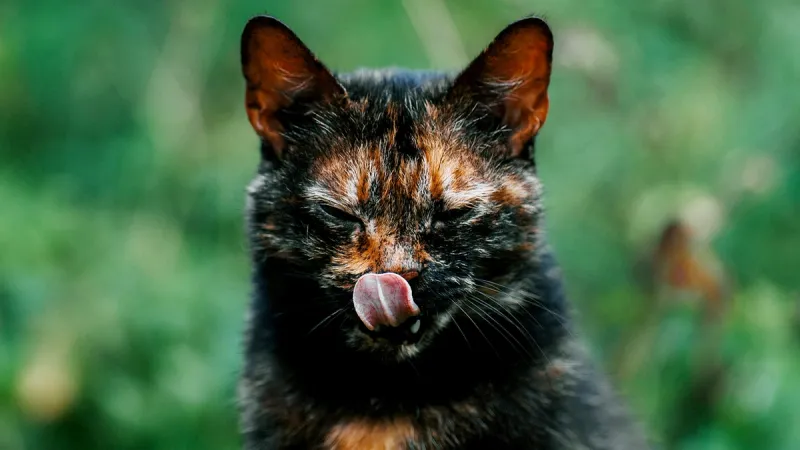
Their black and orange fur blends together like intricate metal rust, creating patterns that are never exactly the same from one cat to the next. Many pet parents find themselves instantly drawn to this mysterious, one of a kind look.
What Is a Tortoiseshell Cat
A tortoiseshell cat, often called a tortie, is a cat whose coat shows a mottled mix of black or very dark brown and red, orange, or reddish brown. In English speaking countries, the name comes from “tortoiseshell,” referring to the marbled look of traditional tortoiseshell patterns.
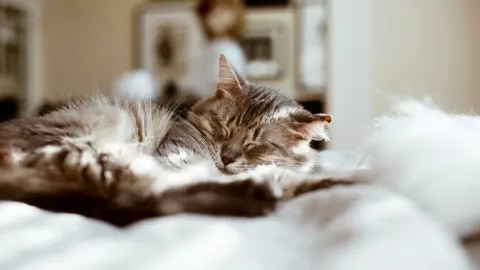
Classic torties have very little white in their coat. Instead of clear color blocks, their fur looks finely mixed, as if black and orange pigments have been stirred together. Under different lighting, this marbling can appear almost three dimensional, giving the coat a rich, artistic depth.
No two tortoiseshell cats share the same pattern. Each coat is a unique, random arrangement of colors, which is one reason many pet guardians feel their tortie looks like a living work of art.
When more white is present and the colors appear in distinct patches, the cat is typically described as a calico rather than a tortie. When the black and orange are replaced by softer gray and cream tones, the pattern is often called a dilute tortoiseshell.
Why Are They Called Rust Cats
In Japanese, tortoiseshell cats are often nicknamed “rust cats,” a reference to the word for metal rust. The mix of black and reddish brown in their fur resembles the complex, weathered surface of oxidized iron.
Some people might associate their slightly wistful, enigmatic expression with the aesthetic of “wabi sabi,” but the stronger explanation is that the name comes from the visual similarity to actual rust on metal. The layered, aged look of their coat is what inspired the term.
Why Male Tortoiseshell Cats Are So Rare
The key to understanding tortoiseshell coloring lies in the gene that produces orange fur. This gene is located on the X chromosome. During early embryo development, one X chromosome in each cell is randomly inactivated, which creates patches of cells where different color genes are expressed.
Female cats have two X chromosomes (XX). In some of their cells, the X chromosome carrying the orange gene is active, while in others, the X chromosome carrying the black gene is active. This mosaic of orange and black expressing cells produces the fine, patchy tortoiseshell pattern.
Male cats, on the other hand, usually have one X and one Y chromosome (XY). With only a single X chromosome, they typically express either black or orange, but not both in the same mosaic pattern.
In rare cases, a male cat may have an atypical chromosome pattern such as XXY, a condition similar to Klinefelter syndrome in humans. Chimerism or mosaicism can also create a situation where two different cell lines exist in the same body. In these unusual situations, a male can show a tortoiseshell like coat.
However, most male tortoiseshell cats have reduced fertility or are completely infertile. Pet guardians who encounter a male tortie should understand that while he is genetically fascinating, he is unlikely to be a breeding cat.
How Tortoiseshell Cats Differ From Calico Cats
Tortoiseshell and calico cats are sometimes confused, especially when both show black and orange. The most important difference is the amount and placement of white fur.
-
Tortoiseshell cats
Typically have little to no white. Their coats show a blended, mottled mix of black and orange, with the colors interwoven rather than sharply separated. -
Calico cats
Have a significant amount of white, with three distinct colors (white, black, and orange) appearing in clearer, more separated patches.
Both patterns are closely related in terms of genetics, but visually they create very different impressions. Torties tend to look more abstract and marbled, while calicos often look more patchwork and high contrast.
Comparing Tortie Coats To Brindle Dogs
If you are also interested in dogs, you may notice that tortoiseshell cats resemble brindle coated dogs, such as the black brindle pattern seen in the Japanese Kai Ken.
Despite the similar color combinations, the mechanism behind the patterns is different. In Kai Ken with black brindle, a reddish brown base coat is overlaid with more regular black stripes. This pattern is controlled by genes on the autosomes (non sex chromosomes), often described in terms of different alleles.
In tortoiseshell cats, the pattern is created by X linked genes and random X chromosome inactivation, which produces irregular patches of color. Instead of stripes, torties show a mosaic of uneven spots and flecks.
In practical terms, you can think of it this way:
-
Brindle dogs
Show more regular striping over a base color. -
Tortoiseshell cats
Show irregular patches and speckles of color, with no predictable pattern.
Both are striking in their own way, but they arise from very different genetic processes.
Is Tortitude Real
In English speaking communities, you may hear the playful term “tortitude”, a blend of “tortie” and “attitude.” It is often used to describe tortoiseshell cats as bold, strong willed, or a bit spicy.
From a scientific perspective, there is no strong evidence that coat color alone determines personality. Current research suggests that a cat’s behavior is shaped far more by genetics unrelated to coat color, early socialization, environment, and individual temperament than by fur pattern.
Cultural beliefs about coat color and luck exist in many countries. For example, some traditions label black cats as unlucky, while white cats may be seen as pure or sacred. In Japan, however, there are relatively few widespread superstitions specifically about tortoiseshell cats.
For pet parents, the most helpful approach is to treat each tortie as an individual. Some may be confident and vocal, others gentle and reserved. Getting to know your cat’s unique personality is far more reliable than any color based stereotype.
Seeing Your Tortie As Living Art
A tortoiseshell cat is often described as a living piece of art created by biology. The interplay of black and rusty red, the subtle shifts in tone, and the one of a kind patterning give these cats a quiet, distinctive elegance.
While their coat may be what first catches your eye, it is only a small part of who they are. Their health, comfort, and emotional well being matter far more than any color pattern. Pet guardians are encouraged to look beyond appearance and focus on what each cat enjoys, fears, and needs.
By appreciating your tortie’s individuality and providing consistent, compassionate care, you can build a deep, trusting bond that lasts a lifetime. Whether their fur is bold and dark or softly diluted, their true beauty lies in the relationship you share.
- 03.03.2026
- 08.27.2025