How Cats Really See the World and What It Means for Everyday Care
This article is an English translation of the original Japanese article. Read the original Japanese version.
Cats do not see the world the way humans do. Understanding their unique vision, from night sight and color perception to odd eyes and aging changes, helps pet parents create a safer home and choose toys, routines, and environments that truly match a cat’s needs.
How Wide Is a Cat’s Field of View
Cats are built to be hunters, and their eyes reflect that purpose.
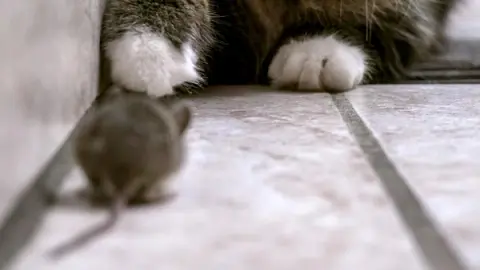
A cat’s field of view is roughly 200 to 220 degrees, which is wider than the human average of about 180 degrees. This broader field makes cats especially sensitive to movement at the edges of their vision, helping them notice prey or potential threats approaching from the side.
However, the area where both eyes overlap to create depth perception (called the binocular field) is slightly narrower than in humans, at around 120 degrees. This means cats are not as strong at judging the three-dimensional shape of objects that are farther away, but they excel at detecting side-to-side motion. In practical terms, their vision is finely tuned for tracking quick, lateral movements rather than admiring distant scenery.
How Cats See Color
Contrary to popular belief, cats do not see the world in pure black and white.
Feline vision is considered dichromatic, meaning cats can distinguish primarily between blue and green tones. They have much more difficulty telling reds and pinks apart, which are thought to appear as grayish or yellowish shades. Because of this, a bright red toy may not stand out to your cat the way it does to you.
Some pet guardians notice that cats often respond more readily to blue or green toys than to red ones. However, experts emphasize that cats are far more responsive to movement, contrast, and shape than to color alone. A toy that wriggles, flutters, or darts unpredictably will usually be more exciting than one that simply has a vivid color.
Night Vision and Low Light Superpowers
One of the most remarkable features of a cat’s eyes is their ability to function in low light.
The retina at the back of the eye contains special light-sensitive cells. In cats, there is a high concentration of rod cells, which are responsible for vision in dim conditions. Thanks to these rods, cats are estimated to have around six times better sensitivity to low light than humans, allowing them to move, hunt, and play in conditions where we would struggle to see.
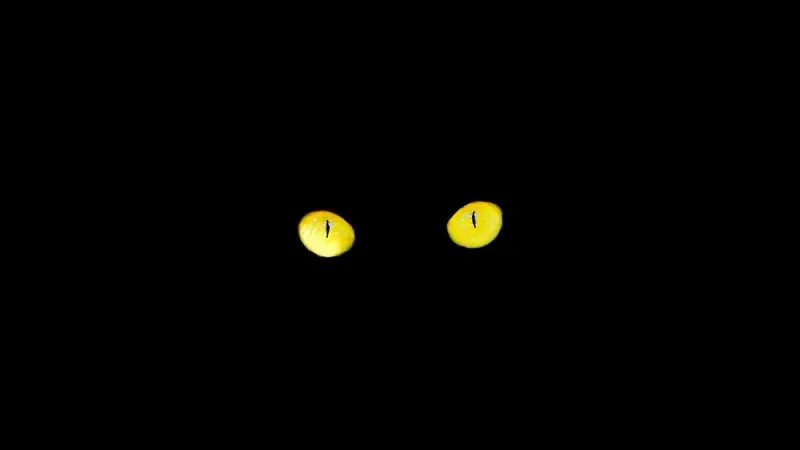
Behind the retina lies a reflective layer called the tapetum lucidum, often shortened to tapetum. This structure acts like a built-in mirror, bouncing incoming light back through the retina a second time to give the photoreceptors another chance to capture it. This is also why a cat’s eyes seem to glow when light hits them in the dark.
Together, the rod-rich retina and tapetum make cats exceptionally well adapted to dawn, dusk, and nighttime activity, even though they still need at least some light to see.
How Vision Changes With Age
A cat’s eyesight does not start out perfect, and it does not stay unchanged for life.
Kittens typically open their eyes around 10 days after birth, but at this stage their vision is still very blurry. They can detect changes in light and notice moving shadows, yet they cannot clearly distinguish fine details. Over the next several weeks, their visual system rapidly matures.
By about 2 to 3 months of age, most kittens have much sharper vision, better depth perception, and quicker reaction times. This is the period when they pounce, chase, and wrestle constantly, essentially practicing hunting skills through play.
In senior cats, vision can decline due to age-related eye conditions. Cataracts, retinal degeneration, and glaucoma are among the more common issues that may narrow the visual field or make it harder to see, especially in low light. Pet parents may notice their older cat hesitating at stairs, bumping into unfamiliar objects, or becoming less confident in dim rooms.
Because of this, experts recommend keeping the home layout as consistent as possible for aging cats. Avoid frequently rearranging furniture, and ensure key resources like food, water, and litter boxes remain in predictable locations. Age can also slow the pupil’s ability to adjust to changing light, making it harder for older cats to adapt quickly when moving from bright to dark areas.
What a Cat’s Pupils Reveal About Their Vision
A cat’s pupils are constantly adjusting, and those changes are not only about light.
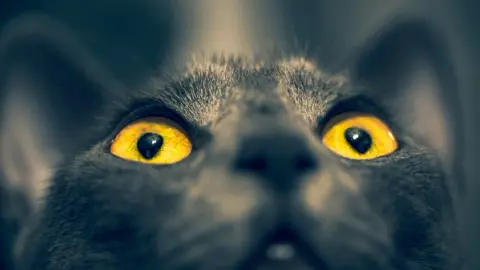
In bright environments, the pupils narrow into thin vertical slits. This shape helps limit the amount of light entering the eye and increases depth of field, allowing a cat to see objects from near to far with more clarity. In low light, the pupils expand into large, round openings to let in as much light as possible.
When the pupils are very wide, cats can gather more light but sacrifice some sharpness. The range of distances that appear in focus becomes narrower, and very small, still objects may be harder to see clearly. This is one reason why subtle, motionless items can go unnoticed while even a tiny movement instantly catches their attention.
Pupil size also responds to emotion. Fear, excitement, and intense arousal can cause a cat’s pupils to dilate dramatically, even in a well-lit room. In these moments, the body is preparing for rapid action, and the eyes open up to take in as much information as possible about the surroundings. Pet guardians can use pupil changes, along with body language, as a helpful clue to a cat’s emotional state.
Eye Color and Sensitivity to Light
Cats come with a beautiful range of eye colors, including blue, green, yellow, and amber. These colors are determined by the amount and distribution of melanin pigment in the iris.
While eye color does not significantly change how sharp or colorful the world looks to a cat, it can subtly influence how the eye handles bright light. Cats with blue eyes generally have less melanin in the iris, which can make them slightly more sensitive to strong light. In contrast, cats with yellow or amber eyes tend to have more pigment, which can help filter light and may make them a bit more comfortable in bright daytime conditions.
For most cats, these differences are mild and not obvious in daily life. Still, pet parents of very light-eyed cats may want to be mindful of prolonged exposure to intense sunlight, especially if their cat likes to sunbathe near large windows.
How Odd-Eyed Cats See
Odd eyes, or heterochromia, occur when a cat has two different eye colors, such as one blue eye and one yellow or amber eye.
In the majority of cases, odd-eyed cats have normal vision and color perception in both eyes. The difference is primarily cosmetic and does not mean the cat sees two different versions of the world.
There is, however, a well-documented association between white cats with one blue eye and congenital hearing loss on the blue-eyed side. This is a hearing issue rather than a vision problem, but it can affect how the cat responds to sound coming from one direction. Pet guardians may notice that these cats startle more easily when approached from the deaf side or respond more reliably to cues given from their hearing side.
In some odd-eyed cats, the eyes may not handle light in exactly the same way. For example, when one eye is blue and the other is amber, the blue eye may have a slightly different light sensitivity and may constrict its pupil more quickly in strong light. These differences are usually subtle and do not interfere with normal daily life.
Using Your Cat’s Vision to Improve Daily Life
Understanding how your cat sees can directly inform how you play with them and how you set up your home.
Because cats are so well adapted to low light, consider scheduling active play sessions in the early morning or evening, when the lighting naturally suits their hunting instincts. Toys that move unpredictably, such as wand toys, feather teasers, or small balls that roll and bounce, are often more engaging than toys that rely on bright colors alone.
When choosing toys or accessories, you may want to favor blue and green tones, which are more visible to cats than reds and pinks. That said, prioritize movement, texture, and sound over color. A crinkly tunnel, a toy that chirps, or a treat puzzle that wobbles can be far more stimulating than a vividly colored but motionless object.
For senior cats or those with known vision issues, stability and predictability are especially important. Try to keep furniture, scratching posts, and resting spots in consistent locations so your cat can navigate by memory. Ensure pathways to food, water, and litter boxes are clear of clutter, and provide night lights in hallways or near key areas if your home gets very dark.
In addition, support your cat by engaging their other senses:
- Use distinct scents near food bowls, beds, or litter boxes so they can locate them more easily.
- Incorporate gentle, predictable sounds, such as tapping the bowl before meals or using a soft verbal cue at feeding and playtime.
- Offer varied textures underfoot, like rugs or mats, to help them map different zones of the home.
Seeing the World Through Your Cat’s Eyes
Cats experience a visual world that is different from ours but perfectly tuned to their needs as stealthy, crepuscular hunters.
By learning how your cat’s eyes work – from their wide field of view and low-light advantage to their unique color perception and age-related changes – you can make more informed choices about play, environment, and long-term care. Pet parents who adapt the home to match a cat’s natural abilities often see calmer, more confident, and more engaged companions.
As you observe your cat moving through your home, imagine the world from their perspective. Small adjustments, like thoughtful lighting, consistent furniture placement, and movement-focused play, can go a long way toward creating a safer, richer, and more comfortable life for your feline family member.
- 03.03.2026
- 08.12.2025