Ocelots Explained For Animal Lovers Who Admire Wild Cats
This article is an English translation of the original Japanese article. Read the original Japanese version.
With their striking leopard-like coats and quiet, powerful presence, ocelots have fascinated humans for centuries. Discover how these small spotted wild cats live, hunt, and survive in a changing world, and what their story reveals about our responsibility to protect wildlife.
What Exactly Is An Ocelot?
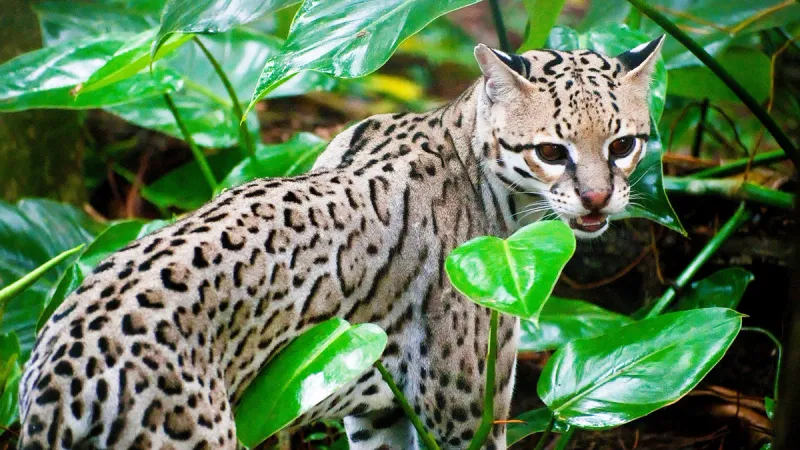
The ocelot (Ocelot, scientific name Leopardus pardalis) is a medium sized wild cat in the family Felidae and the genus Leopardus. At a glance it can look like a miniature leopard, but biologically it is closer to other small spotted Latin American cats.
In Japanese it is sometimes loosely called a "yamaneko" or wild mountain cat, but it is not the same as the lynx group (Lynx spp.). Ocelots form their own branch within the small South and Central American wild cats.
Adult ocelots typically stand about 40 to 50 centimeters (16 to 20 inches) at the shoulder and weigh roughly 7 to 15 kilograms (15 to 33 pounds). Within the Leopardus group, the ocelot is one of the largest and most powerfully built species, with a sturdy, muscular body.
The Secret Behind Their Beautiful Leopard Like Coat
An ocelot’s coat is one of the main reasons humans have been so captivated by this species. Their fur ranges from warm yellow brown to grayish tones, overlaid with bold black stripes and chain like spots that flow along the body.
These linked markings are known as chain rosettes and can look almost like a hand painted artwork. Each ocelot has a unique pattern, and researchers use these coat differences to identify individual cats in the wild through photos and camera traps.
On the back of each ear there is a small white spot. Biologists believe these markings may help ocelots communicate with one another in low light, acting as visual signals when they move through dense forest at night.
Ocelots resemble close relatives such as the margay and the oncilla, but there are subtle differences. Ocelots tend to be slightly larger overall and have a relatively shorter tail, which helps experts distinguish them in the field.
Name Origins And Cultural Background
The word "ocelot" is thought to come from the Nahuatl term ōcēlōtl (ocelotl), a word originally used for jaguars in the languages of Indigenous peoples of central Mexico. Over time, the name was also applied to this smaller spotted cat.
Across parts of Central and South America, ocelots appear in myths and traditional stories. In some cultures, they are portrayed as sacred or spiritually powerful animals, symbolizing stealth, strength, and the mystery of the forest.
Where Ocelots Live Today
Ocelots have a broad natural range that stretches from Mexico through Central America and into northern and central regions of South America. Historically, they also lived much more widely in the southwestern United States.
Today, however, their presence in the US is limited to a few small populations in southern Texas and nearby areas, where only a handful of individuals remain. Habitat loss and human activity have dramatically reduced their northernmost range.
Within their range, ocelots prefer habitats that offer both cover and access to water. Typical environments include:
- Tropical rainforests and subtropical forests
- Mangrove forests
- Grasslands and thickets bordering woodlands
- Dense vegetation near rivers, streams, and wetlands
Taken together, these preferences show that ocelots are wild cats that favor quiet, densely vegetated areas with reliable water sources and plenty of hiding places.
Life As A Nocturnal Hunter
Ocelots are primarily nocturnal and crepuscular, meaning they are most active at night and during dawn and dusk. They usually live and hunt alone, maintaining territories that they mark and defend from other adults.
Most of their hunting takes place on the ground. An ocelot will patrol silently, then use a combination of stalking, waiting in ambush, and short chases to capture prey. Thanks to their strong limbs and flexible bodies, they are also excellent climbers and capable swimmers, so their hunting takes place in three dimensions – on the ground, in the trees, and sometimes in the water.
Their diet is remarkably varied. Ocelots eat small mammals such as rodents and armadillos, as well as birds, lizards, and frogs. In some habitats, they have even been observed catching fish, showing just how adaptable they can be when it comes to finding food.
Reproduction And Raising Kittens
Ocelots can breed throughout the year, although the peak breeding season varies by region and climate. When a female is in heat, she and a nearby male may spend several days together before returning to their solitary routines.
The gestation period lasts about 70 to 80 days. A typical litter consists of a single kitten, though occasionally two or three may be born. Smaller litter sizes are common in wild cats that invest heavily in each offspring’s survival.
The mother chooses a quiet, sheltered den site, such as a hollow tree, dense thicket, or rock crevice. She raises the kittens alone, nursing and protecting them for several months while they learn basic hunting and survival skills.
Both males and females generally reach sexual maturity at around 18 to 24 months of age. At that point, young ocelots begin to establish their own territories, often moving away from their mother’s home range.
How Long Do Ocelots Live?
In the wild, ocelots are believed to live for roughly 10 to 13 years on average, although some individuals may survive longer if conditions are favorable and human related threats are low.
In zoos and other managed care settings, some ocelots have been documented living close to 20 years. Access to regular veterinary care, balanced nutrition, and protection from predators and accidents can significantly extend their lifespan.
Conservation Status And Current Threats
On the IUCN Red List of Threatened Species, the ocelot is currently classified as Least Concern, meaning that, at a global scale, the species is not considered at immediate risk of extinction.
However, this global label can be misleading. In many local regions, ocelot populations are declining, and some isolated groups are now very small and vulnerable. Conservationists emphasize that local trends matter just as much as global numbers.
Major threats to ocelots include:
-
Habitat loss and fragmentation
Expanding agriculture, cattle ranching, and urban development are clearing and breaking up forests. This reduces the amount of suitable habitat and isolates small populations. -
Road collisions
As roads cut through remaining habitat, more ocelots are killed by vehicles. These accidents can have a serious impact when local populations are already small. -
Illegal trade
In the past, large numbers of ocelots were hunted for their fur. Today, illegal trade continues in some areas, including the capture and smuggling of ocelots as exotic pets.
Because of these pressures, many experts argue that active, region specific conservation measures are essential, even for species listed as Least Concern globally.
The Tragedy Of The Ocelot Fur Trade
During the 1960s and 1970s, ocelot fur became highly fashionable in the global luxury market. Coats, stoles, and accessories made from their distinctive spotted pelts commanded high prices.
This demand had devastating consequences. Historical records suggest that tens of thousands of ocelot pelts were traded internationally each year at the peak of the fur boom. In some areas, local populations were pushed to the brink.
International concern eventually led to stronger protections. Under the Convention on International Trade in Endangered Species of Wild Fauna and Flora (CITES), commercial trade in ocelot pelts was effectively banned by 1989.
Since then, the global fur trade in ocelots has dropped sharply, and international agreements have helped create a more coordinated framework for their protection. Even so, ongoing monitoring is needed to prevent a resurgence of illegal hunting.
Ocelots As Endangered Wildlife In The United States
In the United States, the ocelot is listed as an endangered species under the federal Endangered Species Act (ESA). This status provides legal protection and requires recovery planning.
In southern Texas, only a very small number of wild ocelots remain. According to the US Fish and Wildlife Service (USFWS), fewer than 100 ocelots are thought to survive in the entire country, making them one of the rarest native cats in the US.
To support these remnant populations, conservation partners are working on several fronts:
- Restoring and reconnecting native forest and brushland habitats
- Installing wildlife underpasses and overpasses to reduce roadkill
- Developing breeding and genetic management programs to maintain diversity
These efforts aim not only to prevent extinction in the US, but also to rebuild healthier, more connected populations that can withstand future challenges.
Why Ocelots Do Not Belong In Private Homes
In recent years, some wealthy individuals and social media personalities have shown interest in keeping wild cats, including ocelots, as "exotic pets." While the idea may seem appealing to some, experts strongly discourage this practice.
Ocelots are wild animals with complex physical, behavioral, and emotional needs. They are not domesticated and do not adapt well to typical home environments, even when raised from a young age. Stress, aggression, and escape attempts are common when wild cats are confined.
For these reasons, many countries and regions either strictly regulate or completely prohibit private ownership of ocelots. Common concerns include:
- The difficulty of providing a large, secure, and enriched habitat
- Legal requirements for permits, inspections, and specialized facilities
- Risks of bites, scratches, and escapes that can endanger people and other animals
- Ethical issues around removing wild animals from their natural role in the ecosystem
For animal lovers and pet parents who admire ocelots, supporting reputable conservation organizations and accredited zoos is a far more responsible way to appreciate these cats than attempting to keep one at home.
Supporting A Future Where Ocelots Still Roam
The ocelot is a powerful symbol of both beauty and resilience. Its story shows how quickly human desires can push a species toward crisis, and how coordinated laws and conservation efforts can begin to reverse that damage.
Yet serious challenges remain. Habitat fragmentation, climate change, and ongoing human expansion continue to shape the landscapes ocelots depend on. Protecting large, connected forests and wetlands will be critical for their long term survival.
For everyday animal lovers and pet guardians, one of the most meaningful first steps is simply learning about species like the ocelot. By understanding their lives, their struggles, and their role in the ecosystem, we are better equipped to support policies, organizations, and on the ground projects that protect them.
When we choose sustainable products, support habitat conservation, and share accurate information about wildlife, we help create a world where wild cats like the ocelot can continue to move silently through the forests for generations to come.
- 03.02.2026
- 09.09.2025