How To Care For Red Eyed Crocodile Skinks That Look Like Tiny Dragons
This article is an English translation of the original Japanese article. Read the original Japanese version.
With their dragon like armor and fiery eye markings, red eyed crocodile skinks captivate many pet parents at first sight. But behind that wild appearance is a surprisingly delicate reptile that needs very specific care to stay healthy and thrive in your home.
Key takeaways
Q. What should I pay special attention to when keeping a Red-eyed Crocodile Skink?
They are very sensitive to cold and dryness, so maintaining 22–27°C and consistently high humidity is crucial.
Q. What should I feed a Red-eyed Crocodile Skink?
They are carnivorous; feed live insects like crickets and mealworms, dusted with calcium supplement.
Q. What should I do if my Red-eyed Crocodile Skink keeps hiding and doesn’t come out?
Because they are very shy, avoid handling or stressing them and patiently wait until they adapt to the new environment.
If you have ever dreamed of sharing your home with a tiny dragon, the red eyed crocodile skink may feel like a fantasy come to life. Their rugged armor like scales and vivid red or orange eye markings are stunning, but pet parents should know that these reptiles are sensitive, easily stressed, and not beginner friendly. Proper preparation is essential before bringing one home.
In this guide, you will learn what makes red eyed crocodile skinks unique, how to source them responsibly, and how to create a habitat that closely mimics their natural rainforest environment. By understanding their needs in advance, pet guardians can greatly improve the chances that their skink will live a full and healthy life.
What Kind of Animal Is the Red Eyed Crocodile Skink
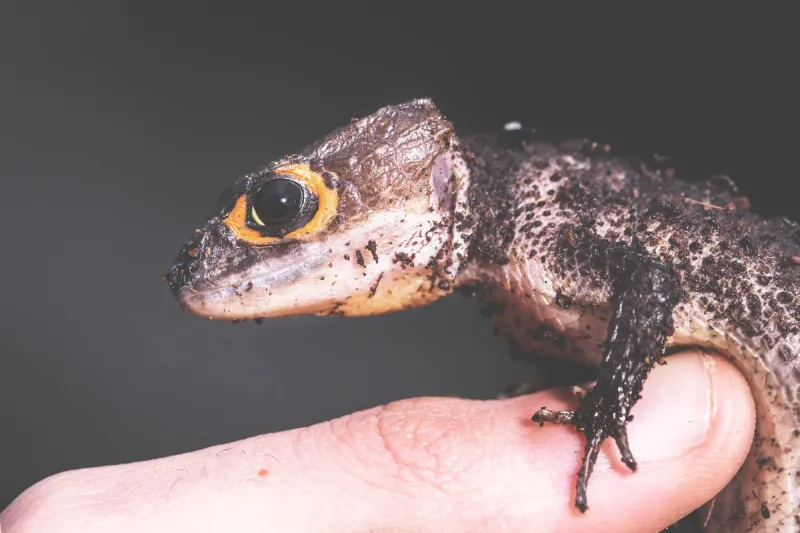
Red eyed crocodile skinks are small, ground dwelling lizards native to the tropical rainforests of Indonesia, New Guinea, and surrounding regions. In the wild, they live in cool, damp forest floors, hiding under leaf litter, logs, and moss. They are carnivorous reptiles that primarily eat insects and other small invertebrates, and may occasionally take very small amphibians.
Unlike many reptiles, red eyed crocodile skinks have a vocal apparatus and can produce soft, squeaky calls. This ability to vocalize is one of their most distinctive traits and often surprises first time pet parents who expect reptiles to be silent.
They are also known by another common name, tribal crocodile skink, and in Japanese they are sometimes called Mebeni kabuto tokage, a reference to the striking red or orange ring around their eyes. This eye ring, combined with their ridged, plated back, gives them a dramatic, almost mythical appearance.
In terms of size, red eyed crocodile skinks are relatively small compared to many pet reptiles. Adults typically reach a total length of about 15 to 20 centimeters, which is roughly the size of a lizard that can comfortably sit in one hand. Their heavy looking armor is mostly on the back; the belly is smoother and lacks the same thick, rugged scales.
With appropriate care, their life span is generally estimated at 5 to 10 years. However, because they are naturally shy, easily frightened, and highly sensitive to environmental changes, many individuals fail to reach their full potential life expectancy when kept in suboptimal conditions. Experts emphasize that success with this species depends on careful planning and consistent husbandry.
How To Obtain a Red Eyed Crocodile Skink
In many markets, red eyed crocodile skinks are still considered somewhat uncommon, but they are becoming more visible in specialty reptile circles. Prices vary by region and availability, but in Japan they are often seen in the range of 8,000 to 10,000 yen per individual. In other countries, prices may be higher due to import and demand.
Wherever you live, responsible sourcing is crucial. Whenever possible, prioritize captive bred individuals from reputable breeders or shops, as wild caught animals are often more stressed, more prone to parasites, and harder to acclimate.
Pet Shops and Reptile Specialty Stores
For pet guardians who want time to observe and choose carefully, visiting a well regarded pet shop or reptile specialty store is often the best starting point. These shops typically stock the basic equipment you will need and can provide practical advice on enclosure setup, feeding, and health monitoring.
Another advantage of a local shop is ongoing support. If you run into questions or concerns about your skink’s behavior, appetite, or environment, you can return to the same staff who know your situation and can offer tailored guidance.
When visiting a shop, consider observing the following before deciding:
- Activity and posture Does the skink appear alert when gently disturbed, or is it extremely lethargic
- Body condition Are the eyes clear, the body well filled out, and the tail not overly thin
- Environment in the shop Are enclosures clean, appropriately humid, and not overcrowded
Reptile Expos and Sales Events
If you prefer to compare many individuals at once, reptile expos and sales events can offer a wide variety of red eyed crocodile skinks. In Japan, large scale events such as the Japan Reptiles Show and Reptiles World are well known examples where enthusiasts, breeders, and shops gather.
At expos, you can often speak directly with breeders about the origin, age, and history of the animals they are offering. This can be invaluable for understanding how the skink has been kept so far and what conditions it is used to. However, expos can be crowded and noisy, which is stressful for such a shy species, so it is wise to choose individuals that appear calm, responsive, and not overly distressed.
How To Care for a Red Eyed Crocodile Skink
Red eyed crocodile skinks are relatively new to the pet trade compared to many other reptiles, and their husbandry methods are still evolving. There is not yet a single universally accepted care standard, but experienced keepers and herpetology experts agree on one key principle. To keep them healthy, you should recreate conditions that closely resemble their native tropical rainforest habitat.
That means focusing on stable, moderate temperatures, consistently high humidity, deep and moist substrate, and plenty of secure hiding places. Because they are secretive and easily stressed, these skinks are best appreciated as a display species rather than a reptile that enjoys frequent handling.
Temperature and Humidity Management
For red eyed crocodile skinks, high humidity is not optional it is essential. These lizards are extremely sensitive to dry air, and prolonged low humidity can lead to dehydration, shedding problems, and serious health issues. Experts recommend maintaining consistently elevated humidity in the enclosure, not just occasional misting.
This is especially important during winter or in homes with strong heating or air conditioning, where the air tends to be very dry. To support your skink’s health, consider the following strategies:
- Frequent misting Use a spray bottle or automatic mister to keep the substrate and enclosure surfaces lightly damp.
- Moisture retaining substrate Choose substrates that hold water well without becoming waterlogged.
- Partially covered top If your enclosure allows, covering part of the lid can help retain humidity while still allowing adequate ventilation.
In addition to humidity, temperature control is crucial. Red eyed crocodile skinks generally do best at around 22 to 27 degrees Celsius in their main living area. In cooler seasons, a reptile safe heat mat or under tank heater can be used to maintain a gentle warmth, but avoid creating hot spots that are too intense.
Always provide a temperature gradient so the skink can move between slightly warmer and cooler areas as needed. Overheating can be just as dangerous as chilling, particularly for a species adapted to the cooler, shaded forest floor.
Food and Feeding
Red eyed crocodile skinks are carnivores that primarily eat insects. In captivity, live feeder insects are the foundation of a healthy diet. Common staple options include:
- Crickets in appropriate sizes for the skink’s mouth
- Mealworms or superworms offered in moderation
- Other suitable feeder insects, depending on availability and expert guidance
To support bone health and prevent metabolic bone disease, dust live insects with a high quality calcium supplement before feeding. Many experienced keepers also rotate in a reptile multivitamin according to label directions or veterinary advice.
Feed in the evening or at times when the skink is naturally more active. Because they are shy and may not eat in front of people, it can be helpful to place the insects in the enclosure and then step away to allow the skink to hunt in peace. Monitor body condition over time and adjust feeding frequency and quantity to avoid both underfeeding and obesity.
Essential Equipment for Red Eyed Crocodile Skink Care
Most of the equipment used for other small to medium terrestrial reptiles can be adapted for red eyed crocodile skinks, as long as it supports high humidity and provides secure hiding spaces. Thoughtful enclosure design is one of the most important investments you can make for this species.
Enclosure or Terrarium
For a single red eyed crocodile skink, a reptile enclosure around 60 centimeters in length is often recommended as a starting point. A glass or high quality plastic terrarium or aquarium can work well, provided that it offers both good ventilation and the ability to maintain humidity.
Because this species is prone to stress, prioritize an enclosure that allows you to create multiple hiding spots and visual barriers. Front opening terrariums are often preferred by experienced keepers because they make maintenance easier and can be less stressful for the animal than reaching in from above.
Substrate
The substrate plays a major role in humidity control and in allowing natural behaviors such as burrowing and hiding. Moisture retaining substrates are strongly recommended, such as
- Coconut fiber or coco husk based soils
- Sphagnum moss or mixes that include sphagnum
- Other reptile safe soils like certain planted tank soils or peat based mixes, used according to manufacturer guidance
Aim for a substrate layer deep enough for the skink to partially burrow and feel secure. Keep the substrate damp but not waterlogged to avoid mold and bacterial overgrowth. Spot clean regularly and replace portions of the substrate as needed to maintain hygiene.
Hides and Shelters
Because red eyed crocodile skinks are naturally timid and easily startled, providing multiple secure hiding places is non negotiable. Use reptile specific hides, cork bark, half logs, and other decor that allows the skink to disappear completely from view when it chooses.
Offering several different types of shelters in various parts of the enclosure allows the skink to select the microclimate it prefers. Some hides can be placed over drier areas, while others can be kept more humid.
A particularly useful option is a wet or humid hide, sometimes called a wet shelter. These are hides designed to hold moist substrate or moss inside, creating a localized pocket of high humidity. This can support healthy shedding and provide a comfortable retreat, especially during drier periods.
Water Dish and Swimming Area
Despite their armored appearance, red eyed crocodile skinks are surprisingly fond of water and often enjoy soaking or swimming. For this reason, the water dish should not be a tiny cup used only for drinking. Instead, choose a sturdy container large enough for the skink to submerge its entire body.
Ensure that the water area is easy to enter and exit. You can create gentle ramps or steps with rocks or decor so the skink does not struggle to climb out. Change the water frequently to keep it clean, as soaking and defecation often happen in the same place.
Providing a generous water area not only supports hydration but also helps maintain overall humidity in the enclosure, especially when combined with regular misting.
Thermometer and Hygrometer
Because red eyed crocodile skinks are highly sensitive to both cold and dryness, accurate monitoring tools are essential. At minimum, install a reliable thermometer and hygrometer in the area where the skink actually spends most of its time, not just near the top of the enclosure.
Digital units with probes are often more accurate than simple stick on dials and allow you to track conditions at ground level, where this species lives. Regularly checking and recording temperature and humidity helps you catch problems early and adjust heating, misting, or ventilation before your skink is affected.
Earning the Trust of a Shy Little Dragon
Caring for a red eyed crocodile skink can be deeply rewarding, but it is important to recognize that this is a challenging species that does not suit every pet parent. Their sensitivity to stress, strict environmental needs, and secretive nature mean they are best kept by guardians who are patient, observant, and willing to invest time in fine tuning their setup.
Many new guardians are surprised when their skink hides constantly at first, sometimes for days, and may refuse food while adjusting. This behavior is common and does not always indicate illness. In these early stages, the most helpful thing you can do is avoid unnecessary handling or disturbance and allow the skink to settle into its new environment.
Over time, with stable conditions and gentle routines, many red eyed crocodile skinks become more confident and may be seen exploring their enclosure more often, especially during low light periods. However, they are unlikely to become a reptile that enjoys frequent handling, and forcing interaction can cause chronic stress.
If you love these animals but feel unsure about meeting their demanding care requirements, consider enjoying them through high quality photos and videos shared by experienced keepers and photographers. Social platforms and reptile communities often showcase beautiful images of red eyed crocodile skinks in naturalistic setups, allowing you to appreciate their dragon like beauty without the responsibility of ownership.
For those who do choose to bring one home, think of the journey as building a lifetime of quiet trust. By respecting their shy nature, providing a carefully maintained rainforest style habitat, and responding promptly to any signs of stress or illness, you can give your tiny dragon the best possible chance to thrive under your guardianship.
- 03.20.2026
- 08.09.2019
Koto Taketsuki
I have shared my life with cats for 30 years. As a homemaker who deeply loves cats and all animals, I look forward to sharing practical, everyday tips for your precious "family members."