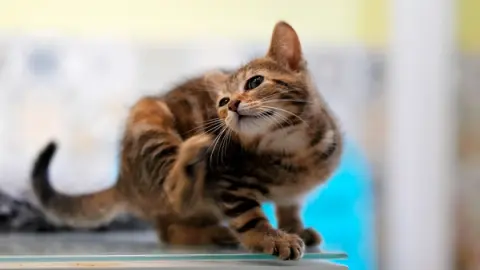
Are Cats Actually Aliens? What Science And Folklore Reveal About Our Mysterious Companions
This article is an English translation of the original Japanese article. Read the original Japanese version.
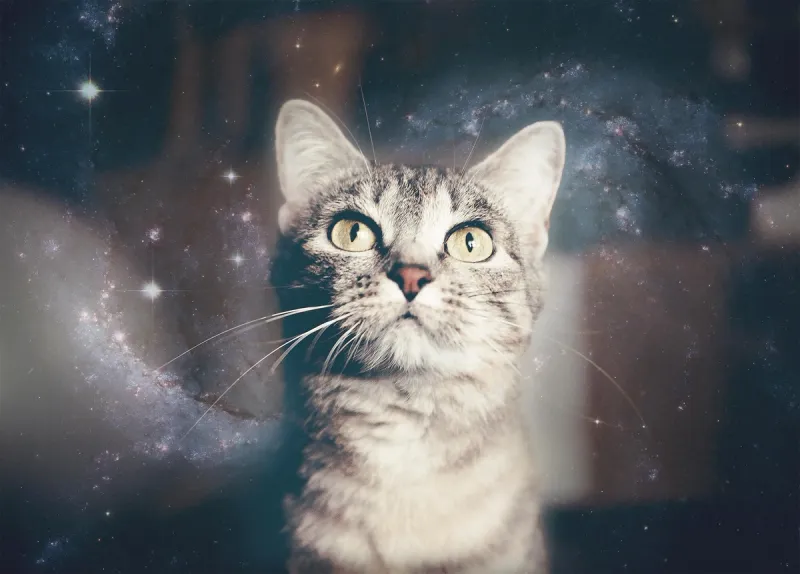
From ancient Egyptian goddesses to modern internet memes, cats have always seemed just a little otherworldly. Discover why some pet parents joke that their cats are aliens, and what feline history, anatomy, and behavior really tell us about these fascinating animals.
When you hear the word "alien," what comes to mind? A tall, two-legged being that looks almost human, or a creature with tentacle-like limbs straight out of a sci-fi movie?
On the internet, one playful theory keeps resurfacing among cat lovers everywhere. You may have seen it already: "Cats are actually aliens" or "Cats are being controlled by aliens." It sounds like pure fantasy, but when you look closely at feline history, anatomy, and behavior, it becomes easier to understand why this idea has captured so many imaginations.
Cats are full of mysteries. They have unusual physical traits, puzzling behaviors, and a long history of being treated as something more than "just" animals. While there is no scientific evidence that cats are extraterrestrial, exploring this lighthearted theory can deepen our appreciation for how unique they truly are.
In this article, we will walk through the so-called "cats are aliens" theory, using what we know from history and animal science to separate fun myth from fascinating reality.
The Strange And Special History Of Cats
Humans have felt that cats were different from other animals for thousands of years. Across cultures and eras, cats have often been treated as special beings rather than ordinary household companions.
As pet parents and pet guardians today, we may think of cats as family members who nap on our couches and chase toys. But historically, they have been worshipped as gods, feared as dark omens, and linked to the supernatural. This long, complex relationship helps explain why modern people still see cats as a little otherworldly.
When Cats Were Worshipped As Gods
Cats are believed to have started living closely with humans around 2000 BCE in ancient Egypt. They were originally welcomed for a very practical reason: they hunted mice and other pests that threatened precious grain stores.
Over time, their graceful movements, striking eyes, and affectionate yet independent nature deeply charmed the Egyptian people. Historical records suggest that when a beloved family cat died, the entire household might go into mourning, and some cats were even mummified and buried with care.
Eventually, cats were elevated to divine status. One of the best-known examples is the goddess Bastet, often depicted as a woman with the head of a cat. She was associated with home, fertility, and protection, and her worship became incredibly popular.
Festivals in honor of Bastet were said to be some of the largest and most joyful in ancient Egypt. For a small, quiet animal to inspire such devotion is remarkable, even by today’s standards.
Because of this intense reverence, some modern internet users jokingly suggest that "alien beings in the form of cats brainwashed the Egyptians." While this is pure fiction, it reflects a real truth: cats have always had an uncanny ability to captivate human hearts.
Cats As Witches’ Familiars And Dark Omens
Fast forward to 16th-century Europe, and the image of the cat had changed dramatically. During the height of the witch hunts, fear and superstition were widespread, and cats were often caught in the middle.
In many regions, people believed that cats were "witches’ familiars" or even witches transformed into animal form. Their silent footsteps, sudden appearances, and habit of rubbing against objects and people were seen as suspicious or magical.
At the time, some individuals even claimed they had been attacked by "cat-like creatures," and cats were occasionally blamed for injuries or unexplained events. This fear-based thinking led to cruel treatment of both accused witches and the animals associated with them.
Unlike dogs, who tend to show their emotions openly and seek constant human approval, cats often appear more reserved and self-contained. Their calm, unreadable expressions and independent nature may have seemed eerie to people who did not understand feline behavior.
From this era onward, cats became linked in the human imagination with forces beyond the ordinary world. To some, they were seen as messengers from another realm, or as beings with one paw in our world and one in the unknown.
The Mysterious Feline Body
Modern science has revealed a great deal about how cats’ bodies work, but there is still an air of mystery around them. Their physical abilities and sensory systems are so finely tuned that it is easy to see why people jokingly compare them to advanced alien life forms.
Below are some of the most commonly cited "alien-like" features of cats, along with what we actually know from a veterinary and scientific perspective.
Are Cat Eyes Like High-Tech Alien Cameras
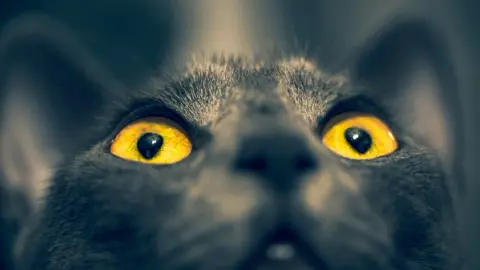
A cat’s large, glassy eyes can feel almost hypnotic. When your cat stares at you, it can seem as if they are looking straight into your thoughts. This has led to a playful theory online that feline eyes are "cameras sending information back to aliens."
In reality, cats do have incredibly sophisticated vision. They see well in low light, which helps them hunt at dawn and dusk. Their pupils can expand widely to let in more light or contract into narrow slits in bright conditions, much like the aperture of a high-performance camera.
This flexible pupil size helps protect their eyes from damage while maximizing their ability to see in different environments. It is not alien technology, but it is a remarkable evolutionary adaptation.
Still, the idea that somewhere in the universe, aliens are watching us cuddle our cats through those shining eyes is a charming image that many pet guardians enjoy imagining.
Whiskers As Ultra-Sensitive Alien Antennae
A cat’s fur is sensitive overall, but the whiskers are especially important. These long, stiff hairs are deeply rooted and connected to a rich network of nerves, making them powerful sensory tools.
Whiskers help cats:
- Detect subtle air currents and vibrations
- Judge whether they can fit through tight spaces
- Navigate safely in low light or darkness
Some people believe that cats can sense earthquakes or other natural disasters before humans do. While research is ongoing, it is true that cats can detect very small changes in their environment, including vibrations and sounds that we might miss.
Because of this, whiskers are often compared to "alien antennae receiving ultrasonic signals." Scientifically, they are specialized tactile organs, but the comparison captures just how advanced and finely tuned they are.
It is fun to imagine that when your cat suddenly perks up, twitches their whiskers, and seems to "listen" to something you cannot hear, they might be exchanging secret messages in a language beyond human hearing.
The Internet Trend About Pulling Back Cat Ears
On social media, there is a trend where people gently pull a cat’s ears back and then compare the resulting face to classic depictions of aliens. The stretched-back ears, wide eyes, slim nose, and small mouth can resemble the stereotypical "Grey" alien often seen in movies and comics.
While the visual comparison can be amusing, pet parents should prioritize their cat’s comfort and welfare. Many cats dislike having their ears handled, and repeated pulling or posing for photos can cause stress.
If you are curious about the resemblance, it is safer to look up existing photos online rather than trying this on your own cat. Enjoy the joke, but always respect your cat’s boundaries and body language.
Unexplained Feline Behaviors That Feel Otherworldly
Cats are known for behaviors that can seem puzzling, even to experienced pet guardians. Some of these actions have fueled the playful idea that cats are in contact with something beyond our world.
While science offers reasonable explanations for most feline behaviors, there is no denying that cats have a talent for making the ordinary feel mysterious.
The Soothing Power Of The Purr
One of the most beloved sounds in the animal world is a cat’s purr. Many cats purr when they are relaxed and content, especially when they are being petted or cuddled. For pet parents, this gentle vibration can be deeply calming.
Interestingly, experts still do not fully agree on the exact mechanism that produces a purr. The most widely accepted theory is that it involves rhythmic contractions of the laryngeal (voice box) muscles and the diaphragm, but the process is not yet completely understood.
What we do know is that purring appears to have several potential benefits:
- It may help calm and soothe both cats and humans
- Certain purr frequencies may support bone and tissue healing in cats
- It can strengthen the bond between cats and their guardians
Because purring can be so comforting, some people jokingly suggest that aliens "installed" this feature to make humans fall in love with cats. While this is just a fun idea, it highlights a real phenomenon: the sound of purring can have a measurable relaxing effect on the human brain and nervous system.
If that was an alien plan, it is certainly working. Many people find themselves reaching for their cat after a stressful day, drawn in by that irresistible purr.
Why Cats Stare At Nothing
If you live with a cat, you have probably seen them sit perfectly still, eyes locked on a seemingly empty corner of the room. Their intense focus can be a little unsettling, especially when you cannot see or hear anything unusual.
This behavior has inspired the idea that cats are "communicating with aliens" or seeing beings from another dimension. It is a popular theme in memes and ghost stories alike.
From an animal behavior perspective, there are more grounded explanations. Cats have far more sensitive hearing than humans and can detect high-frequency sounds we cannot perceive. They may be reacting to:
- Tiny insects moving in the distance
- The faint sound of pipes, appliances, or outdoor activity
- Subtle changes in light or shadow
However, not every instance of staring has been fully studied or explained, and cats do sometimes fixate on spots where we can find no obvious trigger. That lingering uncertainty keeps the door open for playful speculation.
So, are they really in contact with aliens? There is no evidence for that. But the next time your cat stares intently at a blank wall, you might find yourself wondering what they know that you do not.
Embracing The "Cats Are Aliens" Theory As A Loving Joke
The idea that "cats are actually aliens" is, at its core, a lighthearted internet joke. Yet when you look at feline history, anatomy, and behavior, it is easy to see why this playful theory resonates with so many people.
Cats have been worshipped as deities, feared as magical beings, and cherished as family members. Their bodies are equipped with highly specialized senses and abilities that can feel almost superhuman. Their behaviors, from purring to staring into space, often defy simple explanation.
Whether or not you enjoy the alien narrative, one thing is clear. Cats hold a unique place in human hearts around the world, and their mysterious charm keeps us endlessly fascinated.
Deepening Your Bond With Your "Otherworldly" Cat
There is still so much we do not fully understand about animal bodies and behavior, including those of our own companion animals. As research continues, we will likely uncover even more surprising facts about how cats sense and interact with their environment.
In the meantime, consider using that sense of mystery to strengthen your relationship with your cat:
- Observe their unique habits closely and learn what makes them feel safe, playful, or stressed.
- Respect their boundaries, especially when it comes to handling sensitive areas like ears, whiskers, and tail.
- Provide enriching environments with climbing spaces, hiding spots, and interactive toys to satisfy their natural curiosity and hunting instincts.
- Schedule regular veterinary checkups to ensure that any unusual behavior has a healthy explanation.
Whether you see your cat as a tiny tiger, a household guardian, or a charming "visitor from another planet," one truth remains. Cats invite us to stay curious, pay attention, and build a deeper, more respectful bond with the animals who share our homes.
And who knows? If any species were secretly reporting back to aliens about life on Earth, our endlessly observant, quietly watchful cats would be excellent candidates.
- 03.03.2026
- 12.25.2018
Masaka
Veterinarian. My favorite animals are degus, ferrets, cows, and rabbits. I prefer tea over coffee.