Pembroke vs Cardigan Corgis How To Tell Them Apart And Choose The Right One For You
This article is an English translation of the original Japanese article. Read the original Japanese version.
Most people picture the same short legs and round, wiggly butt when they hear the word Corgi. But there are actually two distinct Corgi breeds, each with its own history, look, and personality. Understanding their differences helps pet parents choose the companion that truly fits their life.
When most people think of Corgis, they imagine a low-slung body, short legs, and that famously round, adorable rear. It is an unforgettable silhouette that has made the breed a favorite around the world.
What many pet parents do not realize is that there are actually two different Corgi breeds. The Pembroke Welsh Corgi and the Cardigan Welsh Corgi share a similar outline and working background, but they are not the same dog. Both originated in Wales and were developed as herding dogs, yet their ancestry, appearance, and temperament show clear distinctions.
At the same time, they share one unmistakable trait. Both breeds are classically long-bodied and short-legged, a build that reflects centuries of careful selection for life as tough, agile farm workers. Understanding why they look this way, and how they differ, can help pet guardians appreciate them on a deeper level.
Two Types Of Corgis And Their Different Roots
Although Pembrokes and Cardigans can look similar at a glance, their ancestral roots are completely different. Canine historians generally agree that the Pembroke Welsh Corgi developed from dogs brought to Wales roughly 1,000 years ago from the Flanders region, which includes parts of modern Belgium and northern France, as well as from Scandinavia. These dogs were then crossed with local farm dogs, gradually shaping the Pembroke we recognize today.
The Cardigan Welsh Corgi, in contrast, is believed to have even older origins. Its ancestors likely arrived with Celtic peoples migrating from central Europe to the British Isles. Over many generations in the rugged Welsh countryside, these dogs were refined into sturdy, versatile herders. Because of this deeper history, many experts consider the Cardigan to be the older of the two Corgi breeds.
Despite their different bloodlines, both breeds were molded by the same environment and the same job in Wales. That shared purpose as herding dogs is what ultimately brought their body types and working styles closer together.
Why Both Corgis Are Long And Low
Both Pembrokes and Cardigans share the classic long body and very short legs. This is not a coincidence or just a cute quirk. It is a functional design that made them highly effective herding dogs.
These small, agile dogs were expected to move quickly around cattle and sheep, influencing the herd without causing panic or injury. A low center of gravity helped them stay stable while darting and turning across uneven pastures. Their short stature also allowed them to work close to the animals’ legs while staying safer from kicks. When a cow lashed out, a low-bodied dog could more easily duck or roll away.
In addition, a slightly longer body can help distribute weight and improve balance during fast, twisting movements. Over time, farmers consistently chose dogs that excelled at this demanding work. Selective breeding for the same job, in the same place, pushed both breeds toward a similar body shape, even though their ancestors were different.
This is a bit like what biologists call convergent evolution in nature. When different species adapt to the same role or environment, their bodies can start to look surprisingly alike. In Corgis, the shared purpose of herding led to a shared silhouette.
What The Name Corgi Really Means
Given that their ancestors are different, it can be surprising that both breeds not only look alike but also share the same name. There is a simple reason for this. The word Corgi comes from Welsh, combining “cor” meaning “small” and “gi” meaning “dog,” essentially “small dog.”
Historically, any small herding dog used on Welsh farms could be referred to as a Corgi. Over time, as breeding became more standardized and kennel clubs began recognizing distinct breeds, the Pembroke and the Cardigan were formally separated. Yet the shared working role, compact size, and regional identity meant that the umbrella name “Corgi” remained attached to both.
In other words, they are separate breeds, but their common function, region, and body type allowed the same name to become firmly established in everyday language.
How Pembroke And Cardigan Got Their Names
The final piece of the puzzle is the part of their names that sets them apart. Both Pembroke and Cardigan are place names in Wales.
The Pembroke Welsh Corgi takes its name from Pembrokeshire, a county in the southwest of Wales. The Cardigan Welsh Corgi is named after Cardiganshire, a historic county in mid-west Wales, now largely corresponding to modern Ceredigion. Each region developed its own local herding dogs over many generations.
Because these regional lines were bred somewhat separately, distinct differences in bloodline and appearance emerged. When formal breed standards were created, those regional names were adopted directly as breed names, preserving a piece of Welsh geography and history in every Corgi’s pedigree.
Pembroke And Cardigan Visual Differences
For pet parents trying to tell them apart, appearance is often the easiest starting point.
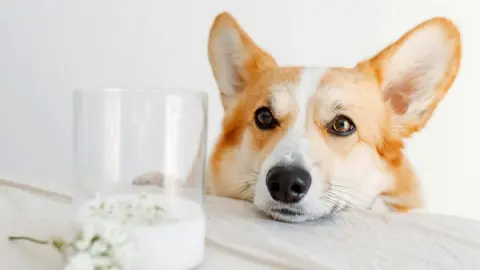
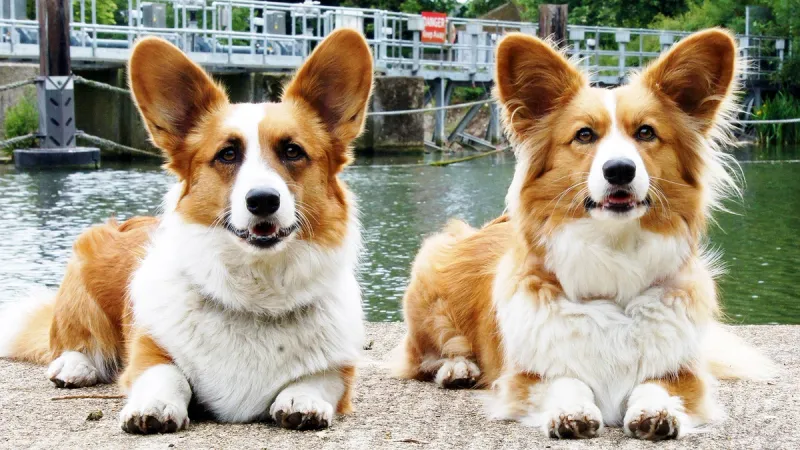
The Pembroke Welsh Corgi tends to be slightly smaller and more refined in build. The ears are usually more pointed and upright, giving a sharp, alert expression. Many Pembrokes have naturally shorter tails, and historically, tail docking was commonly performed, especially in some countries where it was once encouraged for working dogs. Coat colors in Pembrokes are typically red, sable, fawn, or black and tan, often with white markings.
The Cardigan Welsh Corgi, on the other hand, is generally more substantial and bone-heavy. Cardigans often appear a bit longer and sturdier overall. Their ears are larger with a softer, more rounded shape, and they carry a long, full, brush-like tail. Cardigans also come in a wider range of colors, including brindle, blue merle, and various combinations with white, in addition to more traditional shades.
For quick visual reference, many experts suggest looking at:
- Tail Pembrokes often have a very short tail, while Cardigans have a long, bushy tail.
- Build Pembrokes are a bit lighter and more compact Cardigans are heavier-boned and more robust.
- Ears Pembroke ears are more pointed Cardigan ears are larger and more rounded at the tips.
Personality Traits Of Pembrokes And Cardigans
While every dog is an individual, there are some general temperament trends that experienced breeders and veterinarians often observe.
The Pembroke Welsh Corgi is typically outgoing, lively, and highly social. Many Pembrokes enjoy being the center of attention and adapt well to busy households. Their bright, eager-to-please nature has helped them become very popular family companions. With proper socialization, they often get along well with children and other pets, though their herding instincts can sometimes show up as heel-nipping or chasing.
The Cardigan Welsh Corgi is usually described as a bit more reserved and thoughtful. Cardigans tend to be calm, steady, and slightly cautious with new people or situations. They often take a little more time to warm up to strangers, but once they bond with their family, they are deeply loyal and affectionate. This measured approach can make them excellent companions for pet guardians who appreciate a more deliberate, observant dog.
Both breeds are highly intelligent and athletic, reflecting their herding heritage. They thrive when given regular physical exercise and mental challenges. Without enough activity and enrichment, either breed can become bored, vocal, or mischievous.
Experts recommend that pet parents provide:
- Daily exercise such as brisk walks, play sessions, or safe off-leash running
- Mental stimulation including training games, puzzle toys, or scent work
- Consistent training using positive reinforcement to channel their quick minds and strong work ethic
With these needs met, both Pembrokes and Cardigans can become exceptional family companions and partners in everyday life.
Choosing The Right Corgi For Your Life
Corgis come in two distinct breeds, Pembroke and Cardigan. Their bloodlines and histories differ, yet both were shaped by the same herding role in Wales, leading to their shared long-and-low body type and the common Welsh name that simply means “small dog.”
Because their looks and personalities are not identical, it is important for prospective pet parents to match the breed to their lifestyle and preferences. Those who enjoy a highly social, outgoing dog may gravitate toward the Pembroke, while those who prefer a calmer, more reserved companion might find the Cardigan a better fit. In both cases, a commitment to exercise, training, and mental engagement is essential.
By taking the time to understand each breed’s history, structure, and temperament, pet guardians can make a thoughtful choice. Whether you welcome a Pembroke or a Cardigan into your home, their intelligence, charm, and unmistakable Corgi charisma have the potential to bring joy and laughter to your days for many years to come.
Your next step If you are considering a Corgi, connect with reputable breeders or rescue organizations, ask detailed questions about health and temperament, and spend time with both types when possible. That hands-on experience will help you find the Corgi partner who truly matches your heart and your home.
- 03.03.2026
- 08.11.2025