What Happens To Your Pet If You Are Suddenly Hospitalized And How One Hospital Is Changing The Rules
This article is an English translation of the original Japanese article. Read the original Japanese version.
A sudden hospital stay can be terrifying when you have a dog or cat depending on you. Learn how to plan ahead so your pet is safe and cared for, and discover an innovative Japanese hospital model that lets pet parents stay connected during treatment.
When an unexpected hospital stay becomes necessary, many pet parents find that their very first worry is not about themselves, but about their dog or cat. Companion animals are family, and for many people they are also a vital source of emotional support. When hospitalization is urgent or long term, not having a clear plan for your pet’s care can turn an already stressful situation into a crisis.
In recent years, new models of collaboration between human hospitals and pet care services have begun to emerge. These programs are designed to ensure that pet parents can access medical treatment without sacrificing their pet’s safety or well‑being. This article explains what to do with your pet if you need to be hospitalized suddenly and highlights a pioneering initiative at Matsunami General Hospital in Gifu, Japan.
What To Do With Your Dog Or Cat If You Are Suddenly Hospitalized
The first priority when a hospital admission is decided is to secure a safe, stable environment where your pet can be cared for reliably. Experts recommend thinking in layers: start with the most familiar, low‑stress option for your pet, then move outward to professional services if needed.
For many pet guardians, the smoothest solution is to ask a trusted family member or close friend to provide temporary care. Because dogs and cats are sensitive to changes in their environment, staying in or near their usual home base is often ideal. If possible, arrange for someone your pet already knows to visit your home, maintain their routine, and keep familiar sights and smells around them.
When there is no one nearby you can reasonably rely on, consider professional or community‑based options such as:
- Short‑term boarding at a veterinary clinic or reputable pet hotel
- Hiring a certified pet sitter to visit your home
- Arranging temporary foster care with a trusted acquaintance or foster family
If your hospital stay is expected to last only a few days, short‑term boarding at an animal hospital or pet hotel can be very practical. For dogs, it is especially important to choose a facility that can maintain their usual rhythm of walks, feeding times, and social interaction, as this helps reduce anxiety and supports their physical health.
For many cats, however, a boarding facility can be significantly more stressful than staying at home. Felines are typically more attached to their territory than to specific routines outside the home. In these cases, inviting a pet sitter to care for your cat in your own home is often the lower‑stress option. If a longer hospital stay is anticipated, it may be wise to explore temporary foster arrangements or staying with a trusted acquaintance who can provide consistent, quiet care.
To avoid last‑minute confusion, experts strongly recommend preparing a pet care information kit in advance. This can be as simple as a folder or digital note that clearly lists:
- Type and brand of food and treats, including exact amounts and feeding schedule
- Medical history, including chronic conditions, allergies, and past surgeries
- Current medications, dosages, and how and when they should be given
- Primary veterinary clinic contact details, including emergency numbers
- Behavior notes, such as fears, triggers, and handling preferences
Having this information ready means that, even if you are admitted suddenly, anyone stepping in to help can provide consistent, safe care. If your pet has a chronic illness or is on medication, it is essential that the temporary caregiver understands exactly what is needed and how urgently.
In addition, consider planning for worst‑case scenarios. Reviewing pet insurance options and exploring formal guardianship or pet trust arrangements can ensure that, if you are unable to make decisions for a period of time, your pet will still receive appropriate veterinary care and daily support.
A New Model Hospital Pet Parents Can Rely On
To address these very real concerns, a groundbreaking initiative launched in April 2025 at Matsunami General Hospital in Gifu Prefecture. The hospital opened a dedicated Pet Care Center on its grounds, designed specifically so that inpatients can entrust their pets to a safe, supervised facility directly connected to the hospital.
This is recognized as the first initiative of its kind in Japan. Traditionally, when a pet guardian needed hospitalization, they often delayed or declined treatment because they had no one to care for their dog or cat. By integrating pet care into the hospital environment, Matsunami General Hospital offers a practical solution that allows people to prioritize their own health without abandoning their responsibilities to their animals.
Under this system, pets can be cared for on the same hospital premises while their guardian undergoes acute treatment or diagnostic procedures. One of the major advantages is that pet parents no longer have to endure the anxiety of leaving their animals alone at home or in an unknown, distant facility.
Another key feature is the ability to visit your pet during your hospital stay, as long as your attending physician approves. This daily contact can be profoundly reassuring. Research on human–animal interaction suggests that time spent with a beloved pet can reduce stress hormones, ease perceived pain, and support emotional resilience, all of which may contribute to smoother recovery.
With Pet Ward A Hospital Room Shared With Your Dog
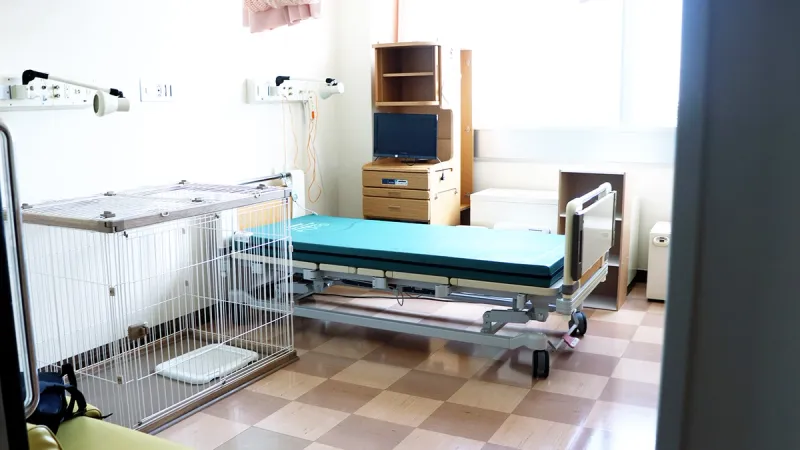
The innovation does not stop at short‑term on‑site boarding. Once acute treatment at Matsunami General Hospital is complete, some patients may be transferred to Kaizu City Medical Association Hospital, where a specialized With Pet Ward allows eligible patients to share a hospital room with their dog.
In this ward, pet guardians and their dogs can live together in the same room while ongoing treatment continues. The hospital grounds also include access to a dog run, so dogs can exercise and enjoy outdoor time in a controlled, safe environment. This model enables patients to maintain much of their usual daily life with their pet while still receiving necessary medical care.
At present, there are important limitations. Only dogs are eligible for the With Pet Ward, and other animals such as cats are not currently included. This restriction reflects both medical and facility‑management considerations. Depending on future demand, outcomes, and safety data, the program may expand, but for now it is essential for pet parents to understand that this option is dog‑only.
It is also worth noting that while Matsunami General Hospital does not limit its admissions solely to patients who will later transfer to Kaizu City Medical Association Hospital, direct admission to Kaizu City Medical Association Hospital is not possible. Any potential use of the With Pet Ward must therefore be coordinated through the standard medical pathways.
How Hospital Based Pet Care Benefits Both Guardians And Animals
The combined system of the Pet Care Center and the With Pet Ward offers meaningful benefits for both humans and animals.
For pet guardians, the most immediate advantage is the ability to focus fully on their own treatment. When people worry constantly about who will feed, walk, or medicate their pet, they may postpone essential procedures or refuse hospitalization altogether. Knowing that a safe, structured care option exists on the hospital grounds and that they can still see their pet during treatment significantly reduces psychological burden.
From a medical perspective, reducing this emotional load can be critical. Lower stress levels are associated with better sleep, improved pain tolerance, and more stable vital signs. For some patients, the simple act of seeing or touching their dog each day can provide motivation, comfort, and a sense of normalcy that supports recovery.
For the animals, these programs can also be beneficial. Instead of being left alone for long periods or moved abruptly to an unfamiliar environment far from their guardian, dogs can remain physically closer and maintain regular contact. This proximity may help reduce separation anxiety and behavioral changes that often appear when a pet parent is suddenly absent.
On a broader scale, if similar initiatives spread nationwide and internationally, fewer people would have to choose between their own health and their pet’s welfare. Access to medical care would become more equitable for those who live alone with animals or lack a strong local support network. As systems evolve to support both human patients and their pets, the quality of life for both sides of the relationship is likely to improve.
Moving Toward A Society Where Pets And People Are Safe Together
For many, pets are not just companions; they are emotional anchors and sources of hope during illness and hardship. That is why it is so important to build systems where a pet’s presence during a health crisis is not a burden, but a form of support.
Matsunami General Hospital’s Pet Care Center and the With Pet Ward at Kaizu City Medical Association Hospital represent an important first step toward that vision. While these services are currently limited to a specific region and, in the case of shared rooms, to dogs only, they offer a powerful model for hospitals and policymakers worldwide.
Sudden hospitalization can happen to anyone. Preparing now can make an enormous difference later. Create a written care plan for your pet, identify trusted caregivers, and keep your veterinarian’s information and your pet’s medical details organized and accessible. At the same time, stay informed about emerging hospital‑based pet care programs in your area and advocate for their development.
By planning ahead and supporting innovative approaches like those in Gifu, pet guardians can help build a future where no one has to delay life‑saving treatment because they are afraid for their pet’s safety, and where dogs and cats can continue to be the steady, loving presence that helps their humans heal.
- 03.02.2026
- 07.26.2025