How To Read Your Dog and Cat’s Body Language And Understand What They Really Feel

This article is an English translation of the original Japanese article. Read the original Japanese version.
Dogs and cats may not speak our language, but they communicate constantly through their tails, ears, eyes, and posture. Learn how to decode your pet’s everyday gestures so you can respond with confidence, deepen your bond, and support their emotional wellbeing.
Understanding Your Dog and Cat’s Emotions Through Body Language
Dogs and cats may not use words, but they are constantly "talking" to their Pet Parents through subtle (and sometimes very obvious) body language. When you learn to read these signals, you can respond more appropriately, reduce stress, and build a deeper, more trusting relationship.
Below, you will find common emotional signals in dogs and cats, what they usually mean, and how Pet Guardians can respond in a calm, supportive way.
How Dogs Show Their Emotions
Many dogs have big, easy-to-read expressions and gestures. Their whole body often gets involved when they are excited, worried, or unsure. Understanding these patterns helps you tell the difference between play, affection, and potential stress.
Tail Wagging And Other Whole-Body Signals
Not every wagging tail means a happy dog. The speed, height, and stiffness of the tail are key clues.
When a dog is genuinely happy or showing friendly interest, the tail is usually held at a natural or slightly raised position and wagged in small, quick movements. The base of the tail may stand up a bit, and some dogs wiggle their hips or even their whole body with joy.
Conversely, when a dog is upset or on edge, the tail may swing more forcefully from side to side, often with a stiff body and tense muscles. If this is paired with growling or barking, it can signal agitation or a warning rather than friendliness.
Lifting A Front Paw As An Affection Signal
A dog that gently lifts and lowers one front paw while approaching often appears to be checking your mood and asking for a positive interaction. These dogs may lower their body slightly, move in a soft, curved line, and gently nudge or lean in.
This behavior can be a form of polite affection or appeasement, as if the dog is saying, "I like you, and I hope we are okay." Pet Parents can respond by speaking softly, offering calm petting, and reinforcing that approaching politely is safe and rewarding.
In contrast, if a dog is lifting a paw while the rest of the body is stiff, the tail is lashing, and the dog is growling or barking, this can be part of a broader threat display. Raised hackles (fur standing up along the back and neck) indicate a dog that is highly aroused and potentially ready to defend itself.
The Play Bow And Sudden Bursts Of Energy
When a dog suddenly drops its front half to the ground with the rear end up and tail often wagging, this is commonly called a "play bow." It is a classic invitation to play and a way of saying, "Everything that happens next is just for fun."
Many dogs follow a play bow with short sprints, zooming in circles, or bouncing around with obvious excitement. If they bring a favorite toy to you right after, it is a clear sign they want interactive playtime.
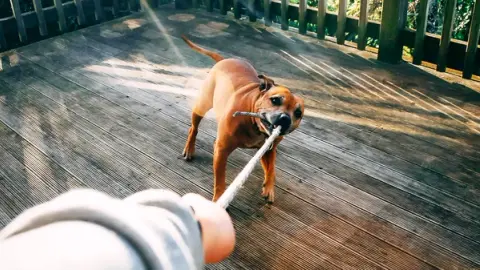
Experts recommend using these moments to engage in safe, structured play, such as fetch or tug with rules, to help your dog burn energy and strengthen your bond.
Showing The Belly
When a dog rolls onto its back and exposes its belly, context matters. In some situations, especially after being scolded or when approached by a more confident dog, this posture can be a submissive gesture, as if saying, "I am not a threat. Please do not be angry."
However, many well-socialized dogs show their belly to trusted Pet Guardians because they feel secure and want gentle touch. If the body is loose, the mouth is soft, and the dog seems relaxed, this is often a sign of trust and comfort.
Pet Parents can respond by calmly petting areas the dog enjoys and avoiding overwhelming them with rough or sudden handling.
Yawning Beyond Sleepiness
Dogs certainly yawn when they are tired, but yawning can also be a "calming signal." When a dog is faced with tension or someone is speaking loudly or moving abruptly, a yawn may be an attempt to release stress and soothe themselves.
In a relaxed home environment, some dogs even "catch" their Pet Guardian’s yawn, which can be a sign of social bonding. Consider yawning, lip-licking, and turning the head away as subtle signs your dog may need a gentler approach or a break from stimulation.
Mounting Behavior
Mounting (humping) is not always sexual. Outside of active heat cycles or intact males, dogs of any sex or age may mount other dogs, objects, or even people.
In many cases, this behavior is linked to:
- Overexcitement or lack of impulse control
- Social tension or attempts to assert control
- Stress or uncertainty in a new environment
Because persistent mounting toward people can be uncomfortable and may escalate social tension, experts recommend calmly interrupting the behavior, redirecting the dog to a different activity, and rewarding calm, alternative behaviors such as sitting or lying down.
Barking And Growling
A strong, clear "woof" or "ruff" can express many emotions. Higher-pitched, repetitive barks often indicate excitement, anticipation, or a request for attention, such as before a walk or mealtime.
However, if a dog believes it can control its Pet Guardian, barking may shift into demanding behavior. In those cases, the dog may bark sharply as if giving orders for food, play, or access to certain areas. Pet Guardians are encouraged to set consistent boundaries and reward polite behaviors instead of responding to pushy barking.
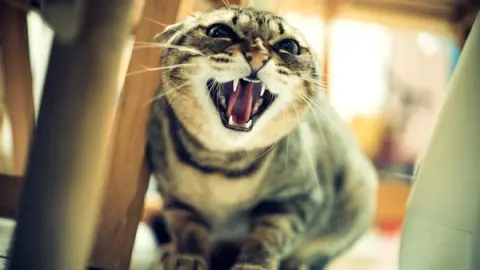
Low, rumbling growls or deep barks, especially when paired with a stiff body, direct stare, and raised hackles, are warning signals. The dog is asking for space and may feel threatened.
Looking Away Or Avoiding Eye Contact
When a dog is confronted by someone it perceives as stronger or more confident, it may deliberately look away, turn its head, or avert its gaze. This is often a peacekeeping gesture that says, "I do not want to fight."
After doing something they "know" often leads to scolding, some dogs will avoid eye contact or pretend to be uninterested, occasionally glancing up to check your reaction. If the dog’s body is soft and they are cautiously checking in, this can be a good moment to guide them calmly rather than punish harshly, helping them feel safe while learning appropriate behavior.
How Cats Express Their Feelings
Cats are often seen as cool and independent, but they are actually highly expressive. Their tails, ears, whiskers, and even tiny changes in posture can reveal a lot about how they feel.
Learning to read these signals helps Pet Guardians respect a cat’s boundaries and create a more harmonious home.
Rubbing Their Body Against You
When a cat walks toward you with its tail held upright and gently rubs against your legs or hands, it is usually a sign of affection and social bonding. Cats also have scent glands on their cheeks and body, so this behavior helps them mark you as part of their safe social group.
Pet Parents can respond by speaking softly, offering gentle strokes, and allowing the cat to control how long the interaction lasts. This is especially meaningful when a new or shy cat initiates contact.
Showing The Belly
Like dogs, cats sometimes roll onto their side or back and expose their belly. This posture usually indicates trust and relaxation, not necessarily an invitation for belly rubs.
Many cats are sensitive about their abdomen. While they may show you their belly to demonstrate comfort, they can quickly switch to defensive behavior if they feel overhandled. Consider this pose a compliment and approach with caution, watching your cat’s reactions closely.
Sudden Biting During Petting Or Holding
A cat may appear to enjoy petting or being held and then suddenly nip or bite. This is often a sign that the cat has reached its tolerance limit and wants the interaction to stop.
This "petting-induced aggression" can be subtle. Before the bite, you might notice:
- Tail starting to flick or twitch
- Ears turning slightly to the side or back
- Skin rippling along the back
Experts recommend stopping petting at the first sign of tension and letting the cat move away. Over time, you can learn how much touch your individual cat enjoys and where they prefer to be stroked.
Grooming Themselves After Being Touched
If a cat immediately licks or grooms the area where a person has just petted them, it can indicate that the scent or sensation was uncomfortable. The cat may be trying to "reset" their own scent and regain a sense of control.
While this can feel a bit discouraging, it is valuable feedback. Pet Guardians can experiment with different touch locations, lighter pressure, or shorter sessions to find what the cat prefers.
Bringing You Caught Prey
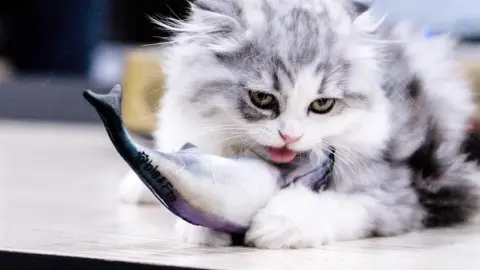
When a cat proudly delivers a toy, insect, or even a small animal, it can be startling, but it often reflects natural hunting behavior and social bonding.
Some behavior experts suggest that cats may be:
- Checking whether their human companion is "eating properly"
- Demonstrating hunting skills as if teaching, "This is how you catch food"
Although the exact motivation can vary, responding calmly and praising the cat’s confidence while safely disposing of real prey can help maintain trust.
Tail Held High
A cat that approaches with its tail held high, especially with a slight curve at the tip, is usually feeling confident and friendly. The higher the tail, the more secure and socially open the cat tends to be.
A tail that quivers or vibrates slightly while held upright is often reserved for individuals the cat particularly likes. This is one of the clearest signs of affection and trust in feline body language.
Tail Moving Side To Side
Unlike dogs, a cat that is vigorously swishing its tail from side to side is often irritated, overstimulated, or focused intensely on something. A rapidly lashing tail can be a warning that the cat is reaching its limit.
On the other hand, a slow, gentle tail movement or a tail that softly taps the surface while the cat is resting can indicate contentment and mild interest. When only the tip of the tail twitches in small movements, the cat may be concentrating on potential "prey," such as a toy or something outside the window.
Pet Parents can use tail speed and intensity as a guide to decide whether to continue interacting or give the cat some space.
Subtle Responses When You Call Them
If you call your cat’s name and they do not come but their ears flick or their tail tip moves, they are letting you know they heard you. This small response can be their way of saying, "I am aware of you, but I am not ready to move right now."
Respecting these small acknowledgments and avoiding forcing contact can help a cat feel more secure and in control of their environment.
Looking Away After Being Scolded
When a cat turns its gaze away after being corrected or spoken to firmly, it is not necessarily sulking. In many cases, this is a de-escalation signal, similar to dogs, that can be interpreted as, "I understand; I will stop."
Pet Guardians can support better behavior by calmly redirecting the cat to an appropriate activity rather than relying on loud scolding, which may increase anxiety.
Kneading Their Guardian’s Body
When a cat rhythmically presses its paws into a person’s lap, chest, or other body parts, this is called kneading. Many cats purr, drool slightly, or close their eyes while doing it.
This behavior is often linked to kittenhood, when kneading around the mother’s nipples helped stimulate milk flow. In adult cats, it is widely viewed as a powerful sign of comfort and affection.
If your cat kneads on you, it is often one of the strongest expressions of trust and love they can offer. Providing a soft blanket or cushion can make this ritual more comfortable for both of you.
Building A Lifetime Of Trust With Your Pets
Understanding your dog and cat’s body language is one of the most effective ways to support their emotional health. When you recognize the difference between play and stress, affection and overarousal, you can respond in ways that make your home feel safer and more predictable.
Pet Parents who observe carefully, respect boundaries, and reward calm, friendly behavior tend to see stronger bonds and fewer conflicts over time. If you are ever unsure about your pet’s signals or notice sudden changes in behavior, consider consulting a veterinarian or a qualified behavior professional.
By listening to what your pets "say" with their bodies every day, you are taking an important step toward a lifetime of mutual trust, comfort, and companionship.
- 03.02.2026
- 09.23.2013