Before You Visit a Pet Shop Rethinking How We Welcome Dogs and Cats Into Our Families
This article is an English translation of the original Japanese article. Read the original Japanese version.
Before you buy a puppy or kitten from a pet shop, it is worth understanding the hidden reality behind many animals for sale. This gentle yet powerful picture book invites pet parents to consider rescue and adoption first, so more dogs and cats can live the safe, loved lives they deserve.
Many pet parents dream of the day they bring home a new dog or cat. But before you walk into a pet shop, there is an important story every family should know.
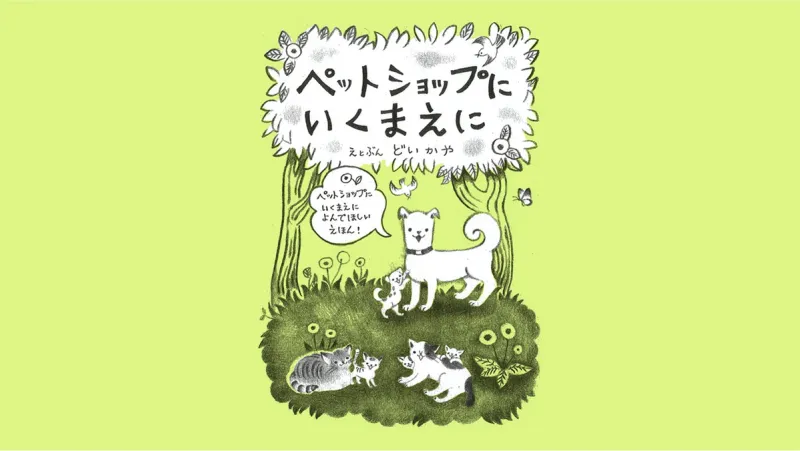
This article introduces the free picture book Before You Go to the Pet Shop by Japanese author and illustrator Kaya Doi. The book explains, in language even children can understand, what is happening behind the scenes of live animal sales in Japan and why our choices matter.
A Picture Book Every Future Pet Parent Should Read
Before You Go to the Pet Shop was created as a free booklet, and the author has kindly allowed it to be copied and shared. The drawings are soft and gentle, but the message is clear and uncompromising.
The book begins with a simple question for the reader.
Do you know that in Japan, many dogs and cats are still killed every single day? It is heartbreaking to imagine, especially because these animals have done nothing wrong. They are healthy, sentient beings who simply had the misfortune of being unwanted.
The natural next question is why. Why are innocent dogs and cats being put to death at all?
Why So Many Dogs and Cats Lose Their Lives
The book gently lists some of the reasons animals are surrendered:
People say things like, “We are moving and can’t keep the dog,” or “She is old and sick, so we don’t want her anymore.” Others say, “There are too many kittens now, please take them,” even though spay and neuter surgery could have prevented those unplanned litters.
Because of these self-centered reasons, animals who were once treated as family are taken to local government shelters and abandoned. Staff and volunteers work hard to find new pet guardians, but there are more animals than there are homes.
When time runs out and no adopter is found, many dogs and cats are killed. In many facilities, this is not a peaceful euthanasia for medical reasons. It is death by gas, a painful suffocation that causes fear and distress.
The Other Side of the Problem Mass Breeding for Profit
The book also highlights another serious issue. While countless animals are being killed, there are still many pet businesses that prioritize profit over animal welfare.
Mother dogs and cats are bred again and again, several times a year. Their bodies become exhausted and fragile. The goal is to produce as many puppies and kittens as possible and sell them cheaply in large numbers.
Even when these mothers manage to give birth safely, their babies are often taken away far too early. Pet shops prefer very young puppies and kittens because smaller, younger animals tend to sell more quickly.
Why Early Separation Is So Harmful
Puppies and kittens learn essential social skills by playing with their mother and littermates. Through play, they discover how to communicate, how hard they can bite, and how to interact safely with others.
When they are separated too early, they lose these critical learning opportunities. Research and veterinary experience suggest that early separation can affect both future behavior and long-term health. Animals taken from their families too soon may be more prone to anxiety, fear-based aggression, or difficulty adjusting to new environments.
Despite this, many very young puppies and kittens end up alone in small boxes at pet shops. They spend long hours without playmates, and even at night they sleep by themselves. In a healthy setting, they would still be snuggled up with their mother and siblings, feeling warm, safe, and secure.
Global Moves to Rethink Live Animal Sales
Around the world, more countries and regions are questioning or restricting the sale of live animals in pet shops. Many experts and welfare organizations argue that reducing or ending live animal retail sales is an important step toward protecting dogs and cats.
In Japan, one regulation now states that puppies and kittens must not be separated from their mother before 56 days of age. This is a meaningful improvement, but there are still loopholes, and enforcement is not yet strong enough to fully protect every animal.
At the same time, some breeders and businesses focus heavily on appearance. In the pursuit of certain looks, they may produce dogs and cats that are genetically prone to illness or physical problems. This can lead to lifelong suffering for the animals and emotional and financial strain for their future families.
A System That Does Not Make Sense
On one side, many dogs and cats are being killed every day because they have no home. On the other side, new puppies and kittens are being bred in large numbers for profit.
When you step back and look at this, it is hard not to feel that something is deeply wrong.
The picture book invites readers especially children and families to pause and think. If, one day, you decide to welcome a dog or cat into your home, what kind of choice will help animals the most?
Choosing Adoption First
The author gently encourages readers to consider adoption instead of buying from a pet shop. In practical terms, that can mean:
- Checking with your local government shelter or animal control facility
- Contacting rescue groups and volunteers involved in animal protection
- Exploring reputable non-profit shelters and foster-based rescues
By adopting, you give a second chance to an animal who already exists and urgently needs a home. You also help reduce demand for mass-bred puppies and kittens.
Most importantly, once you bring that animal into your life, the book asks you to love and care for them for their entire lifetime. Responsible pet guardianship means planning for changes in housing, health, and lifestyle, and staying committed even when things become challenging.
A Free Resource Meant to Be Shared
Before You Go to the Pet Shop is a free paper booklet. The author, Kaya Doi, has made it clear that copying and distribution are allowed.
If you agree with the message, you are encouraged to:
- Share copies with friends and family who are thinking about getting a pet
- Distribute it at community events, school activities, or local adoption days
- Use it as an educational tool to talk with children about kindness to animals
The hope is that, by spreading this story, more dogs and cats can be saved and more families will choose adoption and responsible care.
A Message From the Author
On the official website, Kaya Doi shares the intention behind the booklet. She explains that she created Before You Go to the Pet Shop with the wish that, when someone decides to welcome a dog or cat into their family, buying with money will not be the default choice.
Instead, she hopes it will become normal and expected to adopt animals who do not yet have a guardian.
She also aims to gather and share information about local governments and volunteer groups involved in rescue and protection work, so that people can easily find trustworthy sources when they are ready to adopt.
Above all, she writes that she sincerely hopes as many dogs and cats as possible can find happiness.
Progress in Japan and the Power of Collective Effort
The message of this booklet connects closely with recent changes in Japan. In the 2023 fiscal year, the number of dogs and cats killed by government authorities fell to 9,017 animals, dropping below 10,000 for the first time since records began in 1974.
Nine thousand and seventeen lives is still a very large number, and every single one of those animals mattered. At the same time, this reduction reflects the steady efforts of many people including creators like Kaya Doi, rescue volunteers, veterinarians, policymakers, and everyday pet guardians who choose adoption.
Their combined work shows that change is possible when society begins to value animal lives more highly.
Your Role in Creating a Kinder Future for Pets
As pet-focused media and as individual pet parents, we all share a responsibility to make choices that maximize animal well-being.
You can help by:
- Considering adoption first when you are ready to welcome a new dog or cat
- Spaying or neutering your pets to prevent unplanned litters
- Learning about reputable rescues and shelters in your area and supporting their work
- Teaching children that animals are family members, not disposable objects
Every informed decision sends a signal to breeders, pet shops, and policymakers that animal welfare matters.
By choosing compassion over convenience and commitment over impulse, you help build a world where far fewer dogs and cats are abandoned or killed, and far more can enjoy what they deserve a lifetime of safety, health, and love with their human families.
- 03.02.2026
- 04.27.2025