Gentle Dog Training That Works Teaching Your Pup Through Play, Not Punishment

This article is an English translation of the original Japanese article. Read the original Japanese version.
Your dog is part of the family, but are you teaching manners in a way that truly makes sense to them? Discover how to use play, body language, and quiet corrections so your dog learns to enjoy listening, instead of fearing discipline.
Many pet parents live with their dogs as cherished family members, but still feel unsure about what “good training” really looks like. Instead of thinking of obedience as something strict or harsh, it helps to see training as a shared language that lets dogs live safely and happily in our human world.
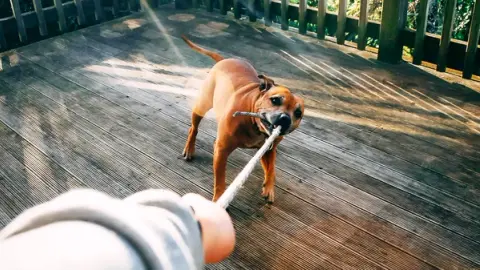
When people bring home large breeds, they often worry most about walks. A powerful dog that pulls or zigzags can be difficult and even dangerous to handle, so many pet guardians turn to professional trainers. That can be a smart choice, but it is important to remember that canine training is not the same as human athletic training. Dogs do not learn well through force or repetition alone; they learn best through relationships, clear communication, and play.
Across breeds, experts strongly advise against any approach based on hitting, intimidation, or pain. Traditional Japanese breeds such as Shiba Inu, Akita, and Kai Ken, as well as many Western breeds, do not “learn by being hit.” In fact, punishment-based methods are linked to higher stress, fear, and behavior problems. Whether your dog is a Japanese breed or a Western breed, modern behavior science supports reward-based, fear-free training.
Many large Western breeds, including Golden Retrievers, Labrador Retrievers, and Bernese Mountain Dogs, naturally see training as a form of play. This playful mindset is part of their charm, but it can make precise skills like walking calmly at your side more challenging to teach. For these dogs, turning training into structured games is often the most effective strategy. They are eager to participate, but they need clear rules and consistent feedback to understand what you want.
Other breeds, such as German Shepherds, Boxers, and Standard Poodles (the original form of the Toy Poodle), were historically used for work like hunting, protection, or search and rescue. These dogs are highly intelligent and capable of deep focus, yet they often form an especially strong working bond with just one person in the household. Even then, for them, training is still experienced as one of many “games” or jobs they share with their favorite human, not as punishment.
Many dogs also show a natural preference for interacting with humans of the opposite sex. Male dogs may gravitate toward women, and female dogs may seek out men as play partners. This is not a strict rule, but it is a pattern many trainers notice. Traditional Japanese breeds, with their closer link to their ancestral working roles, often lean less toward “play for play’s sake” and more toward loyalty to a specific family leader. This may be one reason they have long been valued as watch dogs, even when they are only medium-sized.
A core principle of effective training is simple yet powerful. Do not just “teach commands” – help your dog learn that following your guidance leads to good things. When a dog understands that listening to you reliably results in play, praise, or comfort, cooperation becomes their choice, not something forced.
This rule applies not only to dogs but to most animals that can learn tricks or tasks. In dogs, research suggests their intelligence is roughly comparable to a human toddler around three years old, but their emotional sensitivity can be even sharper. They are remarkably skilled at reading our moods, tone of voice, and body language. Even after working with a professional trainer, many pet guardians feel they must keep “doing discipline” at home. In reality, dogs learn best when everyday life itself becomes a series of playful, well-managed lessons.
Consider common problem moments, such as a dog jumping on the table or racing around the house and knocking things over. In these situations, loud yelling or physical punishment is not only unnecessary, it is often less effective. A surprisingly powerful tool is your calm, focused gaze. Many dogs that make excellent guide dogs or service dogs share one trait: they naturally look into a person’s eyes and pay attention to subtle cues. This ability to hold eye contact is often seen as a sign of strong potential.
When your dog misbehaves, one effective approach is to quietly but firmly correct them while maintaining gentle eye contact. Look directly at your dog, keep your voice low and steady, and let your expression communicate that you are not pleased. If your dog looks away, you can gently guide their head back toward you with both hands and repeat the quiet correction. You do not need to shout; dogs have excellent hearing, and a calm, serious tone often carries more weight than a loud one.
After a calm correction, it is helpful to give your dog a bit of space. Many dogs will appear subdued or “down” for a short while after being gently but clearly told off. This pause is important. Later, during a walk or play session, offer plenty of positive interaction and fun. The contrast between the quiet, serious moment and the later joyful play helps your dog remember: when they control their impulses and respect boundaries, good things follow.
If this “after time” is too short or inconsistent, dogs may become confused. They might start to believe that any behavior, even unwanted ones, will still get them attention. To avoid this, aim for a clear pattern: calm, brief correction; a period of low interaction; then rewarding, intentional play or affection when your dog is behaving appropriately.
When you return from a walk and feel your dog has listened well, take a moment before unclipping the leash. Stroke their whole body, speak warmly, and clearly praise them out loud. Dogs remember how things feel and sound together. The combination of your touch and your voice makes a stronger impression than words alone.
While dogs can pick up on the tone and rhythm of our speech, they do not fully understand language the way humans do. They rely heavily on physical sensations, body warmth, facial expressions, and emotional energy. These organic, mental, and emotional signals leave a deep imprint on their memory. That is why pairing a kind voice with gentle petting or a relaxed posture can be so powerful.
The same principle applies when you need to correct your dog. There is no need to raise your voice. Instead, face your dog directly, look into their eyes, and use a low, steady tone to explain what you do not want. If they turn away, gently guide their head back toward you and repeat the quiet message. Over time, this consistent pattern teaches your dog that your calm, serious voice and focused gaze mean “this matters.”
None of this means training is effortless. It requires patience, timing, and emotional control from the pet guardian. But when you look closely, effective training is built from many small, simple actions repeated with kindness and consistency. You are not just teaching your dog rules; you are shaping how they feel about listening to you.
By treating training as play with purpose, using touch and tone thoughtfully, and relying on calm corrections instead of fear, you help your dog become not only well-mannered, but also deeply secure. This is how you build a lifetime of trust with the dog who shares your home and your heart.
- 03.02.2026
- 10.15.2013