Is Tap Water Really Safe for Dogs and Cats? What Pet Parents Need to Know
This article is an English translation of the original Japanese article. Read the original Japanese version.
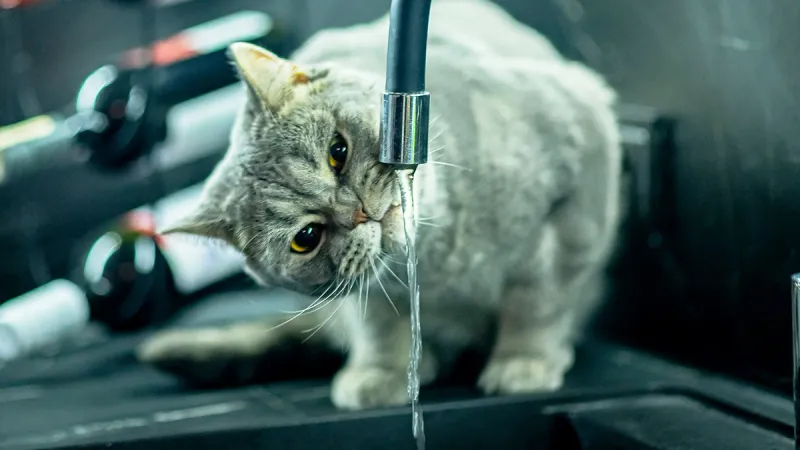
Many pet parents assume that if tap water is safe for people, it must be safe for pets too. But dogs and cats have smaller bodies and different metabolisms, which means the quality of their everyday drinking water deserves a closer look.
The Hidden Issues With Chlorine in Tap Water
Chlorine is added to municipal tap water to kill harmful bacteria and viruses. It is highly effective as a disinfectant and is one reason many countries can safely drink water straight from the tap.
However, chlorine is not completely free of concerns for pets. In dogs and cats, chlorine may irritate sensitive tissues, and when it reacts with organic matter in the water, it can form potentially harmful byproducts such as trihalomethanes and formaldehyde. In addition, chlorine does not fully address chlorine‑resistant organisms like Legionella or Cryptosporidium.
International guidelines, such as those from the World Health Organization, allow for a residual chlorine concentration of up to 5 mg/L. Some water utilities, like the Tokyo Metropolitan Government, set even stricter targets, aiming for 0.1–0.4 mg/L or less and state that these levels are safe for humans. What remains unclear is how these standards translate to long‑term safety for dogs and cats, whose bodies are smaller and may respond differently to chemical exposure.
Can Boiling Reduce Chlorine and Trihalomethanes
Research suggests that boiling tap water for at least 15 minutes can significantly reduce trihalomethane levels. Extended boiling also helps drive off free chlorine. On paper, this sounds like an easy fix for pet drinking water.
The trade‑off is that once chlorine is removed, the water loses its disinfectant protection and becomes ordinary water that can spoil more easily. For pet guardians, this means boiled water must be handled like fresh, perishable food: stored in clean containers, kept cool, and replaced frequently to avoid bacterial growth.
Real‑World Problems Linked to Tap Water
Even when water utilities work hard to maintain safety, unexpected issues can still arise. Beyond chlorine itself, chemical contamination incidents have been reported in various regions, reminding pet parents that tap water quality is not always static.
PFAS Contamination Events
From 2023 to 2024, multiple areas across Japan reported the detection of PFAS (per‑ and polyfluoroalkyl substances) in drinking water. These man‑made chemicals are used in products such as firefighting foams and industrial coatings.
PFAS are often called “forever chemicals” because they persist in the environment and can remain in the body for long periods. Some compounds in this group are under investigation for potential carcinogenicity and other health effects. In certain regions, including Kibi‑Chuo Town in Okayama Prefecture and Kakamigahara City in Gifu Prefecture, blood tests revealed that many residents exceeded risk thresholds used in the United States.
For pet parents, this raises a reasonable question: if local human residents are advised to be cautious about PFAS exposure, it is sensible to consider alternative water sources for pets as well, especially for long‑term daily consumption.
Formaldehyde Formation in Treatment Plants
Another example comes from an incident at the Misato Water Purification Plant in Saitama Prefecture. There, formaldehyde, a known harmful substance, was generated during the chlorination process. The reaction occurred when organic matter in the raw water supply interacted with chlorine.
This event led to a temporary suspension of tap water supply over a wide area. While such accidents are relatively rare, they highlight a key point for pet guardians: even well‑regulated systems can occasionally experience unexpected chemical issues, and pets are just as exposed as humans when they drink from the same tap.
Why Minerals in Tap Water Also Matter for Pets
Beyond disinfectants and chemical contaminants, the mineral content of tap water can influence pet health, particularly in animals prone to urinary problems. Water hardness is mainly determined by calcium and magnesium levels.
In dogs and cats, especially those with a history of urinary stones, excessive mineral intake may increase the risk of urolithiasis (urinary tract stones). While not every pet will be affected, veterinarians often recommend paying attention to both diet and water hardness for stone‑prone animals.
Water Hardness Categories and Regional Differences
The World Health Organization classifies water hardness as follows:
| Soft Water | Moderately Soft Water | Hard Water | Very Hard Water |
|---|---|---|---|
| 0–60 mg/L | 60–120 mg/L | 120–180 mg/L | 180 mg/L and above |
A 2024 nationwide study by the University of Tokyo, which examined 1,564 locations, reported that some tap water supplies in regions such as parts of Kanto and Kyushu fall into the “moderately soft” range. While this is not extremely hard water, it is harder than the very soft water many people assume is standard.
For pets with a known history of urinary stones or lower urinary tract disease, it is wise to:
- Ask your veterinarian whether water hardness should be limited for your individual pet.
- Check local water quality reports from your municipality to understand hardness levels.
- Consider filtered or specially formulated bottled water with controlled mineral content if your vet recommends stricter management.
The Overlooked Role of Storage Tanks in Apartments
In many apartment buildings and condominiums, tap water does not come directly from the main supply line to each unit. Instead, it is often stored in a roof‑top or underground tank (reservoir) before being distributed through the building.
Even if the water delivered by the utility is clean, poorly maintained storage tanks can compromise water quality. There have been cases where small animals, insects, or reptiles entered tanks and died inside, contaminating the water. In a widely reported 2013 incident in Hyogo Prefecture, local high school students even broke into a water tank and swam in it.
Under Japan’s Water Supply Act, large systems with an effective capacity of more than 10 tons, known as “simple dedicated water supply systems,” are required to be cleaned at least once a year. However, individual residents have limited control over how diligently these rules are followed.
For pet guardians living in buildings with storage tanks, it can be reasonable to:
- Ask the property manager or landlord about the inspection and cleaning schedule.
- Request documentation or reports if you have concerns about water hygiene.
- Use filtered, bottled, or delivered water for pet drinking bowls if you are not confident in tank maintenance.
Making Tap Water Safer for Dogs and Cats
On a global scale, Japan’s tap water is considered highly safe, cost‑effective, and well regulated for human use. For many households, it remains a practical choice. At the same time, pet parents should remember that these standards are designed around human physiology, not that of dogs and cats.
With a few thoughtful adjustments, you can use tap water more safely and confidently for your pets:
- Refresh drinking water daily so it stays clean and appealing.
- Clean bowls with hot water and mild detergent to prevent biofilm and bacterial buildup.
- For senior pets or those with chronic illnesses, be especially mindful of mineral content and overall water quality.
- If you are worried about disinfectants or byproducts, consider using a certified water filter or boiling water for at least 15 minutes, then cooling it completely before serving.
- In homes with storage tanks, check how the system is managed and decide whether to rely on alternative water sources for drinking.
For some families, investing in a water dispenser or pet‑safe water delivery service can simplify these concerns by providing consistently filtered or purified water.
Creating a Water Environment Your Pet Can Truly Trust
Water is one of the simplest yet most powerful tools for protecting your pet’s health. By looking beyond the assumption that “human‑safe equals pet‑safe,” you can make more informed choices about what goes into your dog’s or cat’s bowl every day.
Stay curious about your local water quality, work with your veterinarian to tailor water choices to your pet’s medical history, and adjust your routine as needed. Over time, these small, consistent decisions help build a home environment where your pet can drink confidently and stay well hydrated for years to come.
- 03.02.2026
- 01.18.2021