Why Your Dog’s Blood Type Matters And How It Could Save Their Life
This article is an English translation of the original Japanese article. Read the original Japanese version.
If your dog suddenly needed an emergency transfusion, would the veterinary team know which blood is safe to use? Understanding canine blood types and testing in advance can give your dog a critical advantage when every second counts.
Key takeaways
Q. How are dog blood types different from human blood types?
Dogs use the DEA system instead of ABO, have over 13 types, and each dog carries multiple DEA types at the same time.
Q. Why is the DEA 1.1 type considered important for transfusions?
DEA 1.1 has high antigenicity; giving DEA 1.1 positive blood to a negative dog can cause severe hemolytic reactions.
Q. How can I check my dog's blood type and when is a good time to request it?
A vet draws a small blood sample and uses a test kit, giving results in minutes. It’s best to request it during routine checkups, heartworm tests, or pre-surgery exams.
Dogs Have Many Blood Types Understanding The DEA System
When humans think about blood types, we usually think of four familiar groups: A, B, O, and AB. Some people even use them as an icebreaker or for lighthearted personality talk.
Dogs, however, live in a very different blood type world. Their system is more complex, more varied, and far more important to understand when it comes to emergency care.
Canine blood is classified using what is known as the DEA system, short for Dog Erythrocyte Antigen. These antigens are markers on the surface of red blood cells. Internationally, veterinarians recognize at least 13 different DEA blood groups, and ongoing research continues to identify and refine additional types.
Unlike humans, dogs are not labeled with just one blood type such as “Type A” or “Type O.” Instead, each dog can carry several DEA types at the same time, like pieces of a puzzle that form that dog’s unique blood profile. For example, a dog might be DEA 1.1 positive, DEA 4 positive, and DEA 7 positive all at once.
This multi-layered system is fascinating from a medical standpoint, but it also means that finding a perfectly compatible blood donor for a dog can be more challenging than it is for humans. That is one reason why planning ahead and understanding your dog’s blood type can be so valuable.
Why DEA 1.1 Is The First Blood Type Vets Check
Among the many canine blood groups, DEA 1.1 is the most clinically important. When a dog needs an urgent transfusion, it is often unrealistic to match every single blood group in a crisis. Instead, veterinarians prioritize DEA 1.1 because it is the type most likely to trigger serious reactions.
DEA 1.1 is known for having high antigenicity, meaning it can strongly stimulate the immune system during a transfusion. Dogs are classified as either DEA 1.1 positive (they have the antigen) or DEA 1.1 negative (they do not have the antigen).
This positive or negative status has a major impact on transfusion safety. If a DEA 1.1 negative dog receives DEA 1.1 positive blood, that dog’s immune system may recognize the incoming red blood cells as dangerous invaders.
In that situation, the body can launch an aggressive attack, destroying the transfused red blood cells in a process called a hemolytic reaction. Hemolytic reactions can lead to fever, shaking, rapid heart rate, breathing difficulty, and in severe cases, can be life-threatening.
Because of this risk, veterinary teams strongly prioritize blood typing and compatibility testing before transfusion whenever possible. DEA 1.1 negative blood is often considered similar to the human “universal donor” type O, because it can usually be given more safely to a wider range of dogs.
Is The First Transfusion Safe Without Testing Why That Belief Is Risky
You may have heard that “dogs can safely receive a first transfusion without blood typing.” There is a small kernel of truth in this, but it is also a dangerous oversimplification.
Humans are born with natural antibodies against certain blood types that are different from their own. That is why a human given the wrong blood type can have an immediate and severe reaction, even on the first transfusion.
Many dogs, in contrast, do not naturally carry strong antibodies against other blood types at birth. Because of this, a dog’s very first transfusion may not always trigger an immediate, dramatic reaction even if the blood is not perfectly matched.
However, this does not mean that skipping testing is safe or recommended. Once a dog receives blood that does not fully match, their immune system can “learn” from that exposure. Over several days, the body may begin to produce powerful antibodies targeted at that foreign blood type.
If that same dog later needs a second transfusion with incompatible blood, the immune system is already primed and ready. This can result in a rapid and severe transfusion reaction, including signs similar to anaphylaxis, such as collapse, vomiting, pale gums, and shock.
Because accidents, surgeries, or serious illnesses can happen more than once in a dog’s lifetime, experts strongly recommend matching blood types as carefully as possible even for the first transfusion. Doing so can help protect your dog not only today, but also in any future emergency.
Even when it is the first transfusion, choosing compatible blood can be a critical safeguard for your dog’s long-term safety.
How To Find Out Your Dog’s Blood Type
If you are curious about your dog’s blood type, the best starting point is your regular veterinary clinic. Many general practices can perform canine blood typing in-house or through a reference laboratory.
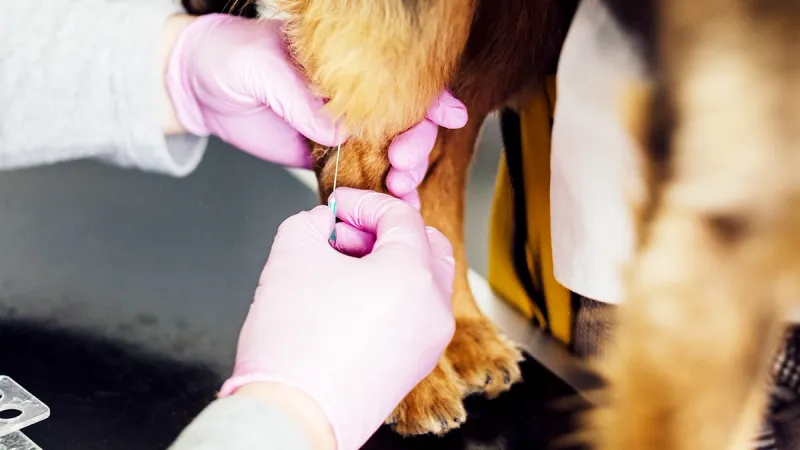
The process is straightforward. A small sample of your dog’s blood is collected, usually from a leg vein, much like a routine blood test. In many clinics, the sample is then tested using a specialized blood typing kit, and results may be available within minutes to an hour.
For most dogs, the time, discomfort, and risk are similar to a standard blood draw for a wellness exam. Costs vary by region and clinic, but many Pet Guardians can expect a typical range from several thousand yen to around 10,000 yen or the local equivalent in other currencies.
If taking your dog to the clinic only for blood typing feels like a big step, consider combining it with another planned visit. For example, you can ask your veterinarian to add blood typing when your dog is already having blood drawn for:
- Annual wellness screening
- Heartworm or other parasite testing
- Pre-anesthetic bloodwork before spay or neuter surgery
- Dental procedures that require general anesthesia
By pairing blood typing with an existing appointment, you can reduce the number of needle sticks and make the most of a single visit.
A simple way to start is to say, “At our next blood test, could we also check my dog’s blood type?” Most veterinary teams are happy to guide you through the options.
Turning Blood Type Results Into A Lifesaving Plan
Once you know your dog’s blood type, that information becomes more than just a lab result. It turns into a vital piece of emergency identification that can help your veterinary team act quickly when time is critical.
In situations such as traffic accidents, sudden internal bleeding, or acute illness requiring emergency surgery, every minute counts. If your dog’s blood type is already known, the clinic can arrange compatible donor blood much more efficiently, potentially improving outcomes.
Your veterinary clinic will usually record your dog’s blood type in their medical file, but it is wise for Pet Parents to keep this information accessible as well. Consider:
- Writing the blood type in your dog’s health notebook or vaccination record on a clearly visible page
- Keeping a small card or note in your wallet or bag with your dog’s name, blood type, and clinic contact information
- Storing the details in your smartphone notes or a pet health management app, so you can share them instantly in an emergency
By treating your dog’s blood type like an essential part of their identity, you help ensure that critical information is never out of reach when it matters most.
Taking The Next Step To Protect Your Dog’s Future
Modern veterinary medicine offers powerful tools to support dogs through accidents, surgeries, and serious illnesses, and safe blood transfusion is one of the most important of these tools. Knowing your dog’s blood type in advance is a simple, proactive step that can make a real difference in an emergency.
At your dog’s next veterinary visit, consider asking whether blood typing is appropriate for them and how your clinic handles transfusions. A brief conversation today can translate into faster, safer care tomorrow.
By learning about canine blood types and planning ahead, Pet Guardians can play an active role in safeguarding their dog’s life, turning medical knowledge into everyday preparedness and peace of mind.
- 03.20.2026
- 03.05.2026