How To Safely Shorten Overgrown Dog Nails And Gently Reset the Quick
This article is an English translation of the original Japanese article. Read the original Japanese version.
Worried about hitting the blood vessel when you trim your dog’s nails? Learn how to safely help an overgrown quick recede, how often to trim, and when to call in a professional so your dog can stay comfortable and stress free.
Key takeaways
Q. How can I safely make an overgrown quick recede at home?
Trim and file only a small hard tip of the nail every 1–2 weeks to give light, repeated stimulation, gradually making the quick recede over time.
Q. What is the ideal nail trimming frequency to prevent the quick from growing long?
In general, trim every 2–3 weeks; small indoor dogs need care every 1–2 weeks, and even active outdoor dogs should have a full nail check about once a month.
Q. What should I do if the quick is so long that it won’t recede with home care?
If home care can’t make it recede, you need to consult a veterinarian for medical treatment using hemostatic agents and local anesthesia.
Many pet parents feel nervous about nail trims, especially once they learn there is a blood vessel inside the nail that can bleed and cause pain if cut.
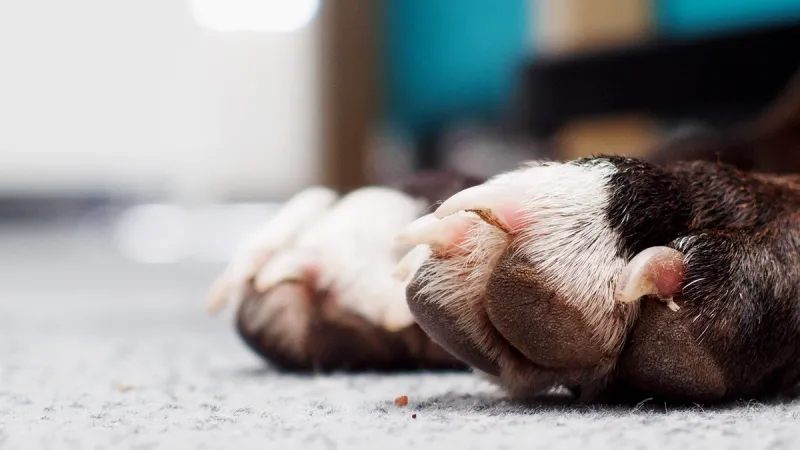
That inner blood vessel and nerve bundle is called the quick. When the quick is accidentally cut, it can cause significant pain and bleeding. Even more challenging, if nails are allowed to grow too long, the quick gradually grows forward with the nail, making it harder to trim the nails back to a healthy length.
In this guide, you will learn how to safely help an overgrown quick recede, how often to trim your dog’s nails, and when to seek professional veterinary care.
What To Do When the Quick Has Grown Too Long
The first thing to understand is that resetting an overgrown quick takes time and patience. There is no instant, pain free way to make it disappear.
The safest and most effective method is to shorten the nails gradually over multiple sessions. By trimming a very small amount every one to two weeks and gently smoothing the hard tip, you provide light, controlled stimulation to the quick. Over time, this repeated mild stimulation encourages the quick to slowly recede back toward the paw.
To make the process more comfortable for your dog, consider trimming right after a bath or a walk, when the nails are slightly softer. For dogs with white or light-colored nails, the pink quick is often visible through the nail, making it easier to avoid. For dogs with black nails, you can shine a light from behind or underneath the nail to better visualize where the quick may be.
If you still cannot confidently identify the quick, or if your dog’s nails are extremely overgrown and feel unmanageable, consult a professional groomer or your veterinarian. They can demonstrate safe technique, help you set a trimming schedule, and step in when home care is no longer enough.
Why the Quick Can Recede With Proper Care
The quick is living tissue that responds to the environment around it. When the nail tip receives regular, gentle wear or trimming, the quick tends to slowly pull back. This is why maintaining a shorter nail length over several weeks to months can allow the quick to return to a healthier position.
However, trying to shorten the nail dramatically in a single session is risky. Cutting too far can cause pain, bleeding, and fear, which may make your dog resist future nail trims. Instead, focus on small, frequent trims and pair each session with positive experiences.
After each trim, offer high-value treats, calm praise, and gentle petting. This helps your dog associate nail care with good things, protecting your bond and making long-term maintenance much easier.
How Often Should You Trim Your Dog’s Nails
To prevent the quick from creeping forward, regular nail maintenance is essential. For most dogs, experts recommend trimming every two to three weeks.
That said, the ideal schedule depends on your dog’s lifestyle and environment. Dogs who spend most of their time indoors on soft flooring or carpet experience very little natural nail wear. Small breeds such as Chihuahuas and Toy Poodles often benefit from trims every one to two weeks to keep nails at a healthy length.
Conversely, dogs who walk frequently on rough or hard surfaces, such as concrete or asphalt, may naturally wear their nails down to some extent. Even for these dogs, it is important to check all nails at least once a month, including the often-forgotten dewclaws (the higher “thumb-like” nails that do not touch the ground). These nails rarely wear down on their own and can curl or overgrow if ignored.
Think of nail care not as “cutting when they are already long,” but as trimming before they become overgrown. This proactive approach is one of the most effective ways to prevent the quick from extending and to maintain healthy, functional nails.
When the Quick Is So Long That It Will Not Recede at Home
In some cases, the quick becomes so overgrown that home care alone is unlikely to make it recede enough. When nails are extremely long or your dog is very fearful or painful, veterinary treatment is often the safest option.
At the veterinary clinic, the team can use tools such as styptic or hemostatic agents and, when appropriate, local anesthesia or sedation to carefully shorten the nail tips in a controlled, medical setting. In some situations, a veterinarian may intentionally allow a small amount of bleeding to occur under close supervision. This controlled injury can trigger a healing response that encourages the quick to remodel and gradually recede.
Because this is a medical procedure, it must be performed by a veterinarian who can assess the blood supply, pain level, and overall health of your dog. Attempting to “cut deep” at home without training can lead to prolonged bleeding, significant pain, and long-lasting fear of nail trims.
In addition to veterinary care, moderate walking on firm surfaces can support healthy nail wear. Regular, appropriate exercise on pavement or other hard ground can provide gentle, natural abrasion that helps maintain nail length and stimulates the quick to adjust.
However, this approach is not suitable immediately after bleeding, in very senior dogs, or in dogs with joint, paw, or mobility issues. Always follow your veterinarian’s guidance on how much and what type of exercise is safe for your individual dog.
Why Cutting Through the Quick Is No Longer Recommended
In the past, some professionals advised that it was acceptable to cut straight through the quick once, causing temporary pain and bleeding, in order to “reset” the nail length quickly. Because the quick often receded during healing, this method sometimes appeared effective.
Modern veterinary medicine and behavior science, however, do not recommend this approach. Cutting directly into the quick causes intense pain and stress. Many dogs who experience this become extremely fearful or defensive about nail trims, making future care far more difficult and dangerous for everyone involved.
There are also medical risks, including prolonged bleeding and potential infection, especially if the dog licks the area or walks on dirty surfaces afterward.
Today, the standard of care emphasizes minimizing pain and fear while encouraging the quick to recede naturally. Professional groomers and veterinarians aim to trim nails in small increments, using gentle, repeated stimulation rather than traumatic cuts. This approach protects both your dog’s physical comfort and emotional well-being.
For pet guardians, the most important goal is to maintain a nail care routine that is as pain free and low stress as possible. Over the long term, this is the most reliable way to keep nails healthy and prevent the quick from overgrowing again.
Caring for Your Dog’s Nails With Patience and Trust
Even if your dog’s quick has already grown too far forward, consistent, gentle care can help it recede over time. Focus on gradual trims, positive reinforcement, and a schedule you can realistically maintain.
By combining regular nail trimming with appropriate daily exercise, most pet parents can keep their dog’s nails at a healthy length and the quick in a safe position. If you are unsure where to start, begin by checking your dog’s nails once a week. Look at the length, listen for clicking on hard floors, and gently handle each paw so your dog becomes comfortable with the routine.
With patience, planning, and support from your veterinary team when needed, you can turn nail care from a stressful chore into a calm, predictable part of your dog’s wellness routine—and build even more trust along the way.
- 03.20.2026
- 10.27.2025