Is Nighttime Walking Safest For Dogs In Extreme Heat? How To Protect Your Pup All Summer
This article is an English translation of the original Japanese article. Read the original Japanese version.
Scorching summer days can turn a simple walk into a serious health risk for dogs, especially on hot asphalt. Learn when it’s actually safer to walk at night, how to check ground temperature, and the essential safety steps every pet parent should follow.
When temperatures soar, a midday walk can be genuinely dangerous for dogs. Asphalt can reach close to 140°F (60°C), putting your dog at risk for painful paw pad burns and heatstroke from the radiant heat rising off the ground.
It is natural for pet parents to wonder whether “it might be safer to just walk at night instead.” Night walks can absolutely help your dog avoid the worst of the heat, but they also come with their own set of risks that you should plan for.
Benefits Of Night Walks And What To Watch For
Walking after dark offers a major advantage in extreme heat. Your dog is exposed to less direct sun, and in many areas the air temperature is lower than during the day. For dogs who are sensitive to heat, this can make walks more comfortable and safer.
However, nighttime does not automatically mean safe conditions. Pet guardians still need to be cautious about three key factors: residual heat in the asphalt, reduced visibility, and lingering humidity.
Even after sunset, asphalt does not cool down right away. It slowly releases the heat it stored all day, which means the ground can stay dangerously hot for hours. A road that felt scorching at noon can still be hot enough to hurt your dog’s paws in the early evening.
Reduced visibility is another concern. In the dark, it is harder for drivers and cyclists to see your dog, especially smaller or dark-coated dogs. You may also have more trouble spotting curbs, potholes, broken glass, or other obstacles that could cause injuries.
On humid nights, the air can feel warmer than the thermometer suggests. Dogs cool themselves primarily through panting, so high humidity makes it harder for them to release heat. Even if the temperature has dropped a bit, you should watch closely for early signs of heat stress such as heavy, rapid panting, a bright red tongue or gums, slowing down, or seeming unusually restless.
How Long Does Asphalt Stay Hot At Night
Many people assume that once the sun goes down, the ground cools quickly. In reality, on very hot days, asphalt can hold onto heat much longer than we expect.
Here is a general guideline for how long road surfaces may stay warm after a scorching day:
- Right after sunset around 6–7 p.m.
If the road surface climbed close to 140°F (60°C) during the day, it can still be well above 104°F (40°C) at this time. At these temperatures, paw pad burns are a real risk, and walks on bare asphalt should be avoided. - Two to three hours after sunset around 8–9 p.m.
The surface temperature usually drops somewhat, but on tropical nights when the air stays around 86°F (30°C), the road can still be over 86°F (30°C). That is cooler than earlier, yet still uncomfortable and potentially irritating for sensitive paws. - Late night after 10 p.m.
As the air temperature finally dips, the asphalt cools further and often settles around 77°F (25°C) or a bit higher. This is generally safer, but the surface may still feel warm rather than cool.
Asphalt is designed to absorb and retain heat. In contrast, surfaces like concrete, packed dirt, and grass tend to release heat more quickly. Whenever possible, prioritize routes that include dirt paths, shaded sidewalks, or grassy parks over long stretches of blacktop.
A simple rule of thumb many veterinarians recommend is the “5-second hand test.” Before you walk, place the flat of your hand on the ground and hold it there for 5 seconds. If it feels too hot or very uncomfortable for your hand, it is too hot for your dog’s paws.
Essential Safety Measures For Night Walks
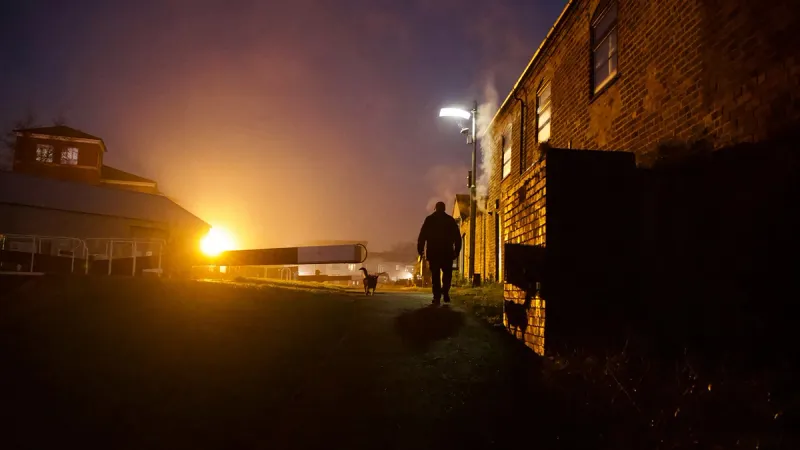
The biggest additional risk at night is reduced visibility. On darker streets or busy roads, drivers and cyclists may not notice your dog until they are very close, especially if your dog is low to the ground or blends into the surroundings.
To keep your dog safer, make visibility a top priority:
- Use reflective gear such as collars, harnesses, and leashes with reflective strips.
- Add LED lights to your dog’s collar or harness so they are visible from a distance.
- Carry a flashlight or wear a headlamp so you can see the path clearly and others can see you.
These simple tools help you spot uneven pavement, steps, or debris before they cause a trip or injury. They also give drivers and cyclists more time to react.
In many areas, wildlife and free-roaming animals are more active after dark. You may encounter stray cats, raccoons, or other wild animals, which can trigger your dog’s prey drive or cause sudden lunges and scuffles. Keep your dog on a secure, non-retractable leash and stay alert to movement around you.
Mosquitoes are also more active at dusk and into the night. Because mosquitoes can transmit heartworm disease, veterinary experts strongly recommend year-round heartworm prevention in many regions. Talk with your veterinarian about appropriate preventives, and consider using pet-safe insect repellents or avoiding areas with heavy mosquito activity.
Are Late-Night Or Midnight Walks A Good Idea
If evenings are still hot where you live, you might think, “Maybe I should wait until midnight when it is finally cooler.” In some climates, late-night walks do offer the lowest temperatures and the coolest ground, and short, occasional midnight walks are usually fine for healthy dogs.
However, making very late walks a daily habit can disrupt your dog’s natural rhythm. Dogs are generally more daytime-oriented and tend to follow a morning-to-evening schedule. If your dog is regularly exercised very late at night, they may become overtired, less active during the day, or more prone to stress and irritability.
Late-night environments are also quieter, which can feel peaceful but comes with trade-offs. You may be more likely to encounter nocturnal wildlife such as stray cats or wild mammals, which can startle or excite your dog. With fewer people around, personal safety and security are additional considerations for pet guardians.
After a late walk, many people head straight to bed. This can mean your dog does not get enough time to cool down, drink water, and fully recover before sleeping. To support your dog’s health, build in a short cool-down routine after any late walk: offer fresh water, gently wipe your dog’s body and paws with a damp cloth if they are warm, and give them a few minutes to relax before lights out.
Why Early Morning Often Beats Nighttime In Extreme Heat
Overall, night walks are generally safer than midday walks during extreme heat, but timing and environment matter greatly. Pet parents can reduce risk by being strategic about when and where they walk.
Key points to keep in mind include:
- Avoid walking right after sunset when the asphalt is often still dangerously hot.
- Always check the ground temperature with your hand before heading out, even at night.
- Use reflective gear and lights so you and your dog are clearly visible in the dark.
- Limit deep-night walks as a daily routine and consider your dog’s natural sleep–wake cycle.
- Choose dirt paths, grassy areas, and parks instead of long stretches of bare asphalt whenever possible.
In many regions, early morning walks are the safest and most comfortable option on very hot days. Just after sunrise, the ground has had the longest time to cool, the sun is still low, and humidity may be more manageable. Pairing a short early-morning walk with a shorter, carefully planned evening or night walk can work well for many dogs.
If your dog is likely to miss out on exercise because of the heat, consider indoor enrichment such as puzzle feeders, scent games, gentle training sessions, or short play sessions in a cool room. These activities provide mental stimulation and help burn energy without exposing your dog to dangerous temperatures.
Walking Safely Through The Hottest Months
During prolonged heat waves, it is not just the walk itself that matters, but also what happens before and after. Offer cool, fresh water before you head out, avoid heavy meals right before strenuous activity, and keep walks shorter than usual when conditions are borderline.
After each walk, monitor your dog closely. Check their paws for any redness, cracks, or tenderness, and watch for lingering panting, lethargy, or signs of discomfort. When in doubt, cut the walk short and move to a cooler environment.
By adjusting your schedule, choosing safer routes, and paying attention to your dog’s signals, you can continue enjoying walks together while minimizing the risks of summer heat. Thoughtful planning today helps protect your dog’s health and comfort for many seasons to come.
- 03.03.2026
- 07.25.2025